
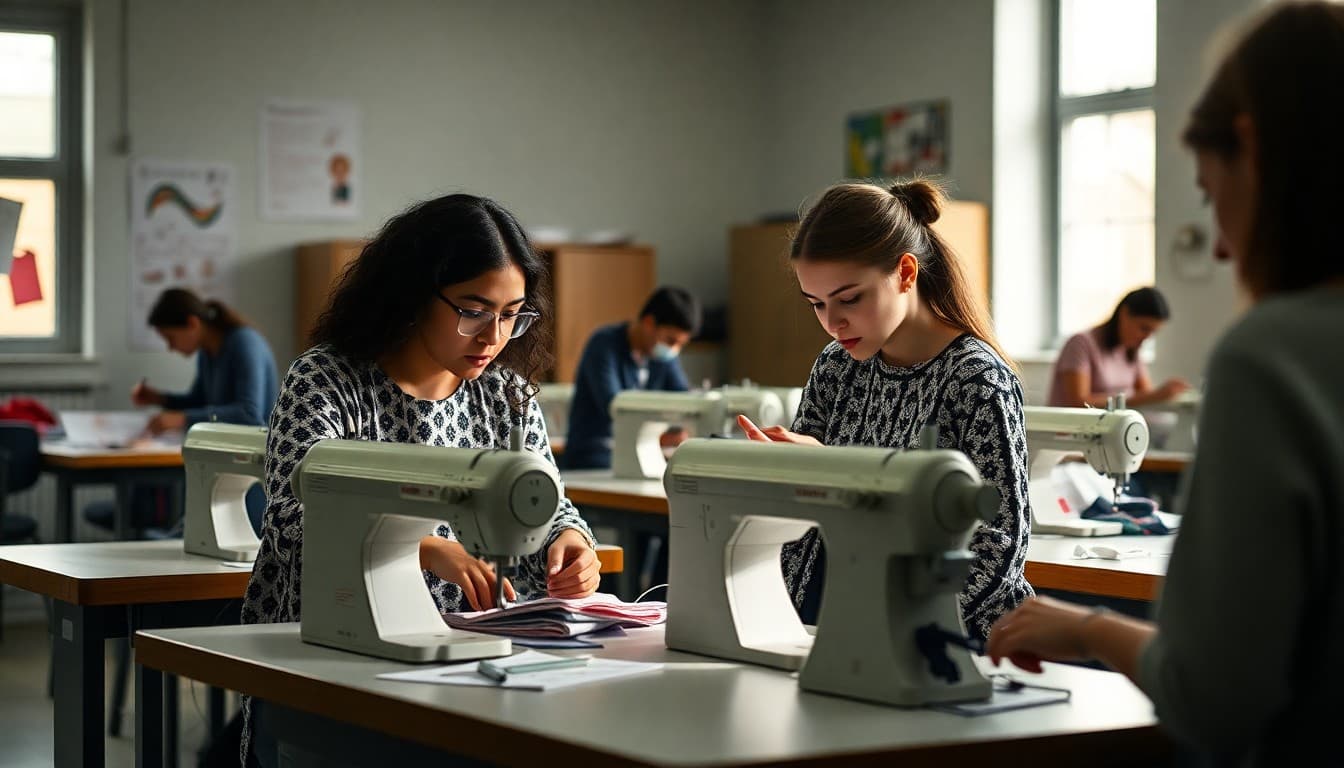
Fashion Design Class Newsletter: Sewing and Creativity
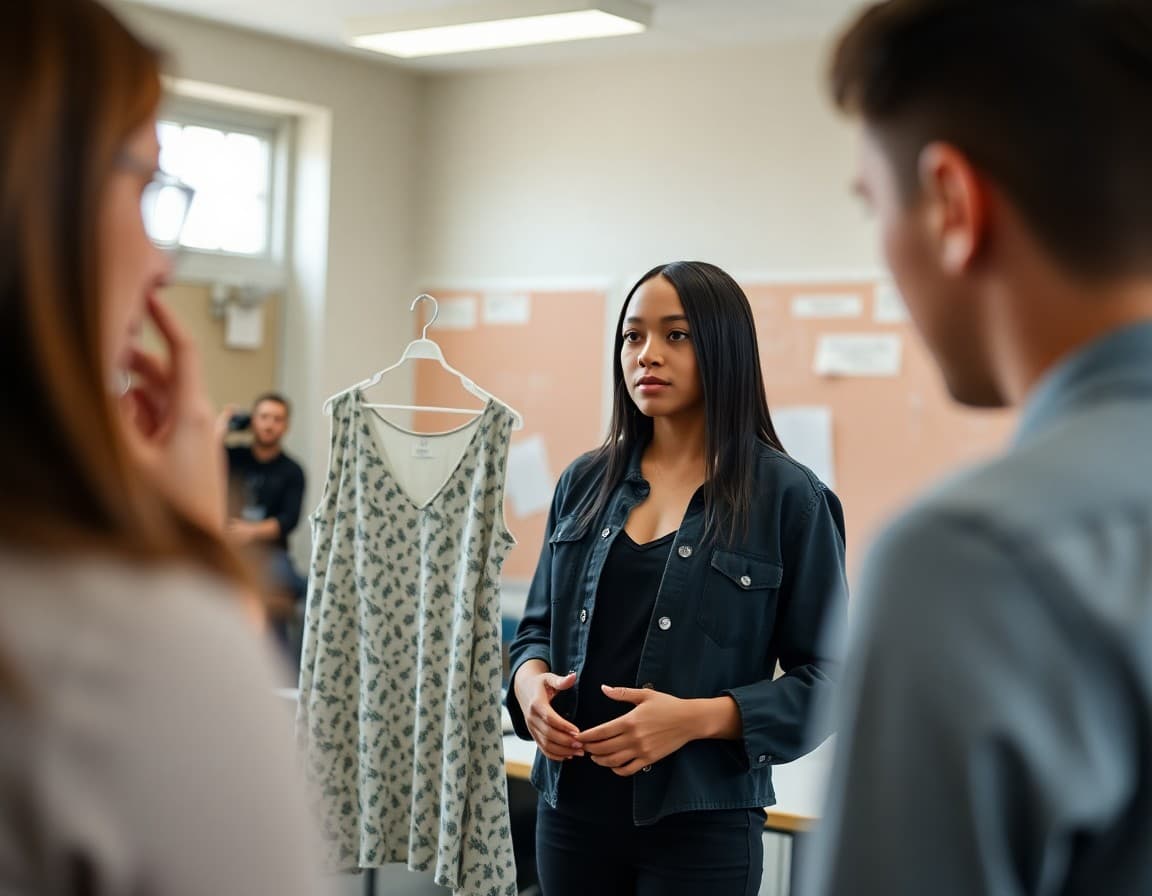
Fashion design is a technical course disguised as a creative one. Students are learning precision pattern drafting, machine operation, structural sewing, and design process, all while making something they can wear. The newsletter should reflect both the technical rigor and the creative energy of the class.
Current Project Snapshot
Each newsletter should describe what project students are currently working on and where they are in the process. Families follow along more closely when they can visualize what their child is doing: "This month students are completing their first fitted garment: a gathered-skirt shirtdress with side seam pockets. Students drafted their own patterns from measurements taken in class. Each pattern is unique. The technical challenges of this project: installing an invisible zipper in the side seam, attaching a collar, and achieving a clean hem on a curved skirt edge."
Sewing Skills Development Ladder
Unlike many arts courses, sewing has a clear technical skill progression. Showing families where their child falls on that progression helps them understand the work being done. A brief skills ladder in the newsletter orients families:
Level 1 (first unit): Seam construction, pressing, straight hems, machine threading and maintenance.
Level 2 (current unit): Pattern drafting from measurements, zipper installation, collar attachment, curved seams.
Level 3 (second semester): Tailoring techniques, lining, interfacing, and fashion illustration.
Most students in this class are currently between Level 1 and 2, depending on prior experience. Students who entered with existing sewing experience may work ahead on independent design projects.
Template Excerpt: Fashion Design Newsletter
Design Room Newsletter - November | Ms. Kim's Fashion Design
The sewing machines have been running nonstop this month. Sixteen students are deep into their shirtdress project, which is the most technically demanding project of the first semester. I am genuinely impressed with the problem-solving I'm seeing when students encounter fitting issues. They are learning to diagnose a problem, unpick the seam, and try again without losing confidence. That resilience is the most important skill in this class and it cannot be taught directly.
Student highlight: Jordan Chen stayed after school three times this week to re-do a zipper installation that wasn't sitting flat. The fourth version is perfect. Jordan has not mentioned quitting once.
Material donation request: We are running low on mid-weight cotton fabric in solid colors or small prints. If you have unused fabric at home (at least half a yard), we would put it to use. Donations can be left at the front office in an envelope marked "Fashion Design."
Fashion Show date set: The end-of-semester fashion show is scheduled for December 12 at 6:00 PM in the main gymnasium. Each student will present their semester's work on the runway. Families and friends are welcome. No RSVP needed. Doors open at 5:45.
Design Portfolio Progress
Upper-level fashion design students often develop portfolios for college art program applications. The newsletter can communicate portfolio progress to families who want to support this process: "Juniors and seniors in Advanced Fashion Design are currently completing their portfolio digital spreads. Each spread documents a design concept from inspiration through finished garment. Students should have at least two completed spreads by winter break. If your student is applying to college fashion or design programs, portfolio deadlines at many schools fall in January and February. Please check specific school deadlines."
Career Pathways in Fashion and Textile Arts
Include brief career pathway information periodically so students and families understand where this course can lead. Fashion design skills translate to careers in fashion design, costume design for film and theater, textile development, fashion merchandising, pattern making, fashion illustration and styling, and apparel production management. Include local or regional programs that offer certificate or degree pathways. Naming one alumni outcome per semester, such as a former student who now works at a costume shop or fashion house, makes the career pathway concrete and achievable.
Get one newsletter idea every week.
Free. For teachers. No spam.
Frequently asked questions
What should a fashion design class newsletter include?
Current project descriptions with photos, sewing and design skills being developed, portfolio progress for students in upper-level courses, any upcoming fashion shows or presentations, material and supply needs, and career pathway information for students considering fashion, textile design, or costume design as a profession.
How do you make a fashion design newsletter appealing to families who aren't familiar with the field?
Lead with the student work. A photo of a student's first completed garment, even an imperfect one, tells families more about what the class does than any description. Pair the photo with a brief note about what skill it represents: 'This is Priya's first garment with a functioning zipper installation. Getting a zipper straight and smooth is a technical skill that takes most students 3 to 4 attempts.'
Should a fashion design newsletter mention academic connections?
Yes. Fashion design is cross-curricular. Students use geometry in pattern drafting, history in period costume research, physics in understanding how fabric drapes and moves, and business math in costing their designs. Naming one academic connection per newsletter helps families and administrators understand the breadth of learning in a course that might otherwise be perceived as purely recreational.
How do you communicate fashion show details in a newsletter?
The fashion show invitation deserves its own newsletter section. Include the date, time, location, expected duration, what students will be presenting, and any ticketing or RSVP requirements. A fashion show is the culminating event of the semester and families who know about it well in advance are far more likely to attend.
Can Daystage support a visually-driven fashion design newsletter?
Yes. Daystage is ideal for fashion design newsletters because the platform handles photos well. You can feature student garment photos prominently with captions, add a gallery of work in progress, and use school colors for branding. A fashion design newsletter should look as designed as the course it represents.

Adi Ackerman
Author
Adi Ackerman is a former classroom teacher and curriculum writer with 8 years in K-8 schools. She writes about school communication, parent engagement, and what actually works in real classrooms.
More for Arts & Music
Art Portfolio Newsletter: Communicating Portfolio Development to Families
Arts & Music · 6 min read
Art Teacher Newsletter Guide: Communicating with Families About Visual Arts
Arts & Music · 6 min read
Music Teacher Newsletter Guide: Keeping Families Connected to the Music Program
Subject Teachers · 7 min read
Ready to send your first newsletter?
3 newsletters free. No credit card. First one ready in under 5 minutes.
Get started free