
Ceramics Class Newsletter: Studio Updates and Gallery Show
Ceramics newsletters have a natural story arc: raw clay becomes a finished object over weeks of drying and firing. Use that arc. Each newsletter update is a chapter in the making of something that started as a lump of earth and will end up on a family's kitchen shelf.
Explain the full production timeline at the start of each unit
Nothing frustrates ceramics families more than the apparent wait between building a piece and bringing it home. Explain the timeline clearly and early so families understand why work takes weeks to complete.
"Here is the typical timeline for a ceramic piece in our class: Day 1, construction. Days 2 through 7, slow drying to leather hard. Day 8, trimming and surface work. Days 9 through 14, drying to bone dry. Week 3, bisque firing. Week 4, glazing. Week 5, glaze firing and cooling. Week 6, pieces come home. Building day is the exciting visible part. The five weeks after are where the actual transformation happens."
Describe the current technique with accessible language
Ceramics vocabulary is specific and unfamiliar to most families. When you use technical terms, define them with enough description that families can picture what is happening.
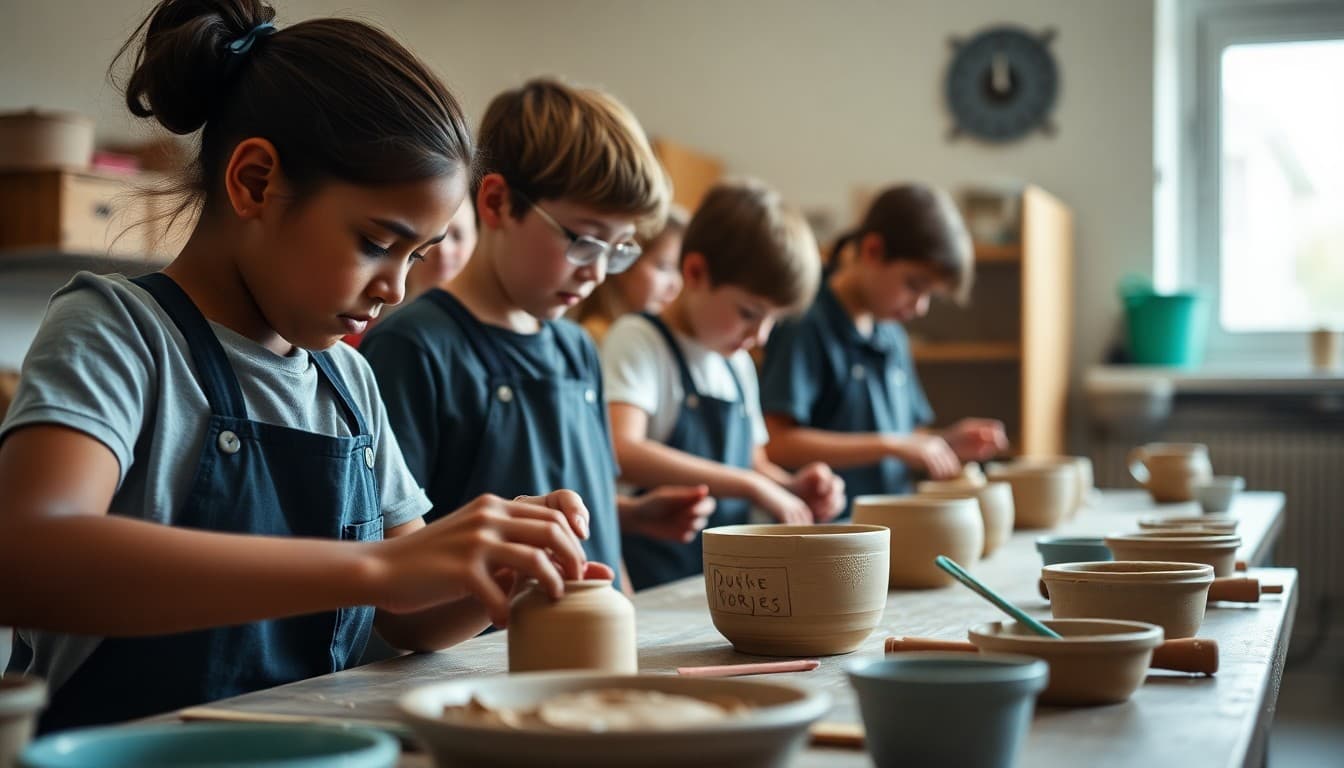
"Students are learning coil building this month. They roll clay into long ropes, then stack those ropes in circles to build the walls of a vessel. Each coil is blended into the one below it on the inside to strengthen the joint. The technique has been used by ceramic artists for over 10,000 years and is one of the most ancient forms of human making. Students are building objects the same way as potters in ancient Egypt and pre-Columbian Mexico."
Share what makes each project challenging
Families who understand the specific technical challenges their child is navigating respect the work differently than families who see pottery as a relaxing craft. Name the technical difficulty in each project.
"The challenge of wheel throwing is centering the clay. A piece of clay that is slightly off-center when spinning will wobble, resist shaping, and eventually collapse. Students spend the first three wheel sessions just learning to center clay before they make anything. Centering requires applying significant downward and inward pressure to a spinning mass while keeping your own body completely stable. It is physically demanding and surprisingly difficult."
Describe the glaze process and what families can expect
Glaze is mysterious to most families. A piece looks completely different before and after firing, and the transformation can produce unexpected results. Preparing families for this magic, and occasional disappointment, is part of the ceramics teacher's communication job.
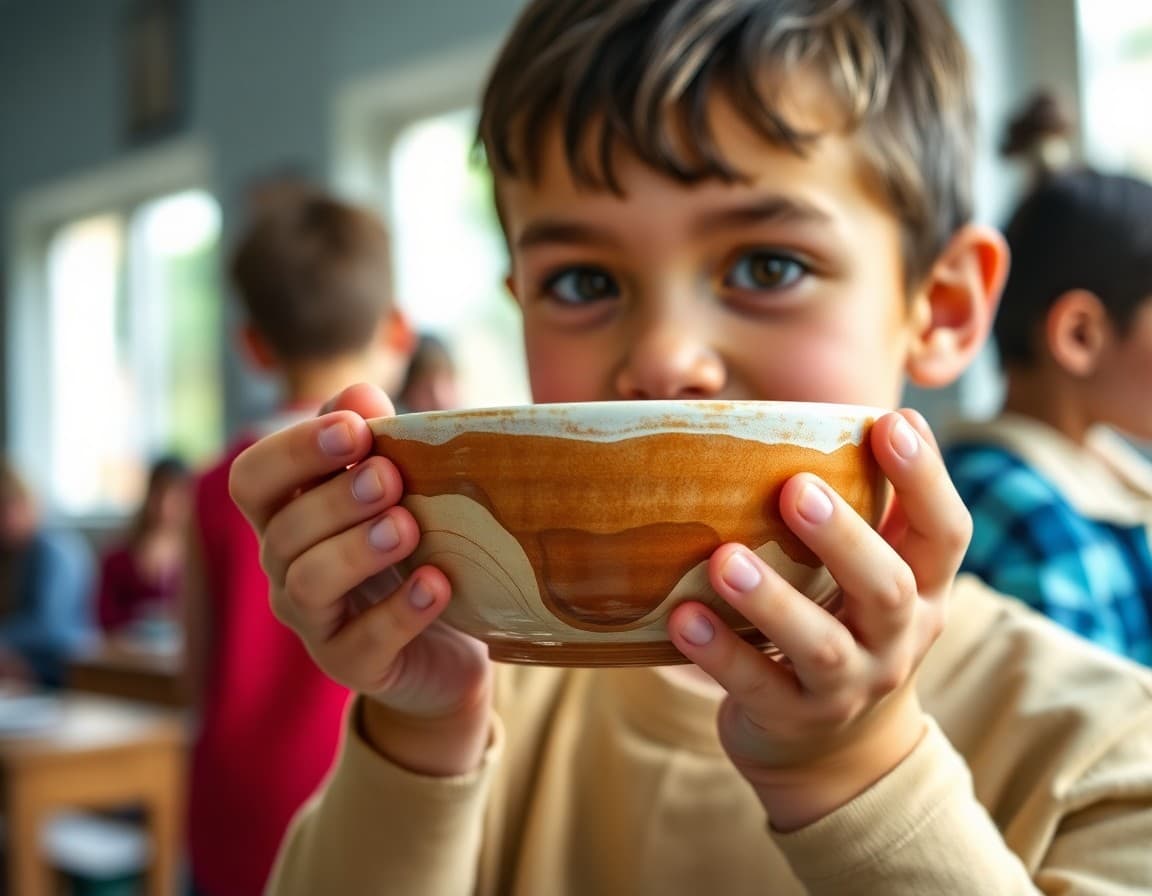
"Students glazed their bowls this week. The colors they applied look completely different from the fired result. The rust-orange glaze they used fires to a deep brown. The milky white fires to a clear sheen that shows the clay color through. We will not know exactly how each piece looks until after the glaze firing on Thursday. That uncertainty is part of the ceramics experience."
Sample newsletter template excerpt
Ceramics class update for November:
Students have been working on functional ware this month: mugs, bowls, and small plates designed to be used, not just displayed. The assignment specifies that each piece must hold liquid without leaking, fit comfortably in a human hand, and have a visual identity that reflects a personal interest or quality of the student who made it.
Pieces go into the bisque kiln next Monday. After bisque firing, students spend two class periods on glazing. Glaze firing happens the week of November 18th. Pieces come home the week of December 2nd, just in time for the holidays if you need a hand-made gift idea.
Prepare families for the gallery show
A ceramics gallery show is typically the highlight of the class year. Give families the full picture: when the show opens, how long it runs, whether there is a reception, what the display format looks like, and when pieces come home.
Include a note asking families to help their child write or practice an artist statement for the show. "Students will have a card beside their work at the gallery describing their piece, what it is made of, and what they were trying to make it say or feel. Ask your student to practice explaining their piece to you before the reception so they are ready to talk about it when visitors ask."
Connect ceramics to art history and cultural traditions
Ceramics is one of the oldest human art forms, and every technique students learn in class has a cultural history connected to it. Naming those connections, even briefly, gives students and families a sense of being part of a long tradition rather than just learning a skill.
Get one newsletter idea every week.
Free. For teachers. No spam.
Frequently asked questions
What techniques do students learn in a K-12 ceramics class?
A typical ceramics curriculum introduces hand-building techniques first: pinch pots to understand clay behavior, slab construction for functional forms like tiles and boxes, and coil building for taller vessels. Wheel throwing is often introduced at the middle or high school level and requires significant practice to produce consistent results. Students also learn surface decoration through carving, stamping, and slip painting, and glaze chemistry and application. Kiln loading and firing safety are taught at the level appropriate to student participation in the process.
Why does ceramics work take so long to complete?
Ceramic pieces go through multiple stages each of which requires drying or firing time. A piece must be built, then allowed to dry to leather-hard stage where it can be trimmed and refined, then allowed to dry fully to bone-dry, then bisque fired in the kiln at around 1,800 degrees Fahrenheit, then glazed, then glaze-fired at full temperature. Each stage takes one to three days. A piece that a student builds in one class session may not be ready to take home for three to four weeks. This timeline is important for families to understand so they do not expect work to come home immediately.
What do students learn from ceramics beyond the craft technique?
Ceramics develops patience, which is measurable and real: students who rush wet clay produce cracked, collapsed work. It builds problem-solving skills because clay behaves differently in different humidity and temperature conditions and students must adjust their approach accordingly. Three-dimensional spatial thinking develops through building and altering forms. Clay is also one of the only materials in art class that has a genuine failure mode, collapse and cracking, that teaches students to work carefully and plan ahead. Those lessons transfer to other contexts.
How does a ceramics class gallery show work?
A ceramics gallery show typically displays finished, glazed pieces on pedestals or shelves arranged by class or by theme. Some shows include artist statements written by students explaining the intent and process behind each piece. Family receptions are common and allow students to present their work directly to visitors. Pieces are usually returned to families after the show closes. A newsletter before the show should describe the display format, the reception schedule, and any artist statement that families should prepare their child to discuss.
How does Daystage help ceramics teachers communicate with families?
Daystage lets ceramics teachers share photos of student work at each stage, from wet clay to finished glaze, so families see the full process rather than just the finished object. When a family sees a photo of their child's bowl being thrown on the wheel alongside a description of the technique involved, then sees the finished glazed piece three weeks later, the patience and skill behind that object becomes tangible. Daystage makes it easy to document that journey in a way families actually read.

Adi Ackerman
Author
Adi Ackerman is a former classroom teacher and curriculum writer with 8 years in K-8 schools. She writes about school communication, parent engagement, and what actually works in real classrooms.
More for Arts & Music
Ready to send your first newsletter?
3 newsletters free. No credit card. First one ready in under 5 minutes.
Get started free