

Superintendent Newsletter: What the Community Survey Told Us
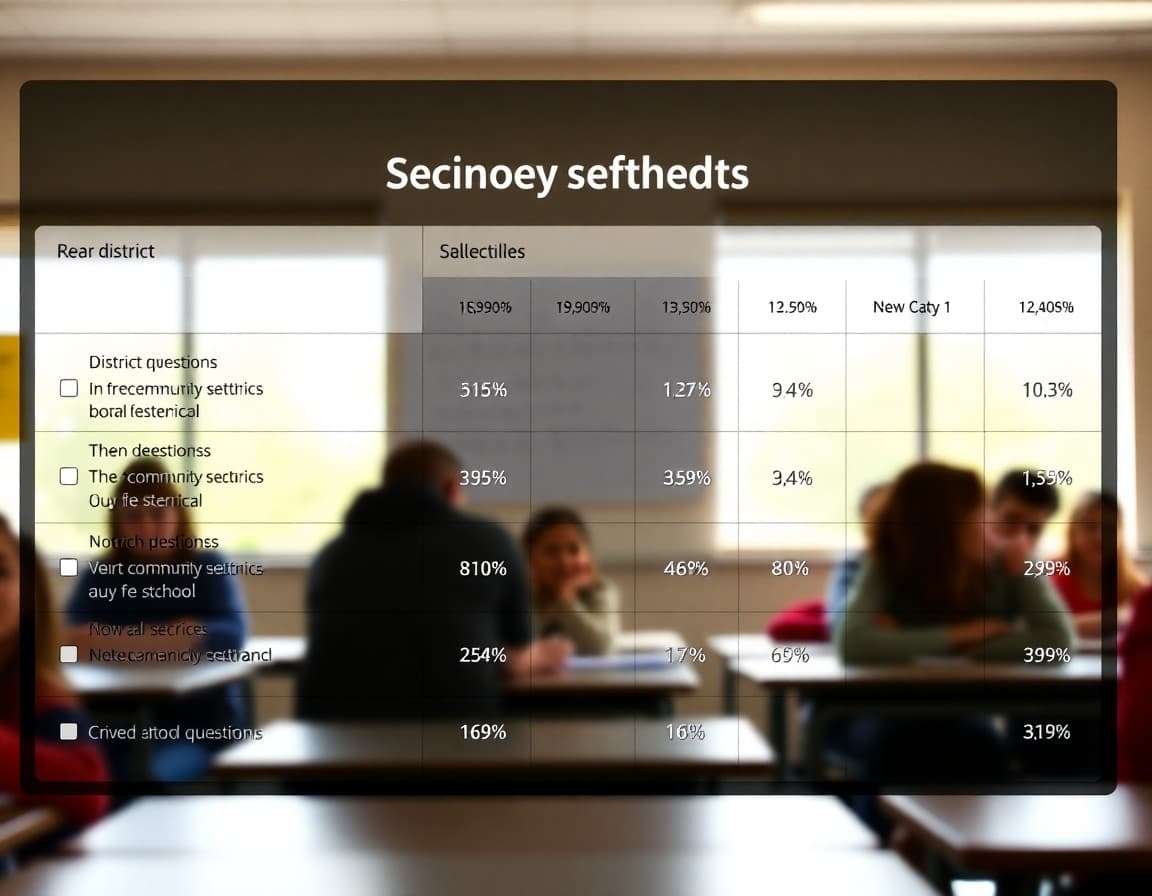
A survey is a promise. When a superintendent asks the community to share their views, they are implicitly committing to hear the results, take them seriously, and report back honestly. Families who respond to a survey and never hear what was found quickly conclude that the survey was performative. The newsletter sharing survey results is what makes the promise real. Done well, it strengthens community engagement for every future effort. Done poorly, or not done at all, it destroys it.
Start With Participation Numbers
Open the newsletter by reporting how many families and community members responded. A high response rate signals that the community cares enough to engage. A lower response rate is worth acknowledging honestly and committing to improve. "We received 1,847 responses, representing about 26 percent of district families. We are grateful for every response and believe this sample reflects a broadly representative cross-section of our community" is both honest and contextual. "Thousands of families shared their perspectives" is vague and often signals inflation of modest response rates.
Report the Major Findings Honestly
Organize the results around the key question areas in the survey. For each category, share the top-line percentage and the most significant finding. Do not soften critical findings. If 68 percent of families rated communication from the district as "fair" or "poor," that belongs in the newsletter with full clarity. If 82 percent of families said they felt their child was safe at school, that belongs in too. The full picture, positive and negative, is what makes the results credible.
Acknowledge What You Did Not Expect to Hear
The most trust-building moment in a survey results newsletter is when the superintendent says: "We heard something we did not anticipate." Families who see that the district actually learned something from the survey, not just confirmed what it already believed, develop significantly greater confidence in the engagement process. Name one or two findings that were genuinely surprising and explain what the district will investigate as a result.
Show How Results Differ Across Groups
If the survey collected demographic data, share notable differences in how different communities responded. If families at lower-income schools rated instructional quality significantly lower than families at higher-income schools, that difference is a finding the district must address. Reporting only the district average without noting variation hides the most important information. Families from communities that historically receive lower quality service are watching whether the district sees them in the data.
A Sample Survey Results Reporting Paragraph
Here is language that presents findings with appropriate candor:
Our spring family survey received 2,341 responses. Seventy-eight percent of families said they feel their child is safe at school. Sixty-four percent rated the quality of instruction at their child's school as excellent or good. The area of greatest concern: 42 percent rated district communication as poor or fair. This finding is consistent with feedback we have received through other channels and it reflects a gap we are committed to closing. We are restructuring our communications department, launching a new district newsletter format this fall, and setting a specific goal of 70 percent "excellent or good" on the communication rating by next spring. We also heard that families at our three westside schools rated overall school quality significantly lower than families at other schools. That finding is driving additional resource allocation to those campuses this year.
Explain What Is Changing Because of the Survey
This is the most critical section of the results newsletter. Families who see that specific survey findings produced specific decisions develop a fundamentally different relationship with district engagement. Name the changes: "Because families told us communication was inadequate, we are doing X. Because families told us they wanted more input on the strategic plan, we are holding Y. Because three schools were rated significantly lower, we are investing Z." Connecting input to action is what makes engagement real.
Acknowledge What You Cannot Change Based on Input Alone
Honest reporting includes telling families when a survey result raised an issue that the district cannot resolve immediately, is constrained by budget, or involves a trade-off that the community itself was divided on. "Forty percent of families said class sizes were too large. We heard this clearly. Reducing class sizes would require resources that the current budget does not support without cuts elsewhere. We are tracking this and will report it as part of our budget discussion in the spring." That honesty is far more credible than making commitments the district cannot keep.
Invite Continued Engagement
Close by naming the next opportunity for community input. Whether that is a focus group on the findings, a public session to discuss what the district plans to do in response, or simply the date when the district will send its next survey, giving families a forward-looking engagement opportunity signals that the conversation continues. Families who see survey results as the beginning of a dialogue rather than the end of one are more likely to participate next time.
Get one newsletter idea every week.
Free. For teachers. No spam.
Frequently asked questions
Why is it important to share community survey results in a superintendent newsletter?
Families who took a survey and never heard what happened to their input develop a permanent skepticism about district engagement efforts. Sharing results closes the loop on the investment families made in responding and demonstrates that the district views community input as real data, not public relations. Reporting back is the single most important thing a district can do to increase participation in future surveys.
What should a community survey results newsletter include?
The participation numbers, the key themes that emerged, specific findings by category, the most significant areas of agreement and concern, how findings differ across different groups if relevant, and most importantly, what the district will do as a result of what was heard. A results newsletter without a 'so what' section is incomplete.
How do you share survey results that include critical feedback about the district?
Report critical findings with the same straightforwardness you would give positive results. Families who see that the district reported their criticisms honestly are more likely to trust the next survey and more likely to believe that positive results are genuine. Selectively reporting favorable responses and minimizing negative ones is quickly noticed and permanently damages the credibility of all future surveys.
How do you explain significant differences in survey responses between different communities?
Acknowledge the differences and resist the urge to explain them away. If families from low-income communities rated school safety significantly lower than higher-income families, that difference is itself a finding that the district needs to investigate and respond to. Reporting the average without noting the variation can hide exactly the information that most needs attention.
What platform helps a superintendent share survey results effectively with all district families?
Daystage allows you to share a formatted survey results newsletter to every family at once, with visual charts, top-line findings, and links to the full results for families who want more detail. Clear, accessible presentation of survey data is more likely to be read and trusted than a PDF of tabular results.

Adi Ackerman
Author
Adi Ackerman is a former classroom teacher and curriculum writer with 8 years in K-8 schools. She writes about school communication, parent engagement, and what actually works in real classrooms.
More for Superintendent
Ready to send your first newsletter?
3 newsletters free. No credit card. First one ready in under 5 minutes.
Get started free