
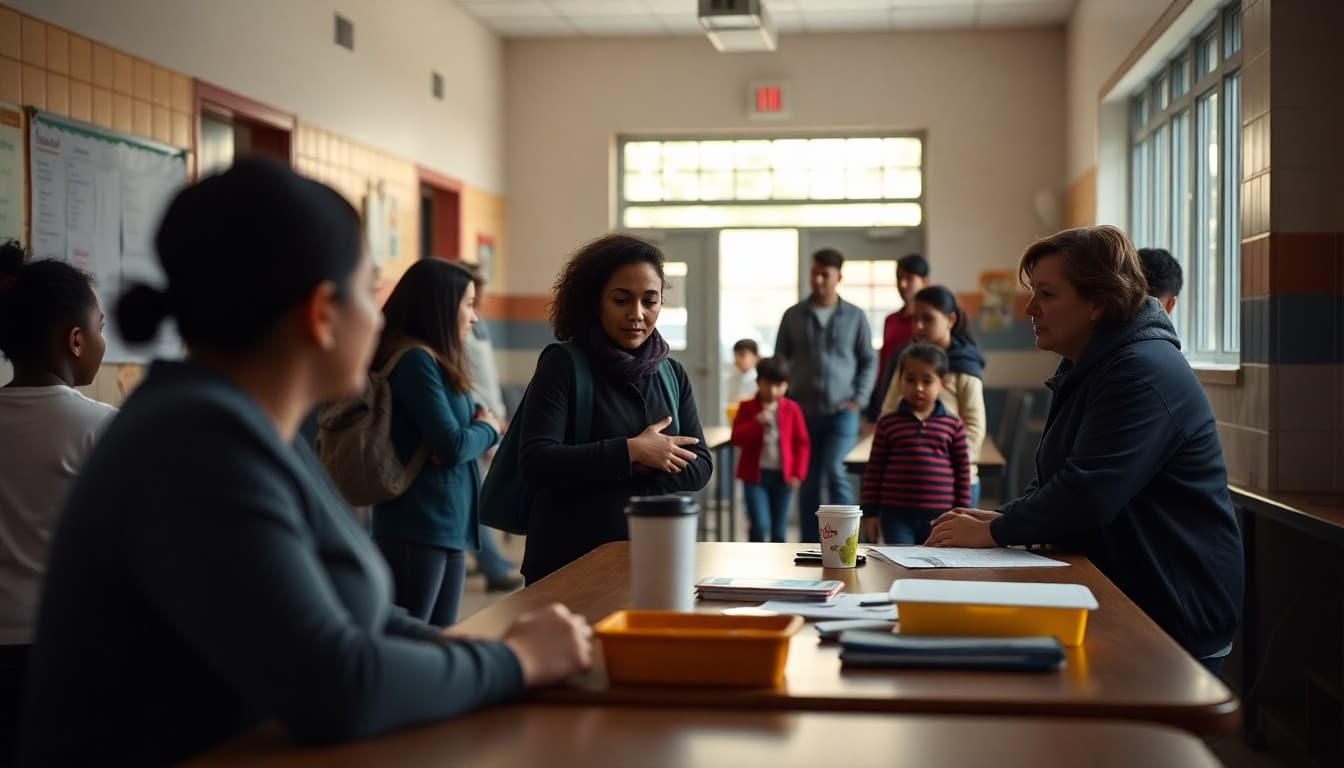
Superintendent Newsletter: Our Community Schools Initiative

A community schools initiative signals something important about what a district believes: that academic success does not happen in isolation from the conditions of a child's life. When a district commits to becoming a community hub, it is saying that school buildings should serve the whole family, not just the child during instructional hours. Communicating that vision well in a newsletter requires the same honesty and specificity that makes any superintendent communication effective.
Explain the Problem the Initiative Is Responding To
Start with why community schools exist in this district. If chronic absenteeism is driven by lack of access to health care, food insecurity, or housing instability, say so. If families in specific neighborhoods have limited access to social services outside the school building, name that. Families who understand the specific problem the initiative addresses see it as a thoughtful response to a real community need rather than an abstract policy idea imported from elsewhere.
List the Services Available at Each Site
Do not describe the community schools model in general terms. Tell families exactly what is available at each participating school: vision and dental screenings, food pantry access, after-school tutoring, English language classes for adults, licensed counseling, workforce development programs, housing navigation support. The more specific the list, the more families understand what the initiative actually offers and whether it might be useful to their family.
Name the Partner Organizations and Their Role
Community schools work because of partnerships with organizations that have expertise the school does not. Name each partner and describe what they provide. "The Children's Health Network will provide vision screenings and referrals to low-cost eyeglasses at no cost to families" is a sentence that tells a parent exactly what their child can access. "We are partnering with local health organizations" is not. Specific partners and specific services are what families need to decide whether to engage with the initiative.
Tell Families How to Access Services
The most important practical section of the newsletter is how families access the available services. What are the hours? Do families need an appointment or can they walk in? Are services available to any family in the district or only to students enrolled at the community school? Is there a community schools coordinator families can contact? Every barrier to access that the newsletter clarifies is a barrier the district has removed between a family in need and a service that could help them.
A Sample Community Schools Announcement Paragraph
Here is language that describes the initiative with necessary specificity:
Starting this month, Jefferson Elementary will operate as our district's first community school, offering services to all Jefferson families and students. A full-service health clinic operated by Valley Health will be open every Tuesday and Thursday from 2 to 6 PM, providing primary care, dental screenings, and behavioral health appointments at no cost to families with Medicaid and on a sliding scale for others. Our food pantry, stocked through a partnership with Community Food Network, will be open every Monday from 3 to 5 PM and every Friday morning. A community schools coordinator, Maria Reyes, is available on site Monday through Friday and can be reached at [email]. Services are voluntary and have no impact on your child's academic record.
Connect Services to Student Outcomes
Families and community members who are skeptical about the initiative will want to see evidence that it improves student performance, not just family quality of life. Share the data if you have it. If community schools in comparable districts have reduced chronic absenteeism, improved test scores, or increased family engagement, name those results. If your initiative is too new for outcome data, commit to tracking and sharing it. The expectation of measurement is what separates a community schools initiative from a services program with no accountability for educational impact.
Make It Easy for Families to Contribute
Community schools thrive when families are involved not just as recipients of services but as contributors to the school community. Include opportunities for family involvement: volunteering at the food pantry, joining the community schools advisory committee, or participating in the adult education program. Families who feel ownership of the community school see it as something they built rather than something the district provided for them, which creates very different levels of engagement and advocacy.
Commit to Expanding What Works
Close the newsletter by telling families your vision for the initiative. If you plan to expand to additional schools over the next several years based on what you learn at the first site, say that. If you are planning to evaluate effectiveness after the first year and share results with the community, commit to it. Families who see a community schools initiative as a genuine long-term investment rather than a one-year pilot develop a completely different relationship with the work.
Get one newsletter idea every week.
Free. For teachers. No spam.
Frequently asked questions
What is a community schools model and how should a superintendent explain it to families?
A community schools model transforms a school building into a community hub that provides wraparound services beyond academics: health care, food access, after-school programs, mental health support, adult education, and social services. A superintendent can explain it as the district partnering with community organizations to offer services families need at a place families already trust and visit regularly: their child's school.
What should a community schools newsletter include?
The specific services being offered at each participating school, how families access them, the community partner organizations involved, the hours of availability, who is eligible, and the vision for how the services connect to student outcomes. Families need practical information more than they need a description of the community schools theory.
How do you explain community schools to families who are skeptical about services in school buildings?
Acknowledge the range of views. Explain what services are and are not included. Name the partner organizations and their community credibility. Clarify what is voluntary versus what is part of the school day. Families who understand that community schools services are opt-in for families and do not change the academic program are usually more receptive than those who imagine mandatory wraparound services integrated into the curriculum.
How do you measure the success of a community schools initiative?
Track the same indicators that motivated the initiative: attendance rates at schools with the community schools model, chronic absenteeism changes, student wellness survey results, and family survey satisfaction. Also track service utilization: how many families accessed food support, health screenings, or mental health services. Both sets of data tell the story of whether the model is working.
What platform helps a superintendent share community schools updates with all district families?
Daystage is a strong choice for this kind of community-facing initiative communication. You can include service listings, partner organization descriptions, and event announcements all in one formatted newsletter that reaches every school family at once.

Adi Ackerman
Author
Adi Ackerman is a former classroom teacher and curriculum writer with 8 years in K-8 schools. She writes about school communication, parent engagement, and what actually works in real classrooms.
More for Superintendent
Ready to send your first newsletter?
3 newsletters free. No credit card. First one ready in under 5 minutes.
Get started free