

Summer STEM at Home Newsletter: Science Experiments to Try
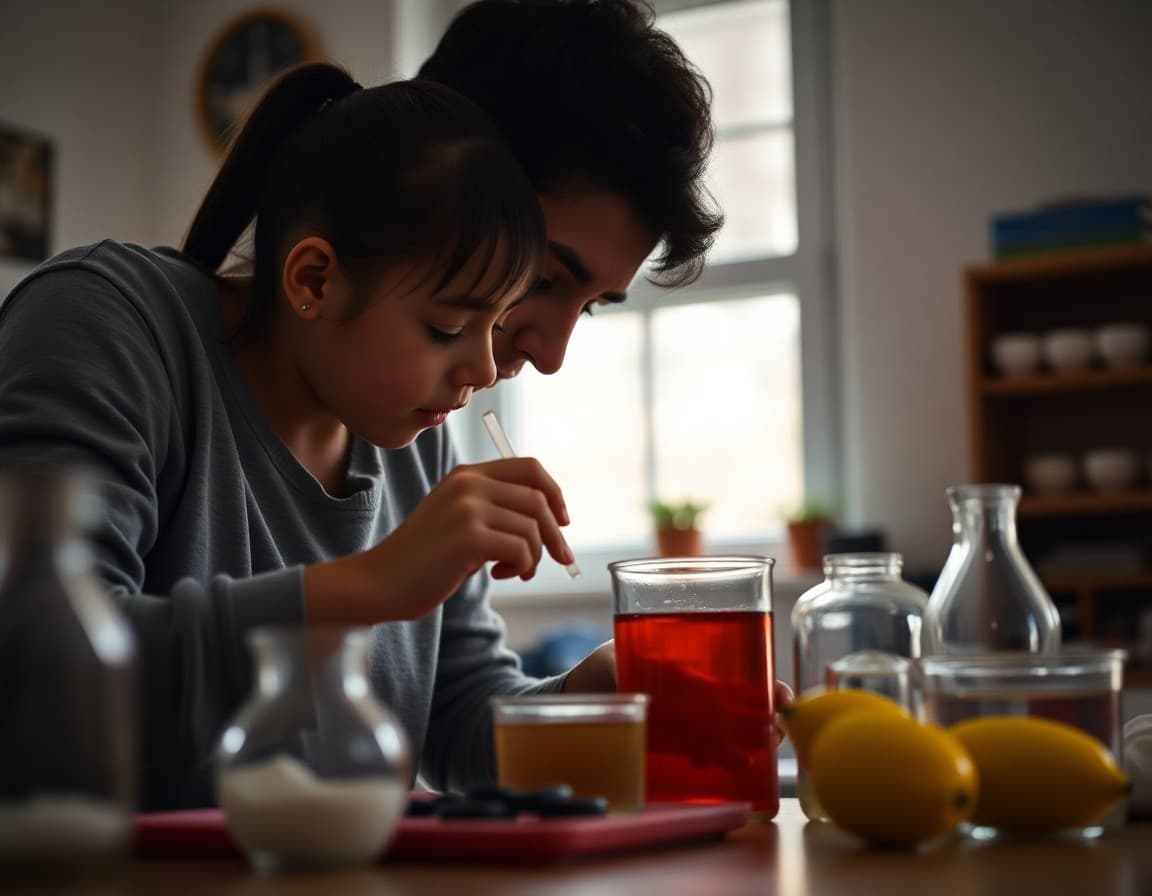
Science stops in June for most students, and the inquiry habits built during the school year fade without practice. A summer STEM newsletter that gives families specific experiments they can run with kitchen materials keeps scientific thinking alive. The best home experiments do not need a lab. They need a curious child, a willing parent, and the right instructions.
Lead with the most dramatic experiment on the list
The first experiment in a summer STEM newsletter should be the one most likely to produce a visible, exciting result. A baking soda and vinegar reaction, a homemade lava lamp using oil and water and a fizzing tablet, or a non-Newtonian fluid made from cornstarch and water grabs students' attention and sets the tone that science at home can be genuinely interesting. Save the quieter, more measurement-focused experiments for later in the newsletter after you have the family's engagement.
Include a printable recording sheet
One simple recording sheet that students can use across multiple experiments, with fields for hypothesis, materials, steps, result, and what it tells us, transforms a fun activity into a science practice. Families can print one sheet per experiment and keep them together as a summer science journal. That journal becomes a show-and-tell item in September and evidence of sustained scientific thinking over the break. A downloadable link or a QR code in the newsletter is all that is needed.
Give at least five experiments using only household materials
The most accessible summer STEM experiments require no special materials: the cabbage juice pH indicator (red cabbage, boiled), the egg in a bottle (a hard-boiled egg and a glass bottle), the pepper and dish soap surface tension demonstration, the paper towel color chromatography test, and the simple electromagnet made from a nail and a battery. Each of these costs nothing beyond what most kitchens already have and each teaches a real scientific concept.
Frame each experiment as a question, not a demonstration
An experiment framed as "how to make a volcano" teaches a procedure. An experiment framed as "what happens if you change the ratio of baking soda to vinegar?" teaches inquiry. Framing each activity as an open question with a variable the student can change turns a demonstration into an investigation. Students who run variations on the same experiment learn more than students who follow a procedure once and move on.
Include an engineering challenge alongside the science experiments
Engineering challenges complement chemistry and biology experiments with a different kind of problem-solving. The tallest free-standing tower built from 20 index cards. The strongest bridge made from 10 craft sticks. A container that protects an egg dropped from a second-floor window. These challenges require design thinking, iteration, and working with constraints, all of which are STEM skills that science experiments alone do not develop.
A sample summer STEM experiment list by grade band
Elementary (K-5): Baking soda and vinegar reaction with measurement variations. Growing seeds and recording height every three days. Making and testing paper airplanes with different wing shapes. Surface tension demonstration with pepper and dish soap.
Middle school (6-8): Cabbage juice pH indicator testing household liquids. Spaghetti tower structural engineering challenge. Testing variables in paper airplane flight distance. Electrolysis with water, a battery, and pencil leads.
High school (9-12): Spectroscopy with a CD and light sources. Measuring dissolved oxygen in water samples. Building a simple circuit with a 9-volt battery and LED components. Designing and testing a water filtration system.
Connect each experiment to a real-world application
A brief sentence after each experiment that connects it to real science or engineering makes the activity feel relevant rather than academic. The baking soda and vinegar reaction is the same chemistry that powers certain types of fire extinguishers. The bridge-building challenge is the same structural analysis that civil engineers use before building a real bridge. These connections matter most to students who wonder why science is worth doing outside a classroom grade.
Invite families to share results
A newsletter that asks students to submit a photo of their best experiment result creates a community of summer scientists. Collect the submissions and create a gallery wall or a digital slideshow for the first week of school. Students who know their summer experiments will be seen by their peers are more likely to complete them with care. That motivation is worth the five minutes it takes to set up a simple photo submission form in the newsletter.
Get one newsletter idea every week.
Free. For teachers. No spam.
Frequently asked questions
What STEM activities work well for a summer home newsletter?
Baking soda and vinegar reactions, building bridges from dry spaghetti and tape, growing plants from seeds and measuring daily growth, making a homemade compass with a needle and magnet, constructing a basic circuit with a battery and LED, observing and documenting insects or birds, and tracking weather patterns with a homemade rain gauge. The best choices use materials most families already have and produce a visible result that sparks further questions.
How do you make STEM activities appropriate for different grade levels?
For early elementary students, focus on observation and simple cause-and-effect experiments. For upper elementary, add measurement, recording results, and basic hypothesis testing. For middle school, introduce variables and controlled experiments. For high school, connect the activity to real applications or ask students to design their own variation. The same basic experiment, like testing what affects the speed of an ice cube melting, can be adapted for any grade.
Should a summer STEM newsletter include math activities?
Yes, and connecting math to physical experiments is one of the most effective ways to maintain math skills over summer. Measuring plant growth over time, calculating the average rainfall per week, graphing temperature changes, or timing paper airplane flights and computing averages all embed math in activities that feel like exploration rather than drill.
How do you make STEM home activities accessible to families without science backgrounds?
Every activity should include clear instructions, the science concept in plain language, and what to do if something does not work as expected. A parent who does not have a science degree should be able to facilitate the activity by following the instructions in the newsletter. Include a sentence explaining why the experiment works in language a non-scientist can understand and use when talking with their child.
How does Daystage support summer STEM newsletters?
Daystage allows science teachers to send summer STEM newsletters with embedded YouTube video links for each experiment, printable recording sheets for students to track results, and a photo submission option for families to share completed projects. Teachers can segment newsletters by grade so each family receives age-appropriate content rather than a mixed list that requires them to identify what applies to their child.

Adi Ackerman
Author
Adi Ackerman is a former classroom teacher and curriculum writer with 8 years in K-8 schools. She writes about school communication, parent engagement, and what actually works in real classrooms.
More for Summer & After School
Ready to send your first newsletter?
3 newsletters free. No credit card. First one ready in under 5 minutes.
Get started free