

What to Include in Your Japanese Class Newsletter to Parents
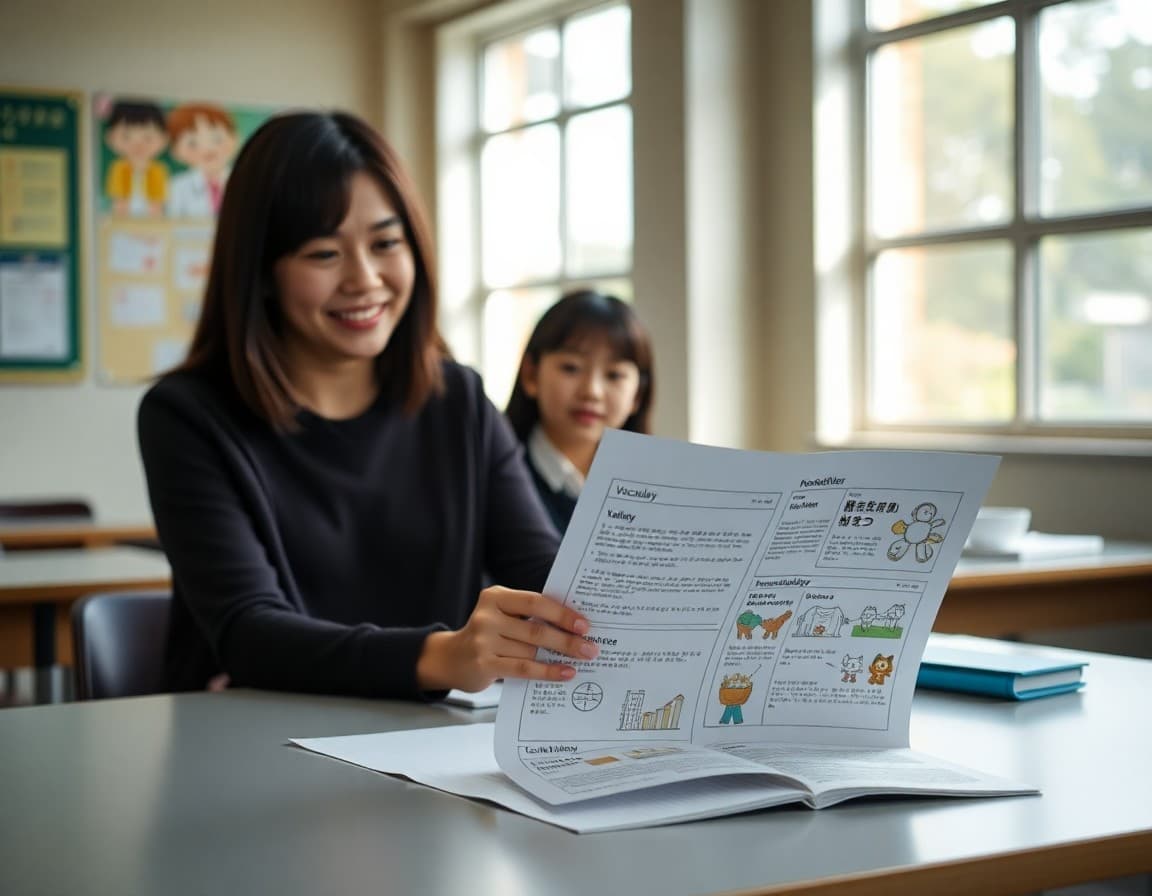
A Japanese class newsletter works best when parents know exactly what to look for in it. The cleaner your structure, the more useful your communication becomes. Here is a section-by-section breakdown of what to include, organized in the order most families will want to read it.
Current Unit Summary
Every newsletter should open with a plain-language description of what students are studying. Name the unit, describe the skills students are building, and give one or two concrete examples. If students are learning to describe their daily routine in Japanese, say that. If they are writing their first full paragraph in hiragana, mention it.
Avoid technical linguistic terms. The goal is for a parent who has never studied Japanese to understand what their child did in class this week.
Writing System Update
Parents are often curious and sometimes confused about Japanese writing systems. A brief update on where students are in learning hiragana, katakana, and kanji helps families understand the scope of what their child is mastering. If students just finished all 46 katakana characters, that is worth celebrating in a sentence or two. If they are learning their first set of kanji, a short explanation of what kanji are keeps parents oriented.
Vocabulary Spotlight
Include three to five vocabulary words from the current unit. Format them with romaji (phonetic spelling), the Japanese character form, and the English meaning. Add a brief pronunciation note if the sound is particularly unfamiliar to English speakers. Then suggest a quick home activity: ask your child to teach you these words, or challenge them to use one in a sentence over dinner.
This section is the most likely to be read by parents and students together. Keep it short and actionable.
Cultural Connection
Japanese language class is also a window into Japanese culture. Include one cultural note per newsletter tied to the season, a current unit theme, or an upcoming cultural holiday. Possibilities include Japanese festival traditions, regional food culture, traditional arts, or pop culture references students encountered in class.
Keep cultural sections brief and curious in tone. You are giving families something interesting to think about, not a full cultural education.
Assessment and Project Dates
List any upcoming quizzes, speaking assessments, written tests, or major projects with dates and a short description. If a test covers hiragana rows three through five, say so. If a speaking assessment involves a scripted conversation, describe the format. Parents who know what is coming can help their child prepare in ways that actually align with what is being assessed.
Home Practice Recommendations
Suggest one or two specific ways families can support Japanese practice at home without speaking Japanese themselves. Free apps like Kana Town or Drops work for character practice. YouTube channels with Japanese content for learners give students listening exposure. NHK World's language learning resources are free and well-structured for multiple levels.
Specificity matters. Vague suggestions like "practice at home" do not help parents who do not know where to start.
Class Highlights
A short paragraph on something the class accomplished or enjoyed keeps the newsletter from feeling purely transactional. Describe a successful speaking activity, a creative project students finished, or a cultural experience the class shared. This section gives parents pride in what their child is part of and context for conversations at home.
Contact and Next Steps
Close with your contact information, the best way to reach you with questions, and the approximate date of your next newsletter. Remind parents of any upcoming events like a cultural fair, field trip, or guest speaker. A brief, warm sign-off wraps things up without taking up unnecessary space.
Get one newsletter idea every week.
Free. For teachers. No spam.
Frequently asked questions
Is it necessary to include Japanese characters in a parent newsletter?
Not necessarily. Including a small vocabulary table with romanized pronunciation and English translations is more useful for most families than showing characters without context. If you do include characters, pair them with romaji so parents can at least approximate the pronunciation. Too many characters without explanation can make the newsletter feel inaccessible.
How detailed should the cultural section of a Japanese newsletter be?
Two to four sentences is plenty for most cultural sections. Introduce the tradition or holiday, explain its significance briefly, and connect it to what students are learning in class. Then suggest one way families can engage with it at home. More detail than that is likely to be skipped, especially by busy parents scanning a newsletter quickly.
Should Japanese teachers include tips for parents who speak Japanese?
If your class has a significant number of Japanese-speaking families, adding a short bilingual section or a note specifically for Japanese-speaking parents can help them engage more deeply. For most classes, writing for a non-Japanese-speaking audience is the right default. You can always add a note like: 'If your family speaks Japanese at home, please encourage your child to practice these phrases with you.'
What is the most important section to include in a Japanese class newsletter?
The current unit summary is the foundation of every Japanese newsletter. Parents cannot follow anything else if they do not know what students are working on. Start there, describe it in plain language, and build the rest of the newsletter around it. Everything else, vocabulary, cultural notes, assessments, flows naturally from a clear unit description.
What tool works best for subject teacher newsletters?
Daystage lets you build a structured Japanese newsletter template and send it to all families with one click. The platform handles formatting, image embedding, and delivery, so the newsletter looks polished every time without extra work on your end.

Adi Ackerman
Author
Adi Ackerman is a former classroom teacher and curriculum writer with 8 years in K-8 schools. She writes about school communication, parent engagement, and what actually works in real classrooms.
More for Subject Teachers
Ready to send your first newsletter?
3 newsletters free. No credit card. First one ready in under 5 minutes.
Get started free