

What to Include in Your Home Economics Newsletter to Parents
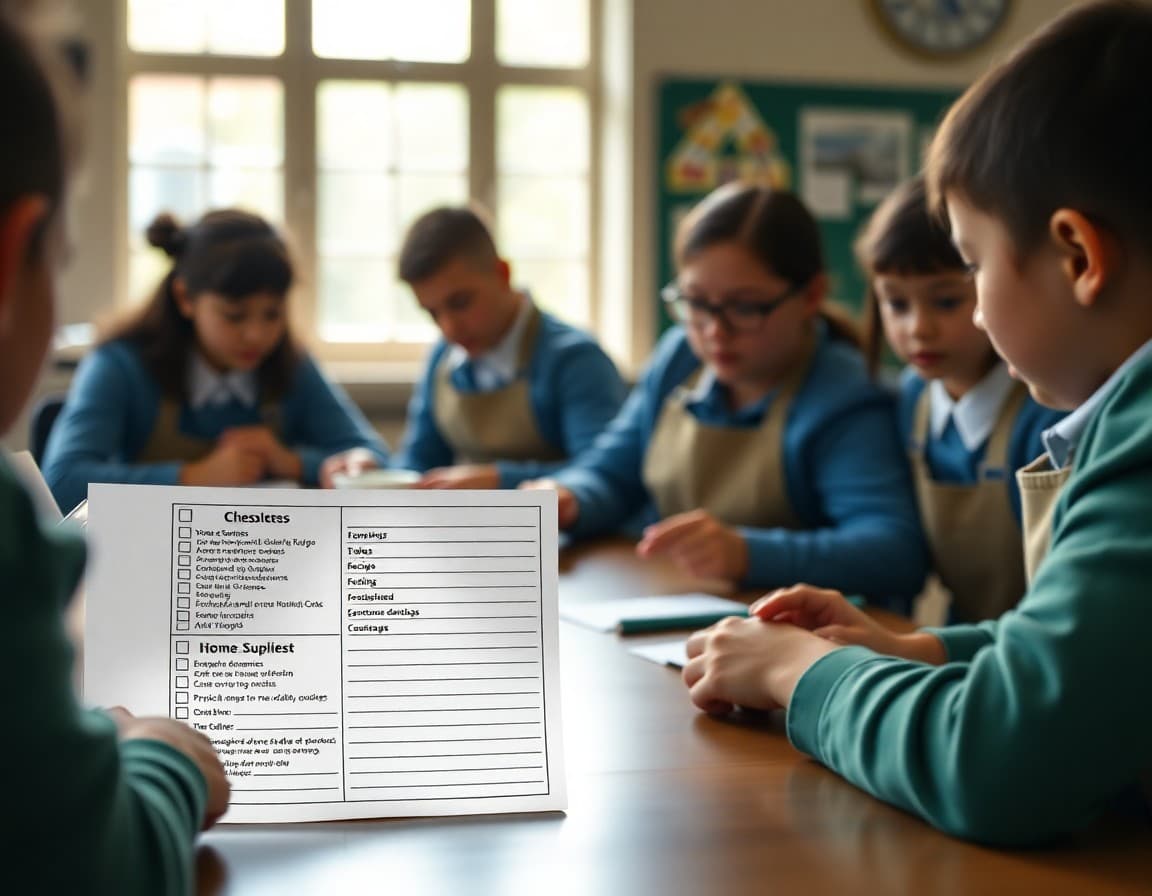
Home economics newsletters are most useful when they connect what students did in class to something families can engage with at home. Here is a section-by-section checklist to make sure every newsletter covers what parents actually want to know.
Current Unit Summary
Open with a brief description of the current unit in plain language. Name the unit, describe the core skills students are building, and give one concrete example of what students did this week. Home economics units are hands-on by nature, so the description should reflect that: students cooked, sewed, calculated, planned. Action verbs make the summary more vivid than objective statements.
Recipe or Project Card
This is the highest-engagement section in any FCS newsletter. For cooking units, include a simplified version of one dish students made: a brief ingredient list, four to six key steps, and a note about the skill it practiced. For textile units, describe the project students are making, what technique it involves, and what the finished product looks like. For personal finance or consumer science units, include one calculation or comparison families can try together.
Keep this section short enough to be scanned quickly but specific enough to be useful.
Life Skills Connection
Every unit in FCS has a life skills dimension that goes beyond the immediate activity. Include one paragraph connecting the current unit to how students will use this knowledge as independent adults. Cooking connects to nutrition, budget management, and food safety. Sewing connects to resource conservation and self-sufficiency. Personal finance connects to every major economic decision students will face. Naming this connection explicitly helps parents see the subject's long-term value.
Supply Requests
If families need to provide materials for an upcoming unit, include a specific, dated request here. List each item, the quantity needed per student, the date it should arrive, and a note about what the school provides. If there are acceptable substitutions (any neutral-colored fabric works for this project), mention them. The more specific the request, the better your collection rate will be.
Upcoming Unit Preview
A brief preview of the next unit helps families plan ahead for supply contributions and gives students something to anticipate. If a cooking unit is starting next week, name it and mention what styles of cuisine or techniques it covers. If a personal finance unit is coming up, note that families might want to gather any statements or bills they are willing to share as real-world examples. Forward-looking content is more useful than retrospective summaries alone.
Ways to Practice at Home
Suggest one or two specific ways families can extend FCS learning at home. Ask their student to lead the grocery shopping with a budget in hand. Let their student cook dinner once a week using what they learned. Sit down with a credit card statement and work through it together. The more specific the suggestion, the more likely families are to act on it.
Student Work Highlight
Celebrate what the class accomplished. If students completed a project, describe what they made and what it took to get there. If a particular cooking challenge was difficult and most students nailed it, say so. A brief celebration of class-level accomplishments makes the newsletter feel positive and builds parent connection to the program.
Contact and Next Steps
Close with your email, any forms that need to be returned, and the date of your next newsletter. If there is a cooking demonstration day parents can attend or a class showcase coming up, include that information here. A clean close with clear next steps makes the newsletter feel complete without running long.
Get one newsletter idea every week.
Free. For teachers. No spam.
Frequently asked questions
How long should a home economics newsletter be?
One to two pages is the right length for most FCS newsletters. Parents will read it if it is focused and useful, but they will skim or skip it if it runs longer than they expect. Six to eight short sections with specific, practical information works well. The recipe or project card section can make the newsletter feel longer in a good way because it includes content parents actually want to read.
How do home economics newsletters handle supply requests without overwhelming families?
Give families at least two weeks notice for any supply request. List each item clearly with the quantity needed, the date it is needed by, and any alternatives that work if the first choice is unavailable. Explain briefly what the supply will be used for. Families who understand the purpose of a request are more cooperative than families who receive a list without context.
Should home economics newsletters include photos of student work?
Yes, when media consent allows it. Photos of completed cooking projects, finished sewing work, or students engaged in a hands-on activity make the newsletter visually engaging and give parents a clear picture of what happens in class. Even a single photo of a completed dish or a sewn project communicates more than a paragraph of description. Check your school's consent policy before including identifiable student photos.
How do FCS teachers write newsletters that highlight the academic rigor of home economics?
Frame every activity in terms of the skills and competencies it develops. A cooking activity is also a lesson in chemistry (heat transfer, protein denaturation), mathematics (scaling a recipe, calculating unit cost), and time management. A sewing project involves geometry, fine motor precision, and project planning. Name those connections explicitly in the newsletter. Parents who see the academic depth of FCS are more likely to value and advocate for the program.
What tool works best for subject teacher newsletters?
Daystage is a practical choice for FCS teachers because it supports image embedding, clean section formatting, and consistent sends to all families. Building a template with your regular sections means updating the newsletter each month takes minutes rather than a full redesign.

Adi Ackerman
Author
Adi Ackerman is a former classroom teacher and curriculum writer with 8 years in K-8 schools. She writes about school communication, parent engagement, and what actually works in real classrooms.
More for Subject Teachers
Ready to send your first newsletter?
3 newsletters free. No credit card. First one ready in under 5 minutes.
Get started free