
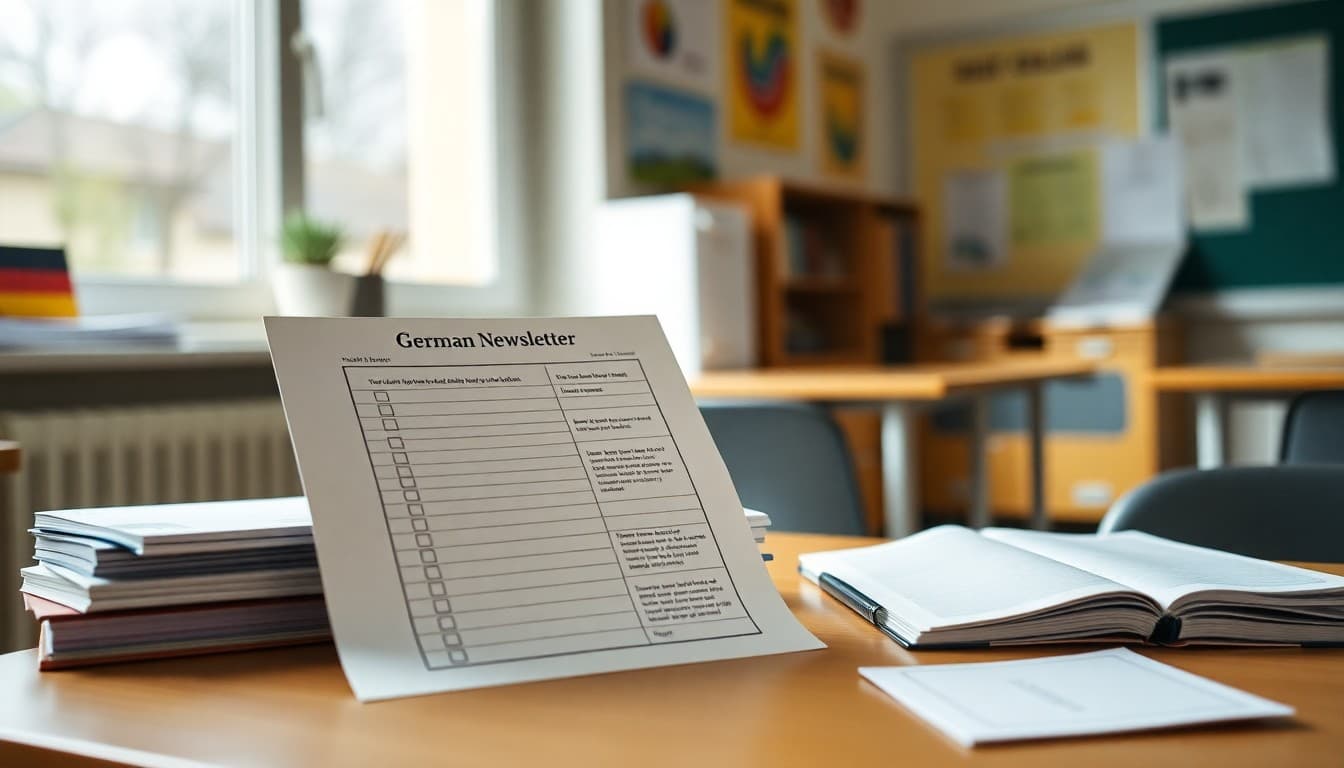
What to Include in Your German Teacher Newsletter to Parents

The Four Elements of Every German Newsletter
German teacher newsletters work best when they have a consistent structure: current unit with proficiency description, vocabulary samples, cultural spotlight, and one at-home activity. These four elements take about 20 minutes to write and produce a newsletter parents genuinely look forward to opening. Consistency is more valuable than novelty. Build the structure once and update it monthly.
Current Unit With Proficiency-Based Description
Name the unit and describe it in terms of what students can do by the end of it. "By the end of this unit, students will be able to discuss their daily routines, describe where they live, and ask and answer questions about familiar topics in German" is a performance goal parents can picture. "We are in chapter 4" is not useful to anyone outside the classroom.
Vocabulary Samples
Three to five German words with English translations, chosen for interest and cultural relevance. German compound words are a reliable source of engaging vocabulary: Fingerspitzengefühl (fingertip feeling, meaning intuitive sensitivity), Weltschmerz (world pain, meaning the sadness of the state of the world), Drachenfutter (dragon food, meaning a gift to appease an angry partner). These vocabulary choices make parents curious about a language they might otherwise dismiss as intimidating.
German-Speaking World Cultural Spotlight
One cultural element per newsletter. Rotate through Germany, Austria, Switzerland, and other German-speaking regions and communities across the year. Two to three sentences: name the place or tradition, describe the cultural element, connect it to the current vocabulary or grammar unit. This section is what distinguishes a German newsletter from a language classroom logistics update.
Assessment Update
Include upcoming major assessments in the next two to four weeks. For oral exams: format and one specific preparation tip. For written exams: what is being assessed. For projects: deliverable and deadline. Parents who know what is coming can support their student more effectively than parents who find out after the assessment has happened.
At-Home German Activity
One specific at-home activity per newsletter. Watch five minutes of a German cooking or travel show (DW Euromaxx on YouTube is free and appropriate for all levels). Ask your student to teach you the German word for five items in the kitchen. Look up whether your local area has any German-speaking community events. Specific and achievable. That is what gets done.
Get one newsletter idea every week.
Free. For teachers. No spam.
Frequently asked questions
What is the most important element of a German teacher newsletter?
Vocabulary samples with English translations, specifically ones that reveal something interesting about the German language or culture. German compound words and culturally specific terms are among the most engaging content any world language newsletter can include.
How should grammar explanations appear in German newsletters?
As functional plain-language descriptions of what the structure does and why it matters for communication. German grammar is genuinely complex in some areas. Brief, accurate, accessible explanations prevent the confusion that comes when students come home talking about the Dativ case and parents have no framework for it.
Should German newsletters include information about German-speaking countries beyond Germany?
Yes. Austria, Switzerland, and the diaspora communities worldwide are part of the German-speaking world your curriculum covers. Rotating cultural spotlights across these regions gives parents a richer and more accurate picture of the language's global scope.
How should assessment information appear in German newsletters?
With enough detail to be useful. For oral exams: format, what students are being asked to do, and one specific preparation tip. For written exams: what vocabulary and grammar is assessed. For projects: the deliverable and deadline.
How does Daystage help German teachers communicate consistently with families?
Daystage provides a consistent newsletter structure you can update each month. For a language with complex grammar like German, presenting information professionally and consistently builds parent confidence in the program.

Adi Ackerman
Author
Adi Ackerman is a former classroom teacher and curriculum writer with 8 years in K-8 schools. She writes about school communication, parent engagement, and what actually works in real classrooms.
More for Subject Teachers
Ready to send your first newsletter?
3 newsletters free. No credit card. First one ready in under 5 minutes.
Get started free