

How to Write a German Teacher Newsletter to Parents That Engages Families
German Has Unique Selling Points Worth Highlighting
German sometimes gets overlooked in favor of Spanish and French because parents are less aware of its global importance. Your newsletter can change that. German is the most spoken native language in the European Union, the language of some of the world's most important scientific and academic publishing, and a significant asset in engineering, manufacturing, and international business careers. Saying this once a year in the newsletter builds parent investment in the program.
Explain Grammar With Functional Language
German grammar is genuinely more complex than Spanish or French in some areas, particularly the case system and word order rules. When you are in a grammar-heavy unit, use plain language to explain what the structure does and why it matters for communication. "German uses four cases to show grammatical relationships between words. Think of it as a system where the form of a word changes to show whether it is doing the action, receiving the action, or being affected indirectly." That one sentence gives parents more context than a declension table.
Cultural Content Across the German-Speaking World
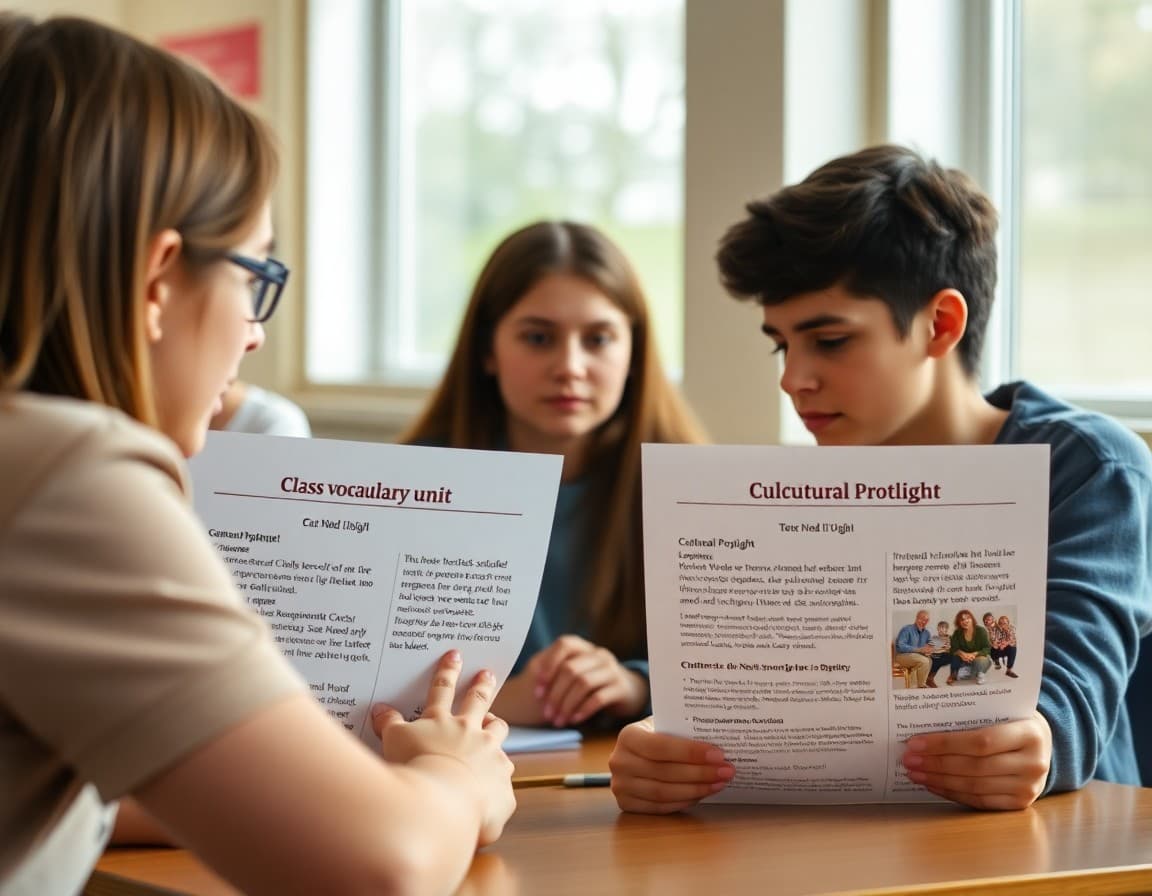
German is spoken in Germany, Austria, Switzerland, Liechtenstein, and Luxembourg, plus significant communities worldwide. Your cultural spotlight section can rotate through these regions. Swiss cultural and banking traditions in one newsletter, Austrian music and art history in another, German engineering and innovation in a third. These rotations give parents a richer picture of the German-speaking world than a single-country focus allows.
Vocabulary Samples in Every Newsletter
Include three to five German vocabulary words with English translations. German compound words are often fascinating: Schadenfreude (pleasure from another's misfortune), Weltanschauung (worldview), Torschlusspanik (the panic of doors closing, often used for life deadlines). These words give parents an authentic sense of what makes German linguistically interesting.
Close With a German Experience
One at-home activity per newsletter: watch a five-minute clip of a German cooking or travel show. Look up the German word for one concept your family discusses often. Ask your student to name three things in German while doing homework. Simple, specific, and achievable. That is the close that actually gets done.
Get one newsletter idea every week.
Free. For teachers. No spam.
Frequently asked questions
How do I explain German grammar to parents who have not studied it?
Use functional descriptions and everyday analogies. The German case system assigns different forms to words based on their grammatical role, similar to how English uses 'he' versus 'him' depending on whether the word is the subject or object. One analogy like this is worth three grammar charts.
What German cultural topics are most engaging for parent newsletters?
Oktoberfest vocabulary and traditions, German engineering and automotive history, the Berlin Wall and Cold War history, Christmas market traditions, and German contributions to science and philosophy. Choose topics that connect to your vocabulary units and that parents will find genuinely interesting.
Should German newsletters explain why German is worth learning?
Yes, once a year. German is spoken by 100 million people, is the most widely spoken native language in Europe, and is highly valued in engineering, science, business, and academic publishing. Parents who understand the career and academic value of German are more supportive of the program.
How often should German teachers send newsletters?
Monthly works well. Eight to ten newsletters per year keeps families informed without creating a communication burden. Add an extra send before any major assessment or cultural project.
What tool helps German teachers send professional newsletters?
Daystage is designed for teacher-to-family communication. You can create structured newsletters with vocabulary samples, cultural content, and assessment updates, then send to all German families at once.

Adi Ackerman
Author
Adi Ackerman is a former classroom teacher and curriculum writer with 8 years in K-8 schools. She writes about school communication, parent engagement, and what actually works in real classrooms.
More for Subject Teachers
Ready to send your first newsletter?
3 newsletters free. No credit card. First one ready in under 5 minutes.
Get started free