
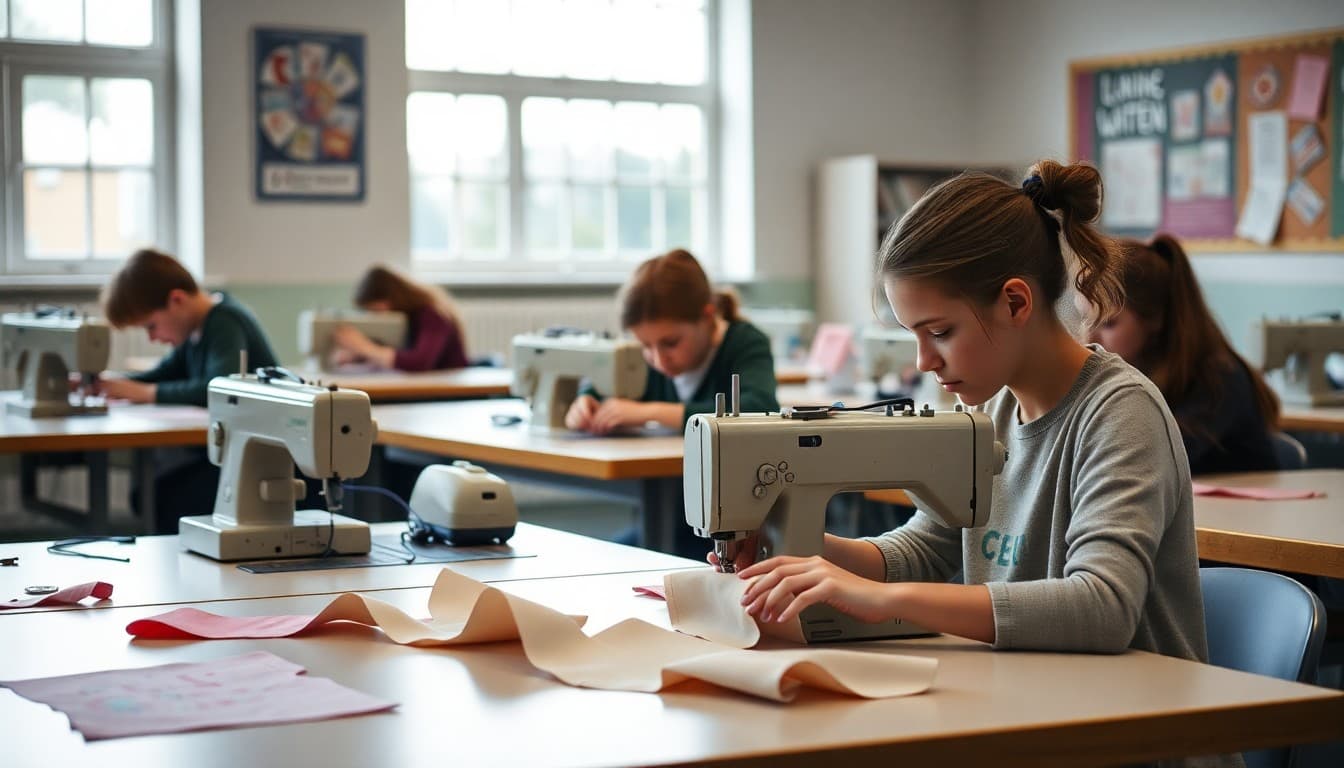
How to Write a Sewing and Textiles Newsletter to Parents
A sewing and textiles newsletter serves three purposes: it tells families what their student is making, it lists the supplies needed and when, and it explains the skills being developed. Parents who receive a clear newsletter before the unit begins come to school with the right materials and a realistic picture of what the project involves. Here is how to write that newsletter effectively.
Open With the Project
Lead with what students will make. Name the project, describe it in two or three sentences, and give the expected completion date. If there is a photo or sketch of a finished example, include it. Parents who can visualize the finished project are more engaged and more likely to help their student stay motivated through the longer or more tedious stages of construction.
Example: Students will construct a reversible tote bag over the next two weeks. The bag measures approximately 14 by 16 inches and features two contrasting fabric panels, reinforced handles, and a finished interior. When complete, the bag is fully functional and strong enough for regular use.
Skills Students Will Develop
Describe the specific sewing skills this project introduces or reinforces. For a beginner project, this might include threading the sewing machine, sewing a straight seam, backstitch at the beginning and end of a seam to secure it, pressing seams open with an iron, and turning a sewn piece right-side out. For an intermediate project, skills might include inserting a zipper, applying bias tape, or matching a pattern at seams.
Connect the skills to broader competencies. Sewing teaches spatial reasoning (how flat pattern pieces create three-dimensional forms), precision under constraint, planning (because cutting cannot be undone), and problem-solving when the fabric does not behave as expected.
Supply Request
This section needs to be specific. Include:
Fabric: [dimensions needed per student]. Recommended types: [cotton, quilting cotton, canvas, denim, etc.]. Avoid stretchy or slippery fabrics for beginners. Any color or pattern is fine. Can be found at [fabric store, craft store, or the fabric section at major retailers].
Thread: [specify if families should match their fabric or if the school provides thread].
The school provides: sewing machines, scissors, pins, needles, seam rippers, measuring tools, and ironing equipment.
Supplies needed by: [specific date].
Alternative: [if a student cannot source fabric, note whether the school has limited fabric available for purchase or loan].
Sewing Machine Safety
All students complete a machine safety orientation before using the sewing machine independently. Key rules: keep all fingers clear of the needle area and guide fabric from the sides and back of the presser foot, not directly in front of the needle. Always lower the presser foot before beginning to sew. Stop the machine before adjusting fabric position. Report any machine issues (skipping stitches, jammed thread, tension problems) to the teacher before attempting to fix them independently.
Students who demonstrate unsafe machine use are required to complete the safety orientation again before continuing.
Hand Sewing Versus Machine Sewing
This project [uses/introduces/combines] hand sewing and machine sewing. Hand sewing is used for [describe where: finishing edges, attaching closures, final details]. Machine sewing is used for [describe where: main seams, reinforced areas]. Both skill sets are part of the course because they serve different purposes in textile construction. Machine sewing is faster for long seams; hand sewing offers precision for detail work.
Project Timeline
Week 1: Cut fabric, begin main seams. End of week goal: main body of the project sewn and pressed.
Week 2: Complete construction, add finishing details, final pressing. Project due [date].
Students who fall behind in class should plan to use free periods or time before or after school to catch up. The project cannot be rushed in the final session without affecting quality.
Bringing Projects Home
If students bring projects home to work on, they will need access to a sewing machine and basic supplies. If a home machine is not available, students are welcome to use classroom machines during [free period, before school, after school] by arrangement. All machine use outside of class should be supervised or only after the student has demonstrated confident machine operation in class.
Contact
Questions about supplies, the project, or the class in general are welcome. Reach me at [email] or during [office hours]. I am happy to show samples of finished projects to families who want to see what the finished piece looks like before purchasing fabric.
Get one newsletter idea every week.
Free. For teachers. No spam.
Frequently asked questions
What supply information is most important to include in a sewing unit newsletter?
Be specific about what families need to provide versus what the school provides. For fabric: name the minimum dimensions, acceptable fabric types (cotton works well for beginners; stretchy fabrics like jersey are harder to sew), and color restrictions if any apply. For thread: note whether families should match to their fabric choice or whether the school provides thread. Give the date supplies are needed and name an alternative if the specific item is unavailable. Vague supply requests lead to the wrong materials arriving on the wrong day.
How do FCS teachers explain the educational value of sewing to parents who see it as a hobby?
Sewing develops precision and patience, spatial reasoning (pattern reading involves understanding how flat pieces create three-dimensional forms), problem-solving under constraint, and fine motor control. It also teaches resource management: fabric is a material with a cost, and a cut piece cannot be uncut. Students who learn to plan before they act, measure twice and cut once, develop habits of careful decision-making that transfer to every field requiring attention to detail.
What safety information belongs in a sewing unit newsletter?
Sewing machine safety is the most important: needles move at high speed and can cause injury if hands are in the path of the needle. Students are taught to keep fingers clear of the needle area and to use a seam guide rather than guiding fabric with fingers directly adjacent to the needle. Scissors are always carried with the point down and closed. Pins are stored in a pincushion, not loose in fabric or left on the table. Brief, specific safety notes reassure parents and reinforce student habits.
Should sewing unit newsletters include instructions parents can use to help their student at home?
Yes, if students are expected to complete any work at home. Describe the specific techniques covered in class (hand stitching, machine sewing, pressing with an iron) and note which ones require supervision for students working independently. If students will bring projects home, include a brief note on pressing (ironing) technique if that is part of the project. Parents who know what their student is practicing can help more effectively.
What tool works best for subject teacher newsletters?
Daystage is a good fit for sewing and textiles newsletters because you can include project images, clear supply lists, and skill descriptions in one clean send to all families. Building the template once and updating the project and supply details for each unit saves time across the year.

Adi Ackerman
Author
Adi Ackerman is a former classroom teacher and curriculum writer with 8 years in K-8 schools. She writes about school communication, parent engagement, and what actually works in real classrooms.
More for Subject Teachers
Ready to send your first newsletter?
3 newsletters free. No credit card. First one ready in under 5 minutes.
Get started free