

How to Write a Lab Safety Newsletter to Parents
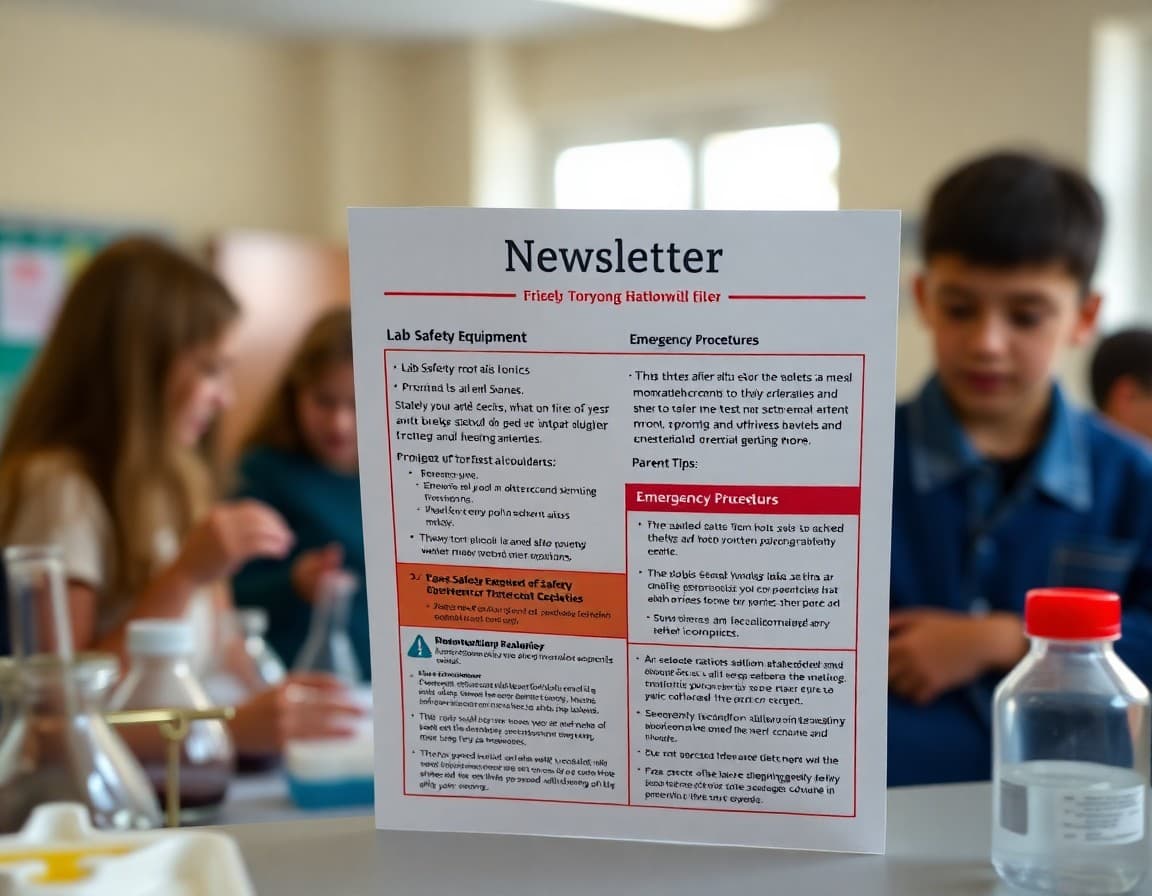
A lab safety newsletter sent before students begin hands-on science work accomplishes two things: it gives families the information they need to feel confident about what their child is doing in class, and it reinforces for students that safety is a priority communicated not just in class but to their entire family. Here is how to write one that does both.
Why This Newsletter Matters
Students often describe lab activities to their families in fragments: "we used chemicals," "there was a fire," "something turned colors." Without context, these descriptions can cause unnecessary concern. A lab safety newsletter gives families the full picture before the lab work begins, which means the partial accounts students give at home are understood correctly.
It also reinforces the safety habits you are building in class. A student who knows their parent has read the safety rules takes those rules more seriously.
General Lab Safety Expectations
Every student in the science lab is expected to follow these rules at all times:
Wear safety goggles whenever chemicals, heat, or glassware are in use. Goggles stay on until the teacher signals the lab is complete and all materials are put away.
Never taste, touch, or smell any chemical directly. If directed to smell a substance, use the wafting technique: fan the odor toward your nose from a distance.
Tie back long hair and secure loose clothing before working with open flames or chemicals.
Report all accidents, spills, and injuries to the teacher immediately. Do not attempt to clean up a chemical spill independently.
Read all procedures before starting. Never begin a lab step without reading and understanding what comes before and after it.
Safety Equipment in the Lab
The lab is equipped with the following safety resources. All students know their location. Please ask your student to describe where each is:
Eyewash station: used immediately for any chemical contact with the eyes. Flush for a minimum of 15 minutes. Safety shower: available for large chemical spills on skin or clothing. Fire extinguisher: located [specific location]. Fire blanket: located [specific location]. First aid kit: located [specific location]. Emergency exits: located [description].
What Students Will Wear and Bring
Safety goggles are provided by the school. Students should wear closed-toe shoes on all lab days. Open-toed shoes are not permitted in the lab. Long hair must be tied back. If a student wears contact lenses, please notify the teacher, as some chemicals can be hazardous if vapors contact lenses. Gloves will be provided for any lab requiring them.
Chemicals Used This Unit
[List specific chemicals with brief descriptions. Example: Hydrochloric acid (dilute, 0.1M): used in acid-base reactions. Causes skin irritation on contact; students wear gloves and goggles. Sodium bicarbonate: common baking soda; used to neutralize acids. No significant hazard. Phenolphthalein indicator solution: used to detect pH changes; turns pink in basic solutions. Harmless at concentrations used in class.]
If you have questions about any specific chemical, please reach out before the lab date.
Emergency Procedures
Chemical on skin: rinse immediately with large amounts of water for 15 minutes. Remove any contaminated clothing if necessary. Notify the teacher.
Chemical in eyes: go immediately to the eyewash station and rinse for 15 minutes. Notify the teacher immediately.
Fire: evacuate the lab using the nearest exit. Do not attempt to control any fire independently. Meet at [assembly location].
Broken glassware: notify the teacher. Do not attempt to pick up broken glass independently. The teacher or custodial staff will handle disposal.
How Families Can Reinforce Lab Safety at Home
Ask your student to walk you through the safety rules for their next lab. If they can explain the rules and where the safety equipment is located, they are prepared. When cooking or cleaning at home, point out when household chemicals should not be mixed and connect the habit of reading warnings on labels to what students practice in class. Safety thinking is a transferable skill.
Questions and Accommodations
If your student has any medical conditions, severe allergies, or sensory sensitivities that may affect lab participation, please contact me before the lab unit begins so we can discuss appropriate accommodations. Every student should be able to participate in lab work safely. Reach me at [email] or during office hours at [days and times].
Get one newsletter idea every week.
Free. For teachers. No spam.
Frequently asked questions
When should science teachers send a lab safety newsletter to parents?
Send it at the start of the year before any lab work begins, and again at the start of each new unit that introduces new materials or procedures. Parents who know what safety protocols are in place before their child's first lab experience are more confident and less likely to contact you with concern after hearing a general description of the lab at the dinner table. Proactive communication consistently prevents reactive worry.
What lab safety rules are most important to communicate to families?
The most important rules to communicate are the ones students are most likely to tell their family about or most likely to violate: always wear goggles, never taste or touch chemicals without instruction, know the location of the eyewash station and fire extinguisher, report all accidents immediately, and follow the teacher's instructions before starting any procedure. These five rules cover the most common safety scenarios and are memorable enough for students to repeat at home.
How do teachers handle lab safety newsletters when parents are concerned about specific chemicals?
Be transparent. List the chemicals used in upcoming labs with brief descriptions of why they are used and what safety measures apply. If a chemical has a strong odor or requires gloves, say so. Most chemicals used in high school labs are considerably less hazardous than what families use at home (bleach, oven cleaner, drain unclogger). Naming the chemicals and their associated precautions is more reassuring than being vague.
What should lab safety newsletters say about students who need accommodations?
Invite families with students who have relevant medical conditions, severe allergies, asthma, or sensory sensitivities to reach out before the lab unit begins. Note that accommodations are available and that you want to ensure every student can participate safely. Early communication prevents last-minute adjustments that are harder to manage on lab day.
What tool works best for subject teacher newsletters?
Daystage works well for lab safety newsletters because you can organize safety rules in clear lists, include images of safety equipment, and send to all families at once. A lab safety newsletter built once can be reused as a template at the start of each new school year.

Adi Ackerman
Author
Adi Ackerman is a former classroom teacher and curriculum writer with 8 years in K-8 schools. She writes about school communication, parent engagement, and what actually works in real classrooms.
More for Subject Teachers
Ready to send your first newsletter?
3 newsletters free. No credit card. First one ready in under 5 minutes.
Get started free