

How to Write a Lab Report Newsletter to Parents
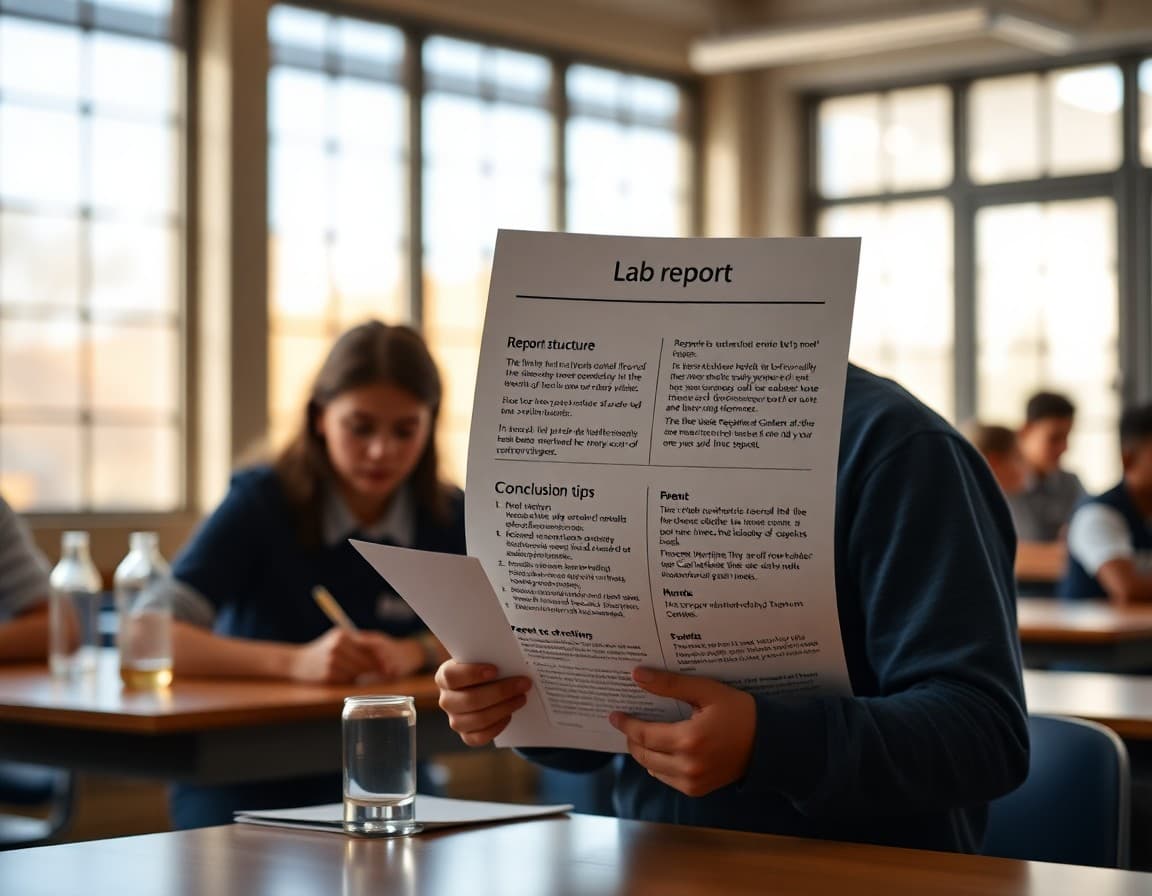
Lab reports are one of the most academically demanding writing tasks in science class, and they are also the most misunderstood by families. Parents often wonder why a lab that took 45 minutes produces a report that takes several hours to complete. A newsletter explaining the purpose and structure of lab reports helps families support the work rather than feeling frustrated by the time it takes.
Why Lab Reports Are Important
A lab report is a scientific communication document. Its purpose is not to record what happened during a lab. Its purpose is to demonstrate that the student understood why the experiment was conducted, what the data means, and what conclusions can be drawn from it. Scientists communicate their findings through exactly this format, and learning to write clearly and precisely in a scientific context is a skill that transfers to any career involving data and reasoning.
The Structure of a Lab Report
Most lab reports include the same major sections, though the specific requirements vary by class level and assignment.
Title and date: a clear, specific title (not just the lab name from the textbook) and the date the lab was conducted.
Purpose or question: the scientific question the lab is designed to answer. Written as a question or a statement of what students are investigating.
Hypothesis: a prediction of what will happen and why, based on prior knowledge. Written in an if-then format: if X is done, then Y will occur because Z.
Materials: a complete list of equipment and substances used.
Procedure: the steps followed, written clearly enough that someone else could replicate the experiment.
Observations and data: direct, objective records of what was observed and measured during the lab. Data tables and graphs go here.
Analysis: interpretation of the data. What patterns emerged? What do the numbers mean? How does the data address the original question?
Conclusion: a summary of what was learned, whether the hypothesis was supported, the significance of the results, and the sources of error that may have affected the outcome.
Observations Versus Inferences: A Critical Distinction
One of the most important things students learn in lab report writing is the difference between an observation and an inference. An observation is a directly measured or perceived piece of data: the temperature rose 4 degrees Celsius. An inference is an interpretation: the temperature increase indicates an exothermic reaction. Both belong in a lab report, but they go in different sections. Students who conflate them score lower on this section consistently.
Writing the Conclusion
The conclusion is the most intellectually demanding part of the lab report and the section students most often struggle with. A strong conclusion does four things: restates the purpose, summarizes the key data, states whether the hypothesis was supported (with specific data as evidence), and identifies at least one source of experimental error and explains how it might have affected the results.
A weak conclusion simply says "the hypothesis was supported" or "the experiment worked." A strong conclusion explains why, with data.
Sources of Error
Every experiment has sources of error. Students learn to identify them honestly without treating error as a sign of failure. Sources of error might include measurement imprecision, timing inconsistencies, equipment limitations, or variations in technique between lab partners. Identifying error sources shows scientific maturity. Claiming there were no errors shows the opposite.
How Families Can Help Without Writing the Report
Ask your student to explain the lab to you: what were they trying to find out, what did they do, what happened, and what does it mean? If they can answer those questions in plain language, they have the material for a complete lab report. If they cannot explain what the data means, they need to go back to the data before writing the analysis section. Listening and asking questions is the most useful support you can offer.
Grading and Deadlines
Lab reports are due [timeframe] after the lab is completed. Reports submitted late receive [specific penalty]. The rubric used to grade lab reports is attached to every assignment. Students who read the rubric before writing consistently score higher than those who address it after completing a draft. If your student has questions about the rubric requirements, encourage them to ask before the deadline rather than after.
Get one newsletter idea every week.
Free. For teachers. No spam.
Frequently asked questions
How do science teachers explain the purpose of lab reports to parents?
Lab reports teach students to communicate science in a structured, professional format. A lab report is not just a record of what happened; it is a scientific argument. The student observed something, collected data to explain it, analyzed that data, and drew a conclusion supported by evidence. Writing that process clearly and precisely is a skill that transfers to every professional field that involves data, reasoning, and written communication.
Why do lab reports take so long to write? Parents often wonder why a one-hour lab produces a multi-page report.
The lab itself is only the data collection phase. The lab report requires students to contextualize the experiment (what prior knowledge applies), analyze the data rather than just recording it, address sources of error, explain whether the results supported or contradicted the hypothesis, and connect the findings to broader scientific principles. That analytical work takes considerably more time than the lab itself. A thorough report is proof that students understood what they observed, not just that they followed procedure.
What is the most common error students make on lab reports?
Confusing observation and inference. An observation is something directly measured or seen: 'the solution turned from colorless to pink.' An inference is an interpretation of that observation: 'the pink color indicates a basic pH.' Many students write inferences in their observations section, which conflates data with interpretation. Keeping observations purely descriptive and saving interpretation for the analysis and conclusion is a distinction students build with practice.
Should parents help their student write the lab report conclusion?
Parents can ask good questions without writing the conclusion. Ask your student what they were trying to find out, what the data showed, and whether that matched their prediction. If they can explain that to you clearly, they have the material for a good conclusion. If they cannot, they need to go back to their data before writing. Parents help most by listening and asking questions, not by suggesting language.
What tool works best for subject teacher newsletters?
Daystage works well for science newsletters covering writing skills because the platform handles structured text cleanly. A newsletter with a clear section-by-section breakdown of lab report components, formatted as a guide families can reference, is easy to build and send through Daystage.

Adi Ackerman
Author
Adi Ackerman is a former classroom teacher and curriculum writer with 8 years in K-8 schools. She writes about school communication, parent engagement, and what actually works in real classrooms.
More for Subject Teachers
Ready to send your first newsletter?
3 newsletters free. No credit card. First one ready in under 5 minutes.
Get started free