
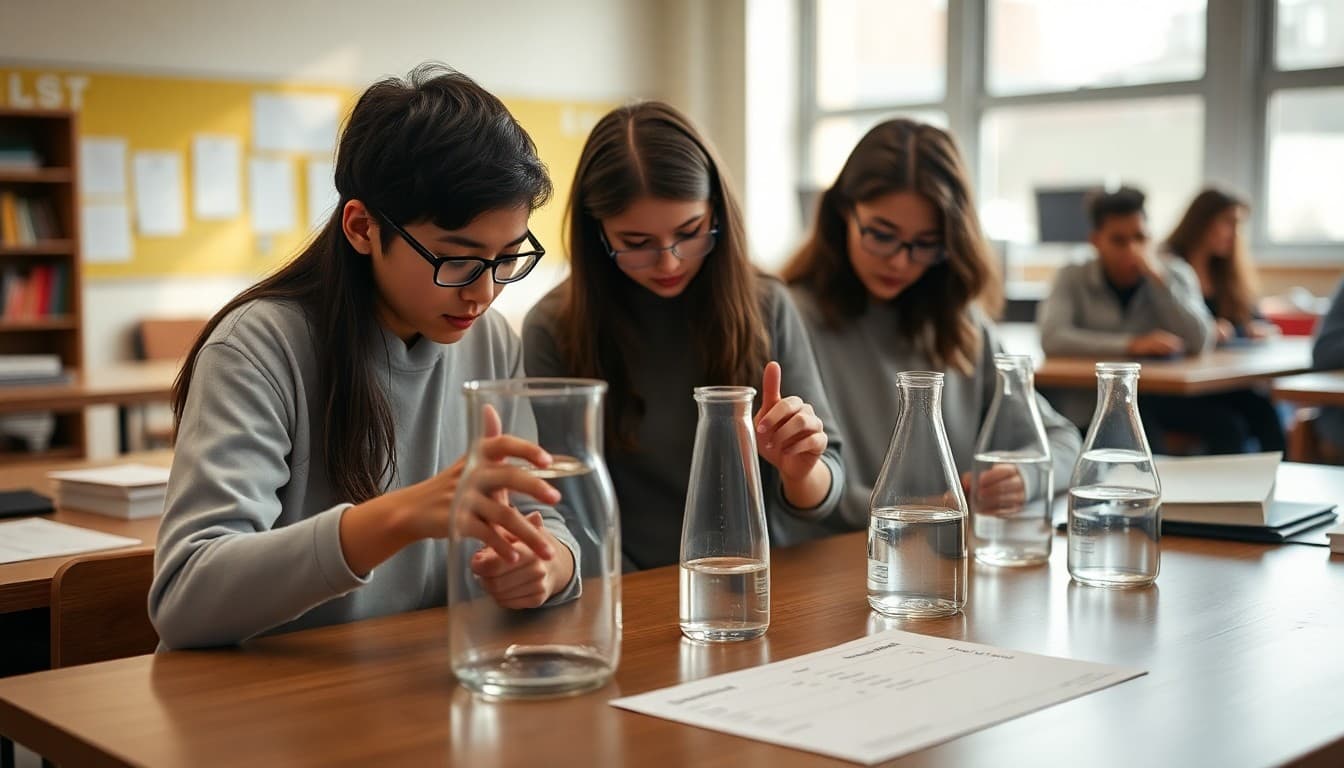
How to Write an Experimental Design Newsletter to Parents

Experimental design is where students learn to think like scientists. Before they can trust their data, they need to know how to set up an experiment that controls for confounding factors and isolates the variable they are actually testing. This unit is foundational to all the lab work that follows, and a parent newsletter that explains its purpose helps families understand why students spend so much time on what might look like planning rather than actual science.
Why Experimental Design Is a Unit on Its Own
A poorly designed experiment produces data that cannot be interpreted. If you want to know whether a new fertilizer helps plants grow, but you also give the fertilized plants more water, more light, and bigger pots, you cannot conclude that the fertilizer caused any growth difference. Too many variables changed at once. Learning to design an experiment properly means learning to isolate the one factor you are actually testing. This is a skill, and it requires practice.
The Scientific Method: Where Design Fits
Experimental design is the planning phase of the scientific method. Before any data is collected, a scientist must: ask a clear question, review what is already known, form a hypothesis (a testable prediction), design an experiment that will test the hypothesis cleanly, and identify how data will be collected and analyzed. All of this happens before the first measurement. Students who skip this phase collect data they cannot interpret.
Variables: The Most Important Concept in This Unit
Every experiment involves variables: factors that can change or be changed. Students learn to identify and control three types:
Independent variable: the variable the experimenter changes intentionally. This is the suspected cause. Example: the amount of fertilizer given to plants.
Dependent variable: the variable that is measured as an outcome. This is the suspected effect. Example: the height of the plant after 30 days.
Controlled variables (constants): everything else that could affect the outcome, kept the same across all groups. Example: the type of plant, the amount of water, the amount of sunlight, the size of the pot.
If a controlled variable changes between the experimental and control group, the experiment is compromised. Students learn to list their constants explicitly before collecting data.
Hypothesis Writing
A hypothesis is a specific, testable prediction. It is not a guess. It is a reasoned prediction based on prior knowledge, written in a form that could be proven wrong by data. The standard format students practice is: if [the independent variable is changed in this way], then [the dependent variable will change in this way] because [scientific reasoning].
A hypothesis that cannot be disproven (because it is too vague or too broad) is not a scientific hypothesis. Students practice writing hypotheses that are clear enough to test.
Control Groups and Why They Matter
A control group receives either no treatment or the standard treatment. It provides a baseline against which experimental results can be compared. Without a control, there is no way to know whether the observed result was caused by the independent variable or by something else.
Example: in a medication trial, participants who receive a placebo are the control group. If both groups improve at the same rate, the medication is not responsible for the improvement. The control group makes the comparison meaningful.
A Home Experiment to Try Together
Design a simple experiment as a family this week. Some options: Does the amount of light affect how quickly a plant leans toward a window? Does temperature affect how fast sugar dissolves in water? Does the brand of paper towel affect how much liquid it absorbs? Walk through the steps together: what is the question, what is the hypothesis, what is the independent variable, what will you keep constant, and how will you measure the outcome? Running even a simple version of the experiment makes the vocabulary concrete and memorable.
Common Mistakes to Avoid
Three mistakes show up most often in student experimental designs: changing more than one variable at a time (which makes results uninterpretable), forgetting to include a control group, and writing a hypothesis that is not falsifiable. If your student is designing their own experiment for a class project, ask them to walk you through their design and check for these three issues before they begin collecting data.
Upcoming Assessment and Project
The experimental design unit assessment requires students to design a complete experiment in response to a prompt, identify all variables, write a testable hypothesis, and explain why each component of their design is necessary. Some students will also conduct their designed experiment as a unit project. Dates and further requirements will be shared [timeframe].
Get one newsletter idea every week.
Free. For teachers. No spam.
Frequently asked questions
Why do science teachers spend so much time on experimental design?
A well-designed experiment produces data that actually answers the question being asked. A poorly designed experiment produces data that could mean many different things, none of them conclusive. Learning to design experiments carefully is learning to think scientifically: to isolate variables, control for confounding factors, and produce results that can be replicated and trusted. These skills matter not just in science class but in any situation where someone needs to figure out what is actually causing what.
What is the difference between an independent variable and a dependent variable?
The independent variable is the one the experimenter changes on purpose. The dependent variable is the one that responds to that change and is measured. If you are testing whether a plant grows taller when given more water, the amount of water is the independent variable (what you control and vary) and the plant height is the dependent variable (what you observe and measure as a result). Students often remember this as: the independent variable is the cause and the dependent variable is the effect.
Why is a control group important in an experiment?
A control group is a baseline. It receives no experimental treatment (or the standard treatment) so that results from the experimental group can be compared to something. Without a control, you cannot know whether the result you observed was caused by your independent variable or by some other factor. A plant experiment with watered and unwatered groups but no constant-water control cannot distinguish between the effect of water and the effect of day-length variation or temperature.
How can parents help their student practice experimental design at home?
The best home activity is to design a simple experiment together. What food does the dog prefer? Does temperature affect how quickly sugar dissolves? Does fertilizer help the houseplant? Walk through the steps: what is the question, what is the hypothesis, what variable will you change, what will you keep the same, how will you measure the result? The kitchen and garden offer perfectly good experimental systems for practicing this thinking.
What tool works best for subject teacher newsletters?
Daystage works well for science newsletters about scientific thinking skills. You can structure the newsletter with clear sections for each concept, include a simple experiment families can try at home, and send to all families at once in a clean, consistent format.

Adi Ackerman
Author
Adi Ackerman is a former classroom teacher and curriculum writer with 8 years in K-8 schools. She writes about school communication, parent engagement, and what actually works in real classrooms.
More for Subject Teachers
Ready to send your first newsletter?
3 newsletters free. No credit card. First one ready in under 5 minutes.
Get started free