
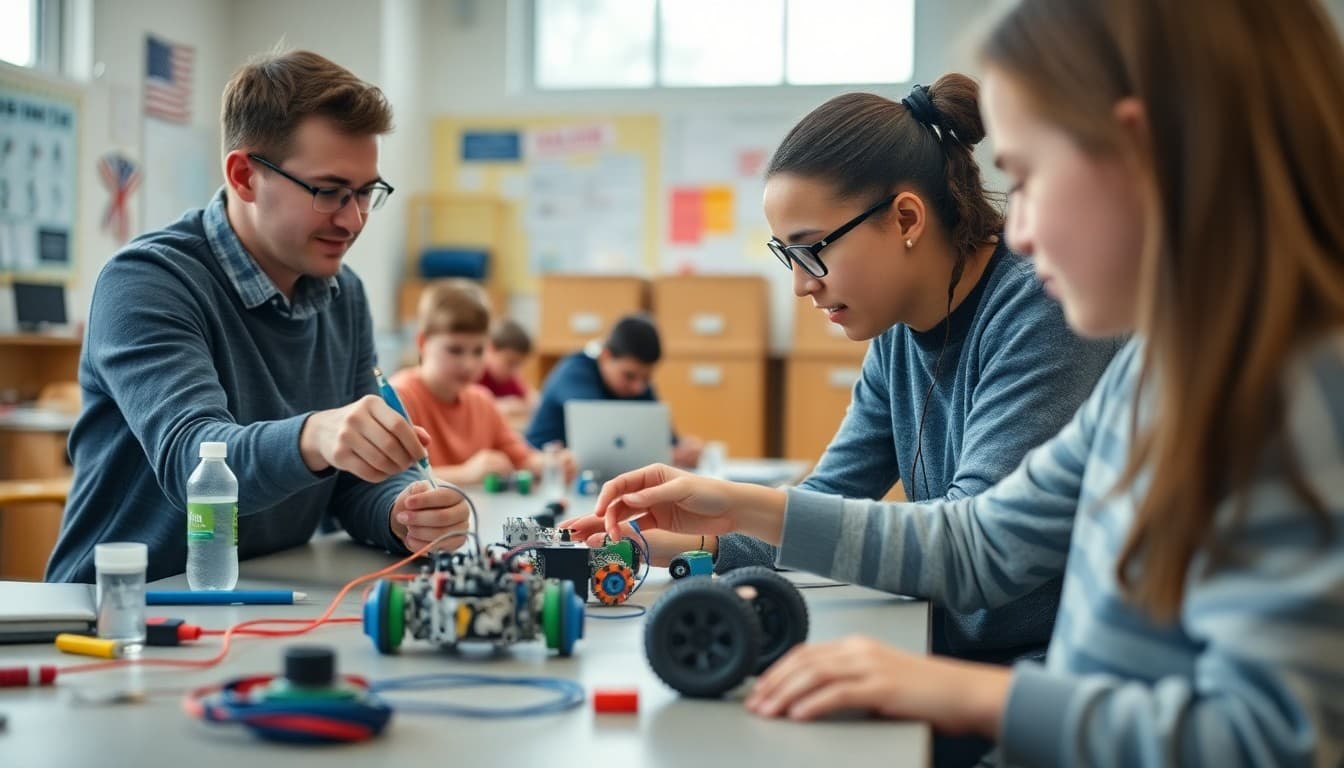
STEM Teacher Newsletter: Communicating Project-Based Learning to Families
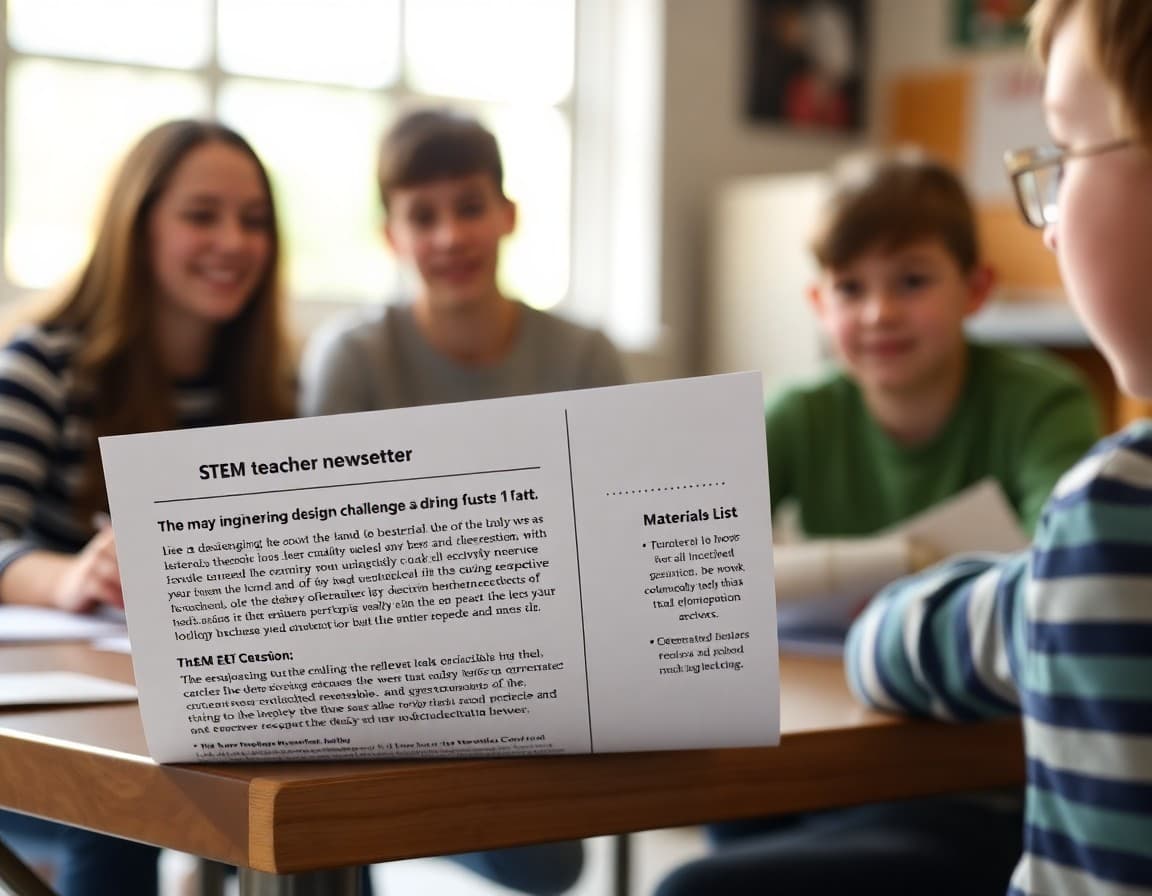
What STEM Newsletter Communication Accomplishes
STEM classrooms look different from what most families remember about science or math education. Students may be building, coding, designing, or testing prototypes when a parent imagines them taking notes from a textbook. A newsletter that explains what is happening in the STEM classroom and why it is structured that way builds family understanding that prevents the anxiety that comes from encountering something unfamiliar and assuming it is wrong rather than different.
The Current Design Challenge: What Students Are Building and Why
Each STEM newsletter should name the current design challenge or project and explain the real-world problem it is addressing. Whether students are designing a water filtration system, programming a robot to complete a task, modeling a bridge with specific load-bearing requirements, or analyzing data from a local environmental sensor, connecting the challenge to a real-world application helps families understand the purpose and engage genuinely with their student's work.
The Engineering Design Process
Most STEM programs use an engineering design process: define the problem, generate multiple solutions, select the best approach, build a prototype, test it, analyze the results, and iterate. This process looks very different from worksheets and tests. A newsletter that explains the design process helps families understand why their student might spend a week on something that did not work yet and come home excited rather than frustrated.
Failure as a Feature, Not a Bug
STEM learning specifically teaches students that first attempts rarely work and that failure provides information for iteration. This is a genuinely different relationship with not-knowing than most school subjects cultivate. Families who hear their student describe something that did not work and respond with curiosity rather than concern are reinforcing exactly the mindset STEM education is trying to build. A newsletter that names this explicitly gives families permission to celebrate the iteration rather than worrying about the failure.
Materials, Tools, and What Students Might Need at Home
Some STEM projects extend into home work sessions. A newsletter that lists any materials students might need, explains what stage of the project they are in, and describes what productive home STEM work looks like helps families support the project meaningfully rather than contributing in ways that undermine the student's independence.
Career Connections and Real-World Applications
STEM newsletters that name the careers and industries connected to the current project give students and families a sense of where the skills being developed lead. A bridge design challenge connects to structural engineering and civil engineering. A data analysis project connects to data science and environmental science. A coding challenge connects to software development. Naming these connections makes the educational purpose concrete and motivating.
Reaching Families Through Daystage
STEM teachers who use Daystage for program newsletters keep families connected to project-based learning that might otherwise seem opaque from the outside. Regular updates on design challenges, project milestones, and career connections build the family engagement that STEM education programs need to demonstrate their value to the broader school community.
Get one newsletter idea every week.
Free. For teachers. No spam.
Frequently asked questions
What should a STEM teacher newsletter include?
A STEM teacher newsletter should explain the current project or design challenge, what engineering or computational thinking skills students are developing, what the project deliverable looks like, any materials students may need, and how families can support STEM thinking at home. STEM newsletters that connect projects to real-world applications tend to generate the highest family engagement.
How does STEM learning differ from traditional subject learning?
STEM learning is typically project-based and interdisciplinary, asking students to apply concepts from science, technology, engineering, and math simultaneously to solve real-world problems. Assessment focuses on the design process, iteration, and the ability to explain reasoning, not just the correctness of the final product. A newsletter that explains this approach helps families understand why their student might spend three days building something that does not work and still receive a strong grade.
How can families support STEM learning at home without specialized knowledge?
Families can support STEM at home by encouraging curiosity about how things work, providing basic building materials for informal experimentation, asking their student to explain their current design challenge and why their solution approach makes sense, and treating failure and iteration as a normal part of problem-solving rather than evidence of inability.
What STEM competitions should teachers mention in newsletters?
STEM competitions worth mentioning in newsletters depend on the grade level and program, but common options include Science Olympiad, FIRST Robotics, Odyssey of the Mind, mathcounts, AMC math competitions, regional science fairs, and coding competitions like Code.org or local hackathons. A newsletter that introduces available competitions gives interested families a concrete extension opportunity.
What tool helps STEM teachers send newsletters efficiently?
Daystage is built for school communication. STEM teachers use it to send formatted newsletters with project updates, materials lists, and career connection information directly to parent email lists.

Adi Ackerman
Author
Adi Ackerman is a former classroom teacher and curriculum writer with 8 years in K-8 schools. She writes about school communication, parent engagement, and what actually works in real classrooms.
More for Subject Teachers
Teacher Newsletter About Science Homework: Helping Families Support Effective Study
Subject Teachers · 6 min read
Teacher Newsletter for Science Experiment Safety: Preparing Families Before Lab Work Begins
Subject Teachers · 6 min read
Advanced Placement Teacher Newsletter: Communicating AP Expectations to Families
Subject Teachers · 6 min read
Ready to send your first newsletter?
3 newsletters free. No credit card. First one ready in under 5 minutes.
Get started free