

Social Studies Teacher Newsletter: How to Communicate Curriculum Changes
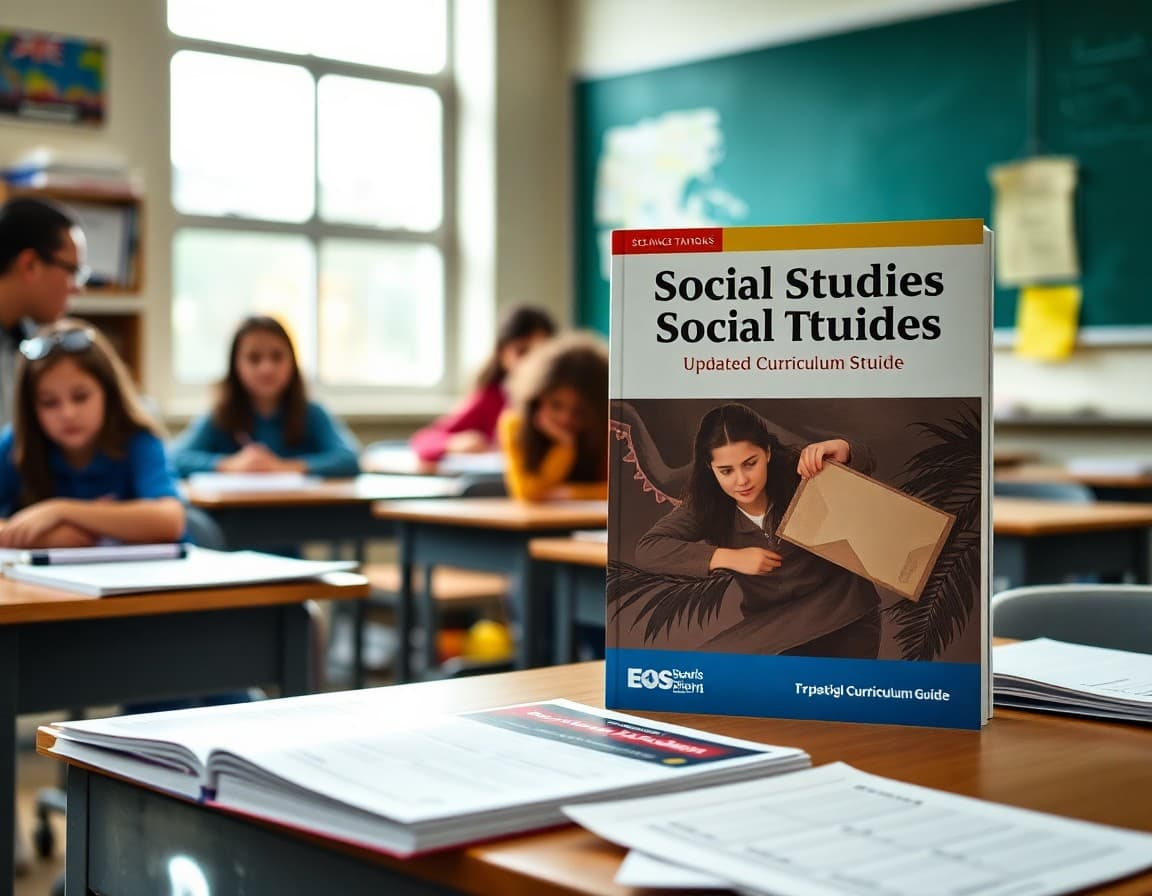
Social studies curriculum changes generate more community discussion than curriculum changes in most other subjects because the content is directly political. History, civics, and geography are subjects that families have opinions about. A clear, transparent newsletter that explains what changed, why it changed, and what it means for students can prevent confusion from becoming conflict.
Name the change and its source in the first paragraph
Families who learn about a curriculum change through their student, before they hear from the teacher, often receive an incomplete or distorted version of the information. Get ahead of it. "Starting this semester, the eighth grade social studies curriculum is adding a three-week unit on Reconstruction and its aftermath. This change comes from the state's updated social studies framework, which requires more in-depth coverage of Reconstruction than our previous curriculum included. I want to give you a brief overview of what students will study before we begin."
If the change comes from the district rather than a teacher decision, say so explicitly. Families who blame the classroom teacher for a district mandate are easier to redirect when they understand where the decision came from.
Explain what is changing and what is staying the same
Families sometimes hear "curriculum change" and assume the entire course is different. Be specific about the scope. "What is changing: we are adding a three-week Reconstruction unit in October that was not previously in the curriculum. We are extending the Civil War unit from two weeks to three to provide context. What is not changing: the full course still covers US history from pre-Columbian societies through the present. The essay format, grading breakdown, and assessment schedule are the same as last year."
This level of detail prevents the alarm that comes when families assume more has changed than actually has.
Describe the new content in student-benefit terms
Every curriculum change should be explained in terms of what students gain from it, not in terms of administrative compliance. "The Reconstruction unit covers one of the most consequential periods in American history. Students will examine what Reconstruction was actually trying to accomplish, what succeeded, and what conditions led to its collapse, including a systematic analysis of the rise of Jim Crow laws and the political and legal mechanisms used to undermine Black civil rights after the Civil War. This context is essential for understanding the civil rights movement fifty years later and for understanding contemporary debates about race, voting, and political power in the United States."
Families who understand why the content matters are more likely to support it than families who just know that something new is being taught.
Address content sensitivity before families ask
Here is a newsletter section that handles sensitive content proactively:
"A note on the content: Reconstruction and its aftermath involve difficult history, including documented violence against Black citizens, legal and political suppression of civil rights, and the reconstruction of systems of racial hierarchy after the Civil War. We approach this content with the same rigor we apply to any primary source-based unit: students examine the documents, evaluate the evidence, and construct arguments. They will not be shielded from what the historical record shows, but they will engage with it analytically rather than passively. If you have questions about specific materials we will use, I am happy to share the unit materials packet before we begin."
Explain how the new content connects to what students already know
For students who are mid-course when a change is introduced: "You can help your student see the connection by asking them what they already know about the Civil War and then asking what they know about what happened after. Most students know the broad Civil War story but very little about Reconstruction. That gap is exactly what this unit addresses."
Families who understand how a curriculum change builds on existing knowledge feel more confident about it than families who see it as an insertion.
Give families a way to review the materials if they want to
Transparency is a strong tool when curriculum changes generate community concern. "The full unit materials, including the primary source packet, the essay prompts, and the rubric, are available to any family who wants to review them before we begin. Email me and I will send you the PDF." Most families who know they can see the materials will not ask to see them. The offer itself is what matters.
Close with a clear process for families who have further concerns
Name the process and stick to it. "If you have concerns about specific content in this unit, please email me first. Most concerns can be addressed in a conversation. If after that conversation you still have concerns, the next step is a meeting with the department head, and then with the principal if needed. I prefer to address concerns directly rather than having them escalate unnecessarily, and I am always open to that conversation." A clear process reduces the situations where families go around the teacher before the teacher has had a chance to address the concern.
Get one newsletter idea every week.
Free. For teachers. No spam.
Frequently asked questions
My district updated the state history standards. How do I explain this to families?
Translate the standards change into student experience. 'The state updated the social studies standards this year. For our eighth grade US History course, the biggest change is that we now cover Reconstruction in much greater depth than in previous years, including the political, economic, and social dimensions of the period and how Reconstruction's collapse shaped the century that followed. The unit is now three weeks instead of one, and includes several primary sources that were not part of the curriculum before.' Families do not need to know what the standards document says. They need to know what their student will study.
The school adopted a new textbook. What should I tell families?
Name the new textbook, describe what is different about it, and explain whether students need to purchase anything or if the school provides it. 'This year we are using a new textbook, Discovering Our Past: A History of the United States (McGraw-Hill, 2024 edition), which replaces the 2018 edition we used previously. The new edition includes updated primary source excerpts and a new chapter on the post-9/11 period. The textbook stays in the classroom. Students do not bring it home. All homework assignments use printed packets or the online portal, not the physical textbook.' Clear information about a new book prevents families from buying the wrong edition.
The district eliminated a social studies course my students were expecting to take. How do I communicate this?
Be transparent about what happened and what the alternatives are. 'The district has discontinued the standalone AP Human Geography course for next year. Students who were planning to take it can now take AP World History: Modern, which covers overlapping content with an additional focus on historical analysis skills. Students who were specifically interested in geographic frameworks should email me for information about the IB Geography option or the honors-level geographic literacy elective that is being added.' Give families a real path forward rather than just delivering the bad news.
A community group objects to new curriculum content in our social studies course. How do I address this?
Be factual, direct, and brief. 'You may have seen community discussion about the social studies curriculum this year. Our course follows the state-approved standards and district curriculum. We teach students to analyze primary sources, evaluate evidence, and construct arguments, which means students encounter multiple perspectives on historical events. If you have specific questions about what your student is learning and why, I welcome a conversation. My email is [address]. I am also happy to share the full unit materials with any family who wants to review them.'
What platform makes it easy to communicate curriculum changes to social studies families?
Daystage lets you draft a clear, organized curriculum change newsletter, include any attachments like a new unit overview or FAQ document, and send to all families at once. For sensitive curriculum changes that have generated community discussion, having a record of exactly what you communicated and when is valuable if the situation escalates to an administrator or board conversation. Daystage keeps your newsletters organized and searchable so you can reference them later.

Adi Ackerman
Author
Adi Ackerman is a former classroom teacher and curriculum writer with 8 years in K-8 schools. She writes about school communication, parent engagement, and what actually works in real classrooms.
More for Subject Teachers
Ready to send your first newsletter?
3 newsletters free. No credit card. First one ready in under 5 minutes.
Get started free