

Social Studies Teacher Newsletter: Setting Up the Year
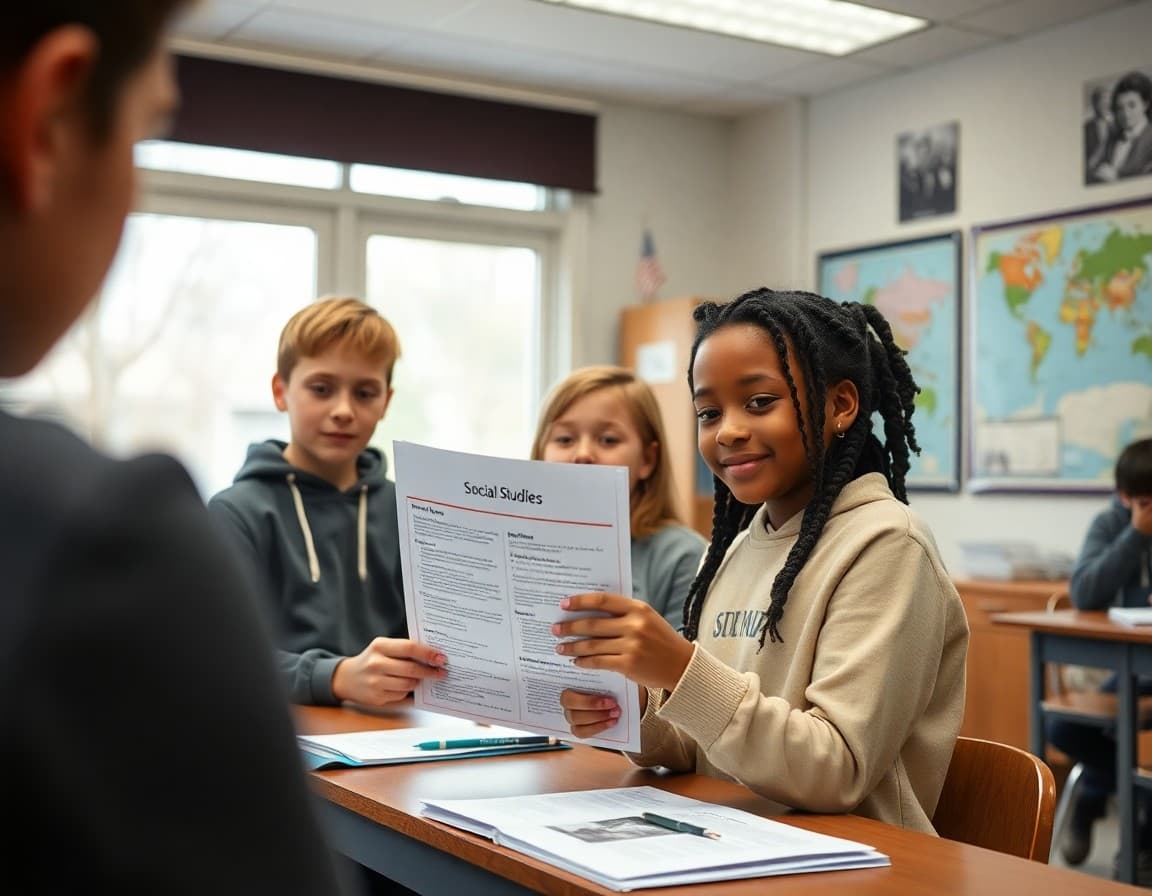
The beginning-of-year newsletter from a social studies teacher has one job that other subjects do not face: convincing families that this is a class with intellectual substance, not just a class where students memorize dates and fill in timelines. Families often underestimate social studies because their own experiences with it were limited. Your first newsletter reframes the subject and sets the tone for a year of real analytical work.
Introduce yourself with a specific belief about why history matters now
A teacher biography is less interesting than a statement of purpose. "I teach social studies because I believe students who understand how past societies made decisions, and why some of those decisions turned out to be catastrophic and others transformative, are better equipped to participate in the decisions their own society is making right now. That is not an abstract belief. It is the reason every unit in this course connects to a question that matters today." That kind of opener gives families a reason to care about the class.
If you have a particular area of expertise, mention it: "I have spent the past eight summers teaching at a civil rights history institute in Alabama, and that experience shapes how I approach every unit on American history in this class." Personal context makes teachers more legible to families.
Lay out the year's units with their central questions
Name each major unit and give it a framing question rather than just a topic. "Unit 1: Ancient Civilizations, central question: What conditions make complex societies possible? Unit 2: The Medieval Period, central question: How does power organize itself when central governments collapse? Unit 3: The Renaissance and Reformation, central question: What happens when new ideas challenge established institutions? Unit 4: Age of Exploration, central question: Who benefits from exploration and who pays the cost?" Framing questions signal to families that the class is about analysis, not memorization.
Describe the types of work students will produce
Families want to know what their student will be doing all year. Name the major assignment types specifically. "Students in this class will write four primary source analysis essays, complete two map-based projects, participate in three Socratic seminars, and complete a major research project in the spring. Tests assess knowledge of key events, people, and concepts. Essays and projects assess analytical thinking and argument construction. Both matter for the grade."
If you use a specific writing framework for historical analysis, describe it. "We use the HAPP framework for primary source analysis: Historical context, Audience, Purpose, and Point of View. By the end of the first month, every student should be able to apply all four lenses to any source we examine."
Address current events and political content directly
Social studies teachers field more concerns about classroom content than most other subject teachers because the subject is directly connected to current political debates. A clear statement in the first newsletter about how you handle politically sensitive content prevents many of those individual conversations. "This class regularly connects historical events to current ones. When we do, I teach students to evaluate sources critically and to build arguments from evidence, not from prior beliefs. My goal is not to tell students what to think about politics. My goal is to teach them how to think when they encounter political claims."
If your school or district has specific guidelines about discussing current events, reference them briefly so families know there is a clear framework.
Set grading expectations clearly from the start
Social studies grades can be confusing to families because the work ranges from factual tests to analytical essays. Explain the weighting clearly. "Grades break down as follows: unit tests 35%, written analysis assignments 40%, projects and presentations 15%, and participation in seminar discussions 10%. I weight analysis writing heavily because it is the most transferable skill this class develops. A student who can construct a clear, evidence-based historical argument can apply that skill in AP History, AP Language, and any college course that requires a research paper."
Include a sample first-week activity so families know what class looks like
Here is a newsletter excerpt that works for the first-week description:
"During our first week we start with a single question: What is history? Students examine three sources about the same event, one written by a winner, one by a loser, and one by an outside observer. They identify what each source includes and what each leaves out. By the end of the week, most students have a more complicated answer to that question than they did on Monday. That complication is the foundation for everything we build on top of it."
Close with your communication plan and an invitation for questions
Tell families how often you communicate, through what channel, and what to do if they have a concern about something that came up in class. "I send a newsletter every two weeks with the current unit focus, upcoming assignments, and any logistical information. If your student comes home with a question about something discussed in class, especially if it is a sensitive historical topic, please feel free to email me. I am happy to explain the instructional context and what we discussed." That invitation prevents the situation where a family hears one thing from their student and forms a strong opinion before they have the full picture.
Get one newsletter idea every week.
Free. For teachers. No spam.
Frequently asked questions
What should a social studies teacher cover in a beginning-of-year newsletter?
Cover the course content arc for the year (not the full standards list, just the major units and themes), the types of assignments students will complete, how you handle current events and controversial topics in class, how grading works, and how you will communicate with families throughout the year. For social studies specifically, it is worth addressing how you approach politically sensitive content. Families want to know their student is being taught to think rather than being told what to think.
How do I explain inquiry-based learning to parents who expect a textbook-driven class?
Use a concrete example from the first unit. 'In our first unit on the origins of World War I, students will start with the question: Was the war inevitable? Rather than reading about the causes in a textbook, they will examine primary sources, including diplomatic telegrams, newspaper editorials, and military orders from 1914, and construct their own argument. The textbook is a reference, not the instruction. This approach builds the analytical skills students need for AP courses, college, and any work that requires evaluating sources rather than just absorbing information.'
How do I address concerns about current events in social studies?
Be direct in the newsletter. Name your approach before families ask. 'We discuss current events regularly in this class because social studies is the study of how human societies work, and that study is more meaningful when it connects to the present. My approach is to teach students how to evaluate sources and construct evidence-based arguments, not to advocate for any political position. Students will encounter perspectives they agree with and perspectives they do not. Learning to engage seriously with both is part of what this class teaches.'
Should I share the full year's curriculum map in the beginning-of-year newsletter?
A summary is more useful than a full map. Name the four to six major units, the approximate time each will take, and the big question or theme of each unit. 'Unit 1: Origins of World War I, four weeks, central question: When is conflict inevitable? Unit 2: The Russian Revolution, three weeks, central question: What makes a revolution succeed?' This gives families an intellectual preview of the year without overwhelming them with a full scope and sequence document.
What tool makes beginning-of-year social studies newsletters easy to produce?
Daystage is built for exactly this: a clean, professional newsletter sent directly to family email inboxes without requiring families to download an app or log into a platform. For the beginning-of-year send, you can include links to the course syllabus, the supply list, and your contact information all in one newsletter. Families who receive a well-organized first newsletter from a teacher tend to open future newsletters because the first one set a useful precedent.

Adi Ackerman
Author
Adi Ackerman is a former classroom teacher and curriculum writer with 8 years in K-8 schools. She writes about school communication, parent engagement, and what actually works in real classrooms.
More for Subject Teachers
Ready to send your first newsletter?
3 newsletters free. No credit card. First one ready in under 5 minutes.
Get started free