
Science Teacher Newsletter: National Month Newsletter Ideas
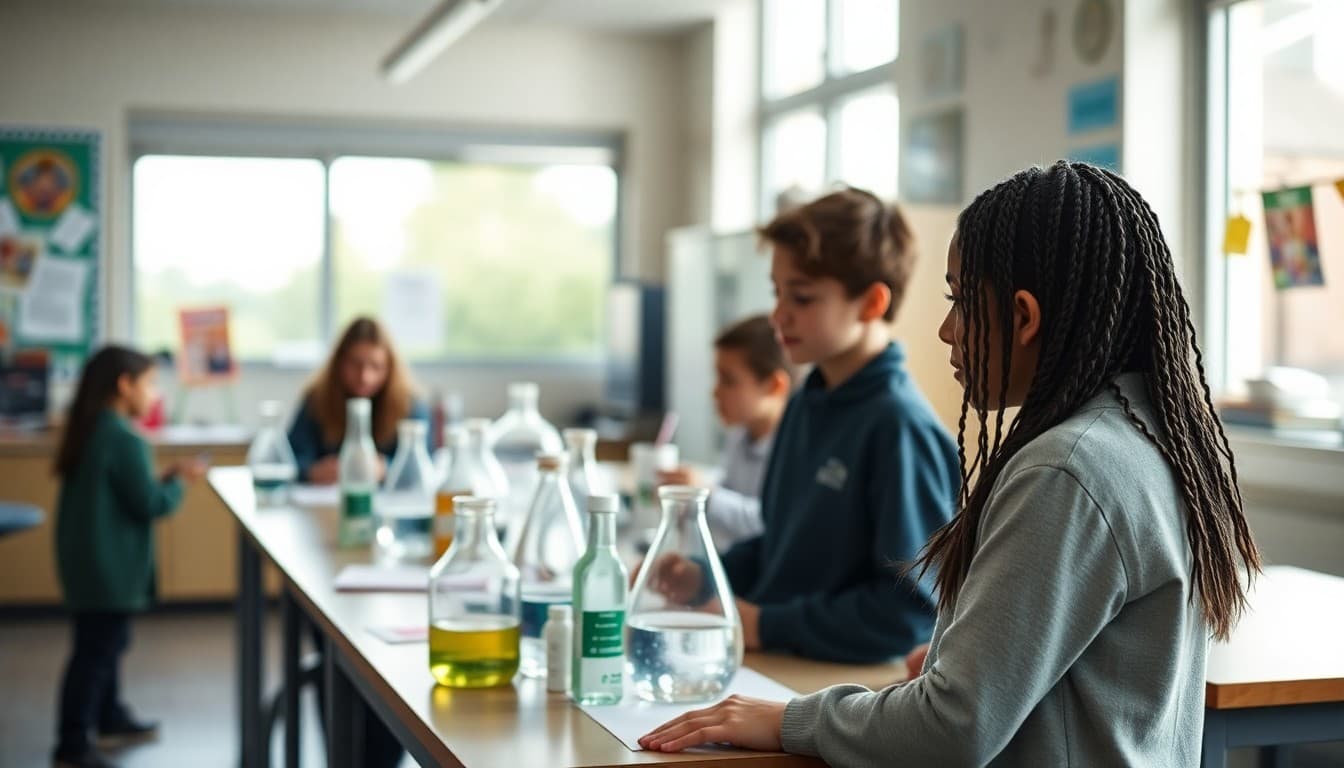
Science awareness months and days give science teachers a calendar of external anchors that connect classroom learning to the broader world. The challenge is making those connections genuine rather than decorative. A national month newsletter that tells families what the school is doing to observe the occasion, and why that connects to real science your students are studying, is worth sending. One that just acknowledges the month in a header graphic is not.
Earth Month (April): Data Is the Anchor
April is Earth Month, with Earth Day on April 22. For science teachers, this is one of the richest opportunities of the year because environmental science connects to nearly every science discipline. Chemistry teachers can analyze acid rain data. Biology teachers can study biodiversity and ecosystem relationships. Earth science teachers can work with climate data sets from NOAA. Physics teachers can analyze energy conversion efficiency.
Your newsletter should describe the specific scientific work students are doing, not just the theme. "This month students are working with temperature and sea level data from NOAA's public records. They are identifying trends, calculating rates of change, and evaluating the quality of the evidence. This is the same type of data analysis that climate scientists perform. The context is environmental; the skill is scientific reasoning." That framing is educational and defensible to families across the political spectrum.
Brain Awareness Week (March): Neuroscience in the Classroom
Brain Awareness Week is coordinated by the Dana Foundation and falls in the second week of March each year. It is an excellent anchor for neuroscience content in biology, health science, or psychology courses. "This week students are studying the structure and function of the brain as part of our nervous system unit. We are exploring how neurons transmit signals, how the brain processes sensory information, and how neurological disorders affect behavior. I have also recommended the Dana Foundation's free Brain Facts book for students who want to read further."
Black History Month (February): Scientists Who Changed the Field
February is Black History Month, and science newsletters that feature Black scientists should focus on their scientific contributions, not just their biographical profiles. Choose figures whose work connects to your current curriculum. If you are teaching genetics, feature Charles Drew (blood banking and transfusion medicine) or Mae Jemison (the first Black woman astronaut and physician). If you are teaching physics, feature Neil deGrasse Tyson's contributions to astrophysics education or Shirley Ann Jackson's particle physics research. The more specific the scientific connection, the more educational value the feature carries.
Women in Science Day (February 11)
The International Day of Women and Girls in Science falls on February 11. Your newsletter can use it as an opportunity to feature women scientists whose work connects to your current unit. "On February 11, we celebrate women in science. This month in biology we are studying genetics, which was fundamentally shaped by Barbara McClintock, whose discovery of transposable elements in corn genetics earned her the Nobel Prize in 1983. Here is what transposable elements are and why her discovery was initially dismissed and later recognized as revolutionary." That framing connects the celebration to the curriculum and makes the recognition substantive.
National Preparedness Month (September): Earth Science Connections
September is National Preparedness Month, designated by FEMA. For earth science and geology teachers, this creates a natural connection to natural hazards units. "This month we are studying plate tectonics and the natural hazards associated with tectonic activity: earthquakes, tsunamis, and volcanic eruptions. The USGS has real-time seismograph data that students are analyzing to identify earthquake activity. We are also mapping historical earthquake and eruption data to identify patterns in tectonic activity globally."
World Space Week (October 4 to 10)
World Space Week commemorates the launch of Sputnik on October 4, 1957, and the signing of the Outer Space Treaty on October 10, 1967. For physics, earth science, and astronomy units, this creates an excellent anchor. "This week we are studying orbital mechanics in the context of World Space Week. Students are calculating orbital periods, escape velocities, and the relationship between orbital radius and velocity. We are also examining how space exploration has produced technologies that are now part of everyday life, from GPS to memory foam to water filtration systems."
Chemistry Week (October): Connecting to Daily Life
National Chemistry Week is organized by the American Chemical Society in October each year, with a different theme annually. "This week the American Chemical Society celebrates National Chemistry Week. In our chemistry class, we are exploring [current unit topic] and connecting it to applications in medicine, materials science, and environmental monitoring. Students who want to explore chemistry further can check the ACS website for free resources, including activities and videos designed for high school students."
Get one newsletter idea every week.
Free. For teachers. No spam.
Frequently asked questions
What national awareness months connect naturally to science curriculum?
Many connect directly. Earth Month in April aligns with environmental science, ecology, and climate data analysis. National Biodiversity Month in May connects to life science units. Brain Awareness Week in March connects to neuroscience and biology. National Preparedness Month in September connects to earth science units on natural hazards. Women in Science Day (February 11) and National Inventor's Month (August) connect to the history of science. Black History Month in February connects to Black scientists whose contributions are often missing from textbooks. The key is choosing months where the connection to current curriculum is genuine, not forced.
How do I write a science newsletter about Earth Month without being preachy?
Keep the focus on data and scientific practice. 'This month we are working with real climate datasets from NOAA to practice our data analysis skills. Students are identifying trends, calculating averages, and evaluating evidence. The context is climate science; the skill is scientific reasoning and data interpretation.' That framing is educational and scientifically grounded. Families across the political spectrum can appreciate that students are learning to read data critically.
How do I feature scientists from underrepresented groups in a national month newsletter?
Focus on the scientific work, not just the biographical narrative. When you write about a Black scientist during Black History Month, describe the actual science: what question they investigated, what method they used, what they discovered, and why it mattered. The identity context is important and should be named, but the scientific achievement is the core of the feature. 'Katherine Johnson calculated the orbital mechanics for John Glenn's 1962 mission. Here is what orbital mechanics involves and why her calculations had to be precise to six decimal places.'
What national months are relevant to biology, chemistry, and physics specifically?
Biology: Brain Awareness Week (March), Biodiversity Month (May), National Wildlife Week (usually April), and World Oceans Day in June. Chemistry: Chemistry Week in October, National Lab Safety Month in September. Physics: World Space Week in October, Einstein's birthday on March 14 (which also coincides with Pi Day). Earth science: Earth Day April 22, National Hurricane Preparedness Week in May, Earthquake Preparedness Month in April in California.
What newsletter platform works well for themed science month communications?
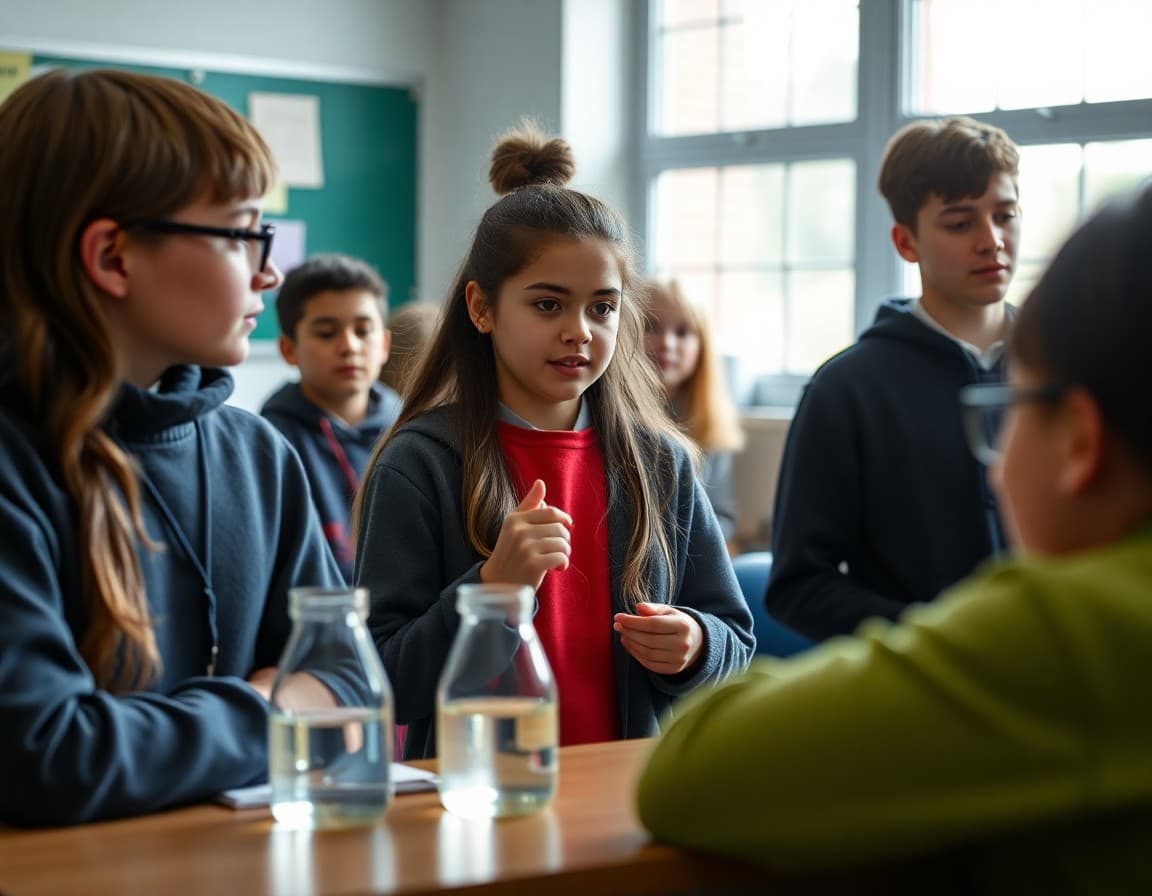
Daystage handles images and links well, which matters when a national month newsletter includes a photo from a class activity, a link to a NOAA data set students are exploring, or a short video clip. A visually rich newsletter signals to families that the thematic content is substantive, not decorative.

Adi Ackerman
Author
Adi Ackerman is a former classroom teacher and curriculum writer with 8 years in K-8 schools. She writes about school communication, parent engagement, and what actually works in real classrooms.
More for Subject Teachers
Ready to send your first newsletter?
3 newsletters free. No credit card. First one ready in under 5 minutes.
Get started free