

Science Teacher Newsletter Guide: How to Share Lab Learning With Families
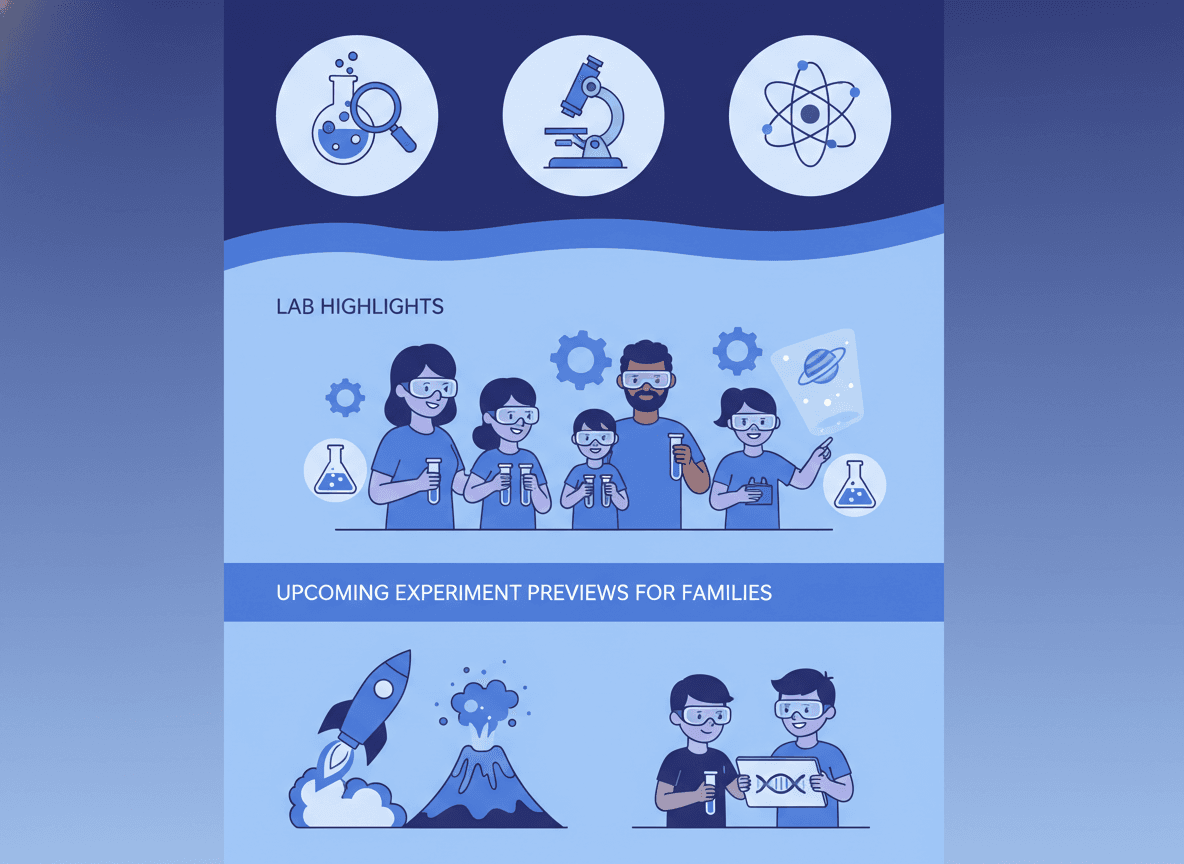
Science class is where kids get excited about how the world works. But that excitement often stops at the classroom door. Parents rarely hear about the lab, the experiment, or the discovery that lit their child up that day. A well-written science newsletter changes that, and it makes families more likely to support science learning at home.
This guide covers what to put in a science class newsletter, how to explain scientific concepts without losing non-scientist parents, and how to use labs and experiments as the centerpiece of your family communications.
What makes science newsletters different
Most subject-area newsletters focus on what students are reading or solving. Science newsletters have a unique asset: labs. Nothing captures a family's attention like hearing that their child dissected something, built a circuit, or watched a chemical reaction happen in front of them.
Lead with the lab. If your unit involves any hands-on activity, open your newsletter with that. "This week, students are building and testing model bridges to explore how engineers design for load and stress." That sentence is more engaging than any list of vocabulary words, and it gives parents a real conversation starter for dinner.
How often to send a science newsletter
One newsletter per unit is the minimum. Most science units run two to four weeks, so monthly communication is a reasonable floor.
If your unit includes a major lab or project, send a second newsletter mid-unit. That second communication can share what students discovered, what they are still investigating, and what the final assessment will look like. Two newsletters per unit is the right cadence for most middle and high school science teachers. Elementary science teachers often find that one per unit is enough.
What to include in a science class newsletter
- The current unit and its real-world connection. Name the unit and tie it to something families recognize. "We are in our ecosystems unit, exploring how energy moves through food webs" is concrete. Add one sentence about why it matters: "Understanding food webs helps students make sense of news about endangered species and habitat loss."
- A summary of recent lab work. Describe what students did, not what the learning objective was. "Students built and tested model lungs using balloons and plastic bottles" tells a much better story than "students explored the respiratory system." Parents can picture the first one. They cannot picture the second.
- Key vocabulary, explained plainly. Pick three to five terms. Write a plain-language definition for each. If students are using terms like "photosynthesis," "dependent variable," or "convection," write what those words mean in the context of what the class is doing, not the dictionary definition.
- One home activity or conversation starter. Science offers natural at-home extensions that other subjects do not. A simple kitchen experiment, a night sky observation, or a walk to notice local plant life can connect classroom learning to real experience. One idea per newsletter is plenty. Make it something that takes less than fifteen minutes and requires no special materials.
- Upcoming labs or safety notes. If students need to bring anything from home, or if there are materials that require a permission or awareness note, the newsletter is the right place to include that. "Next week, students will be working with vinegar and baking soda, both safe household materials" prevents unnecessary alarm and prepares families for what students will tell them about at dinner.
How to explain science without overwhelming parents
Not every parent had a strong science background. Some remember it as the class where they memorized the periodic table and forgot everything the next week. Your newsletter should not feel like a refresher course.
The right level of explanation is enough for a parent to ask one good question. If a parent can ask "what hypothesis did your group make for the bridge test?" after reading the newsletter, you have succeeded. You do not need them to understand tensile strength.
Analogy is your best tool. "We are studying how cells divide, similar to how a recipe doubles when you make a bigger batch" is an imperfect analogy, but it gives parents a mental foothold. Use comparisons to everyday things. The science does not have to be rigorous in the newsletter. It has to be memorable.
Using photos and student work
If your newsletter platform supports images, lab photos are your most valuable content. A photo of students measuring the wingspan of a model airplane, or examining a soil sample under a magnifying glass, tells families more than any paragraph you can write.
Check your school's photo policy before including student faces. Many teachers use photos of materials, experimental setups, or close-up shots that show the work without identifying specific students. That approach usually clears any image use concerns while still giving parents a visual sense of what happens in your classroom.
Daystage makes science newsletters easy to build and send
Science teachers often have more to share than other subject teachers: lab descriptions, safety notes, project timelines, vocabulary lists, and extension activities. Fitting all of that into a coherent newsletter in a reasonable amount of time requires a tool that gets out of your way.
Daystage lets you build each newsletter in blocks. One block for the unit introduction, one for the lab summary, one for vocabulary, one for the home activity. You can add a photo of your lab setup or student work directly in the image block. The whole newsletter takes about ten minutes to draft, and it arrives in parents' inboxes as a formatted email, not a PDF they have to download.
The goal is one good conversation per unit
You are not trying to teach parents science through your newsletter. You are trying to give them enough context to have one real conversation with their child about what is happening in class.
That bar is achievable. One newsletter per unit, focused on the lab and the real-world connection, is enough. Parents who feel informed become partners in supporting science learning at home. That makes your classroom work better, and it makes science feel like something that extends beyond the school building.
Get one newsletter idea every week.
Free. For teachers. No spam.
Frequently asked questions
When should science teachers send newsletters to parents?
Send one newsletter per unit as a minimum. Most science units run two to four weeks, so monthly communication is a reasonable floor. If your unit includes a major lab or project, add a second mid-unit newsletter to share what students discovered and preview the final assessment.
What should a science teacher newsletter include?
Open with a description of recent lab work, not just the learning objective. Add the current unit, three to five vocabulary terms with plain definitions, the real-world connection, and one at-home extension activity that takes less than fifteen minutes with no special materials. Lab photos, if your school policy allows, are the most engaging content you can include.
How often should science teachers communicate with parents by newsletter?
Monthly is the floor, with a second newsletter mid-unit when the unit involves a significant lab or project. Elementary science teachers often find one newsletter per unit is enough. Middle and high school teachers benefit from two per unit given the greater technical depth.
What are common mistakes science teachers make in parent newsletters?
Leading with learning objectives instead of the lab is the most common mistake. Parents cannot picture 'exploring the respiratory system,' but they can picture 'students built model lungs using balloons and plastic bottles.' A second mistake is explaining concepts at a level that requires a science background rather than writing for a curious non-specialist.
What tool helps science teachers build and send newsletters easily?
Daystage lets you build a science newsletter in blocks: unit intro, lab summary, vocabulary, home activity. Drop in a photo of your lab setup or student work with the image block. The whole newsletter takes about ten minutes and arrives in parents' inboxes as a formatted email, not a PDF they have to download.

Adi Ackerman
Author
Adi Ackerman is a former classroom teacher and curriculum writer with 8 years in K-8 schools. She writes about school communication, parent engagement, and what actually works in real classrooms.
More for Subject Teachers
Montessori Teacher Newsletter: Communicating the Montessori Approach to Curious and Invested Families
Subject Teachers · 6 min read
School Nurse Newsletter Guide: How to Communicate Health Information to Families
School Nurses · 6 min read
Teacher's Aide and Paraprofessional Newsletter: How to Communicate Your Role to Families
Subject Teachers · 6 min read
Ready to send your first newsletter?
3 newsletters free. No credit card. First one ready in under 5 minutes.
Get started free