

School Enrichment Teacher Newsletter: Communicating Deep Learning Activities and Student Curiosity to Families
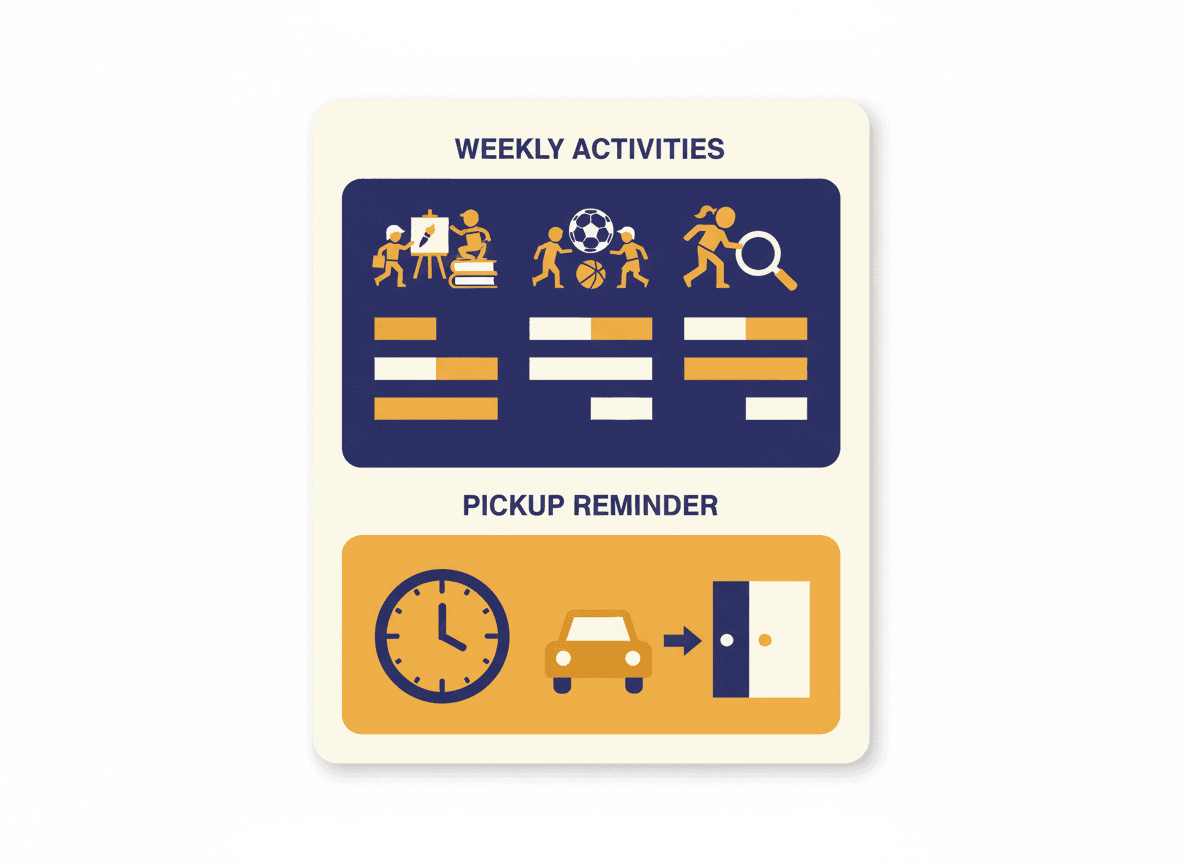
Enrichment programs give students the opportunity to go deep: on topics that interest them, on problems that have no single answer, on skills that standard curriculum does not have time to develop. The learning that happens in enrichment is often the learning that stays with students for decades. A newsletter that shares this work with families does more than inform. It invites families into an experience that their student finds genuinely exciting and gives them the language to nurture that excitement at home.
This guide covers what to include in an enrichment teacher newsletter, how to describe complex student work in accessible terms, and how to help families extend the enrichment mindset beyond the classroom.
Describing student work with the specificity it deserves
The best enrichment newsletters describe what students are doing with enough detail that families can have a real conversation about it. Not "students are working on a science project" but "students are designing biofilter systems to remove contaminants from water samples we collected from the creek behind the school. Each team has a different hypothesis about which filter medium will be most effective, and they are designing their own testing protocol to find out." A description that specific makes the work real and interesting to a parent who was not in the room.
Specificity also signals to families that enrichment is academically serious. Families who receive vague descriptions of creative activities may not fully understand what the program is building. Families who receive specific descriptions of complex, student-driven intellectual work understand immediately.
Following the project arc across multiple newsletters
Many enrichment projects run for several weeks or a full month. A newsletter that follows the project from launch through research, design, iteration, and final presentation gives families a satisfying narrative across the project lifecycle. A family who reads about the initial challenge in October, the design process in November, and the final presentations in December has followed a real story. They are invested in the outcome.
This approach also communicates something important about the nature of enrichment learning: it is not a series of disconnected activities. It is a sustained intellectual journey. Families who see that journey in your newsletter understand why enrichment is different from standard curriculum, and why it matters.
Celebrating student thinking, not just outcomes
In enrichment programs, the thinking process is as important as the final product. A newsletter that celebrates a student who developed a genuinely creative solution to a problem, a student whose experiment failed but whose analysis of why it failed was brilliant, or a student who asked a question that changed the direction of a whole project, values what the program actually values.
This kind of recognition is also more accessible to a wider range of students. Not every student will produce the most impressive final product. Every student can demonstrate exceptional thinking at some point in a well-run enrichment program. Your newsletter is where that thinking gets seen.
Extending enrichment curiosity into the home
The best enrichment newsletter section for families is a simple, specific way to extend what students are working on at home. A question to ask at dinner. A related book to read together. An accessible experiment to try. A documentary to watch. These suggestions cost nothing and have significant impact on students who feel that their intellectual interests are being nurtured both at school and at home. Families who receive specific suggestions act on them far more often than families who receive vague encouragement to "keep learning."
Sharing the final product with the community
Enrichment programs that produce public outputs, like presentations, exhibitions, performances, or publications, need robust event communication in the newsletter. Families who know about an exhibition opening three weeks in advance show up. Families who hear about it two days before do not. Build your pre-event newsletter coverage into your project calendar from the start and treat the event as the public celebration of serious work that it is.
Using Daystage for enrichment program newsletters
Daystage is a natural fit for enrichment programs that produce compelling, visual, student-driven work. The block editor supports photos of student projects alongside written descriptions, creating newsletters that are as engaging visually as the work itself. Build your template at the start of each project cycle, update it as the project progresses, and send to your subscriber list every three to four weeks. Families who receive consistent, specific, visually rich communication from an enrichment program become its strongest advocates when budget season comes around.
Get one newsletter idea every week.
Free. For teachers. No spam.
Frequently asked questions
What should a school enrichment teacher newsletter include?
Cover what students are investigating or building this month, how the enrichment projects connect to student interests, what skills they are developing through the process, and one way families can extend the curiosity at home. Enrichment programs often produce the learning experiences students talk about most at home. Your newsletter helps families ask the right follow-up questions.
How often should an enrichment teacher send newsletters?
Every three to four weeks during the school year is a strong cadence for enrichment programs. Enrichment projects often run for several weeks, so a newsletter that follows the project arc from launch to completion and celebration gives families a satisfying narrative rather than disconnected updates.
How do I explain project-based or inquiry-based learning to families who are unfamiliar with it?
Use a specific example rather than a methodology description. A family who reads about students designing a solution to reduce food waste in the school cafeteria and presenting it to the principal understands what enrichment looks like in practice. Methodology terms like project-based learning are less useful than concrete descriptions of what students actually did.
What is the biggest communication mistake enrichment teachers make?
Keeping the work inside the classroom. Enrichment produces extraordinary student work: models, presentations, experiments, performances, original research. Families who never see or hear about this work do not understand what the program is. A newsletter that describes student projects in detail, includes photos when possible, and shares student reflections closes that gap immediately.
How does Daystage support an enrichment program newsletter with visual content?
Daystage supports photos alongside text in the block editor. An enrichment newsletter with photos of student project work is one of the most engaging school newsletters any family receives. The visual connection between what students are doing and what families read at home makes the newsletter feel alive rather than informational.

Adi Ackerman
Author
Adi Ackerman is a former classroom teacher and curriculum writer with 8 years in K-8 schools. She writes about school communication, parent engagement, and what actually works in real classrooms.
More for Subject Teachers
Assistant Principal Newsletter Guide: How to Communicate With Families as an AP
Principals · 7 min read
Fourth Grade Teacher Newsletter Guide: Communication for the Upper Elementary Transition
Subject Teachers · 6 min read
Middle School Counselor Newsletter: Addressing Social-Emotional Growth in Grades 6 Through 8
Subject Teachers · 6 min read
Ready to send your first newsletter?
3 newsletters free. No credit card. First one ready in under 5 minutes.
Get started free