
Fourth Grade Teacher Newsletter Guide: Communication for the Upper Elementary Transition

Fourth grade sits at an interesting threshold. Students are now firmly in upper elementary, expected to manage longer assignments, work more independently, and take real ownership of their learning. But they are also nine and ten years old. still very much children who need structure, support, and active family engagement. The fourth grade newsletter walks that line: it keeps families informed and engaged without positioning their involvement as hovering or overreach.
This guide covers what to include in a fourth grade newsletter, how to communicate the shift in academic expectations, and how to give families the right level of involvement for this stage of a child's development.
What changes in fourth grade. and why families need to know
In third grade, most academic tasks were short, scaffolded, and teacher-directed. Fourth grade introduces longer projects, multi-step research, nonfiction reading in content areas, multi-digit multiplication and division, and extended writing that requires planning across multiple sessions. Students who handled third grade comfortably can hit unexpected difficulty in fourth grade if they are not prepared for the shift in demand.
Your newsletter's job in September is to set this expectation clearly. "Fourth grade asks more of students in terms of time management, organization, and independent persistence than earlier grades did. We are going to build those skills together, and your support at home in helping your child manage long-term assignments is part of that."
What to include in a fourth grade newsletter
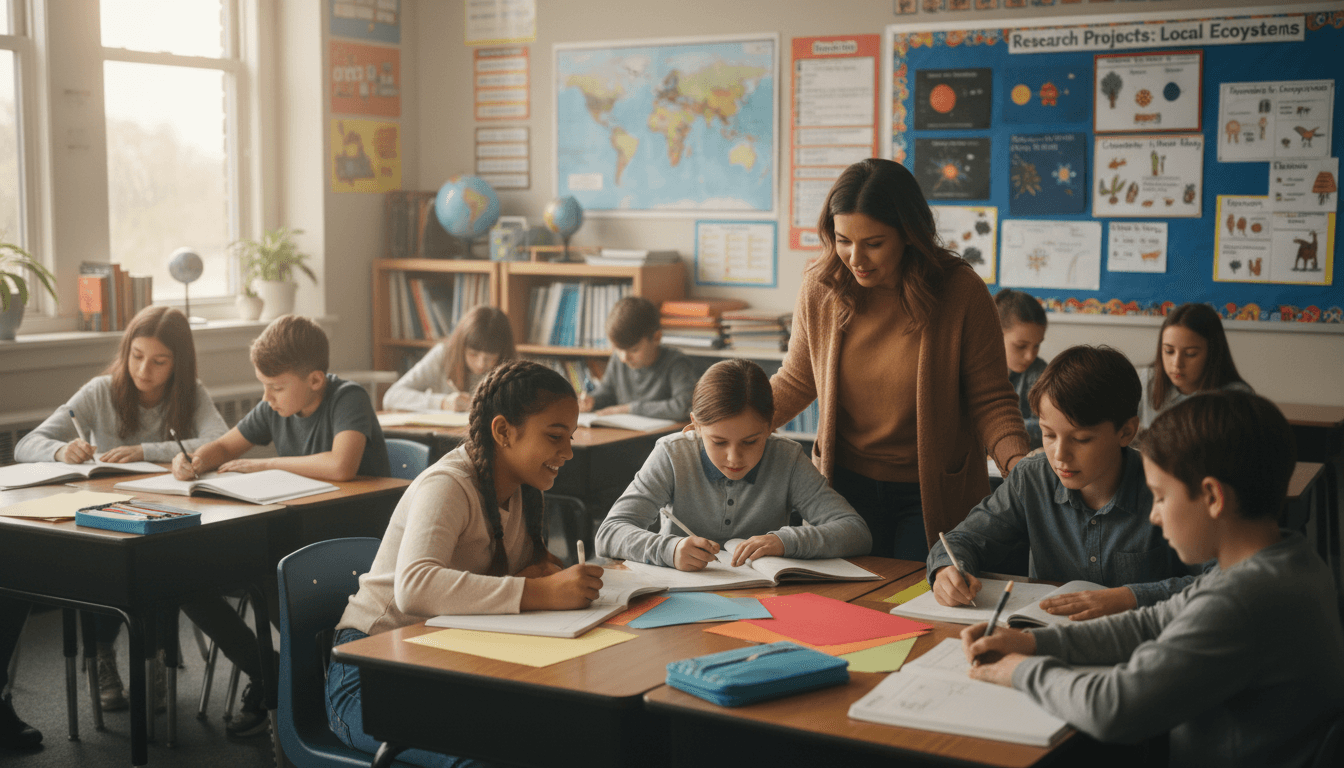
- Long-term projects and how families should support them. When a multi-week project is assigned, announce it in the newsletter the moment it launches. Tell families when it is due, what the major checkpoints are, and what appropriate home support looks like. "Your child has a research project due in three weeks. They should be selecting their topic this week. Ask them what they chose and why. That conversation is the most useful thing you can do right now. do not write the project for them."
- Academic content in science and social studies. Fourth grade content areas get serious. Ancient civilizations, state history, earth science, ecosystems: tell families what students are studying so that conversations at home extend the classroom learning. A family that asks "what did you learn about the Iroquois today?" because they read it in the newsletter is building vocabulary and content knowledge alongside their child.
- Math skills and where families can help without confusing students. Fourth grade math introduces multi-digit multiplication, long division, and fractions. The methods may look different from what families learned. Tell them this explicitly and give them a specific way to help that does not involve teaching a different algorithm. "If your child is stuck, encourage them to draw a picture or a model of the problem. Ask them to explain what the problem is asking. Those two moves are more helpful than trying to reteach the procedure."
- Reading. shifting from fluency to comprehension depth. Fourth grade readers should be fluent but are now being asked to analyze, synthesize, and evaluate what they read. Share one comprehension conversation starter per newsletter that families can use after their child reads. "Ask: what is the author trying to convince you of in this section? How do you know?"
- Organization and homework habits. Many fourth graders are managing their own homework tracking for the first time. Tell families what the school expects and what helpful home support looks like. A homework routine, a dedicated workspace, a regular check-in on assignment completion. give families specific structures that work for this age group.
Navigating the pull toward over-involvement
Fourth grade is the age when over-involvement starts to hurt more than it helps. Families who complete homework, rewrite essays, or rescue their children from the natural consequences of missing assignments deprive those children of the practice they need to handle fifth grade and middle school successfully.
Your newsletter can address this directly and empathetically. "The most supportive thing you can do for a fourth grader who is frustrated with a difficult assignment is to sit with them in that frustration rather than solving it for them. Ask questions. Encourage one more try. Then let them produce what they can produce. That is how the skill develops." Families who receive this framing from the teacher apply it. Families who do not receive it default to rescue mode.
Frequency and format
Bi-weekly newsletters work well in fourth grade. Students are capable of managing some logistics independently, so the newsletter can shift toward academic content and home strategy rather than daily logistics. Keep it focused: one academic focus, one content area spotlight, one home strategy, one reminder.
Using Daystage for fourth grade newsletters
Daystage's block editor makes it easy to build a structured bi-weekly newsletter efficiently: current academic focus, content spotlight, home strategy, project reminder, upcoming logistics. The subscriber list ensures reliability. A consistent format means families read because they trust the newsletter to be useful every time.
Fourth grade is where independence starts to compound
The students who arrive at fifth grade ready for the upper elementary-to-middle school transition are the ones who practiced managing longer tasks, worked through difficulty without rescue, and built the habit of academic ownership in fourth grade. Your newsletter guides the families who make that practice possible. Keep sending it.
Get one newsletter idea every week.
Free. For teachers. No spam.
Frequently asked questions
When should fourth grade teachers send newsletters to parents?
Bi-weekly newsletters work well in fourth grade. Students are managing more of their own logistics, so the newsletter can shift toward academic content, home strategy, and long-term project updates. The moment a multi-week project launches, put it in the newsletter immediately so families know the timeline from day one.
What should a fourth grade teacher newsletter include?
Announce long-term projects when they launch with due dates, major checkpoints, and a clear description of what appropriate home support looks like (asking questions, not writing the project). Cover content-area material in science and social studies so families can extend those conversations at home. Include math guidance that helps families support without teaching a conflicting algorithm, and one comprehension conversation starter for after-reading.
How often should fourth grade teachers communicate with parents by newsletter?
Bi-weekly is the right cadence. Focus each newsletter on one academic priority, one content area spotlight, one home strategy, and one reminder. At this age, brevity is a feature: families who received weekly newsletters in kindergarten and first grade appreciate that fourth grade communication is more focused and less logistically intense.
What are common mistakes fourth grade teachers make in parent newsletters?
Not addressing the risk of over-involvement is the most common mistake. Fourth grade is when helping too much starts to hurt more than it helps, and families need explicit guidance on what support looks like versus what rescue looks like. A second mistake is announcing multi-week projects only at the due date, which gives families no time to support the process.
What tool helps fourth grade teachers build reliable bi-weekly newsletters?
Daystage's block editor makes it easy to build a structured bi-weekly newsletter efficiently: current academic focus, content spotlight, home strategy, project reminder, upcoming logistics. A consistent format across the year means families read because they trust the newsletter to be useful every time they open it.

Adi Ackerman
Author
Adi Ackerman is a former classroom teacher and curriculum writer with 8 years in K-8 schools. She writes about school communication, parent engagement, and what actually works in real classrooms.
More for Subject Teachers
Eighth Grade Teacher Newsletter Guide: Preparing Families for the High School Transition
Subject Teachers · 6 min read
Music Teacher Newsletter Guide: Keeping Families Connected to the Music Program
Subject Teachers · 7 min read
School Physical Therapist Newsletter: Communicating Motor Skills, Services, and Home Activities to Families
Subject Teachers · 6 min read
Ready to send your first newsletter?
3 newsletters free. No credit card. First one ready in under 5 minutes.
Get started free