
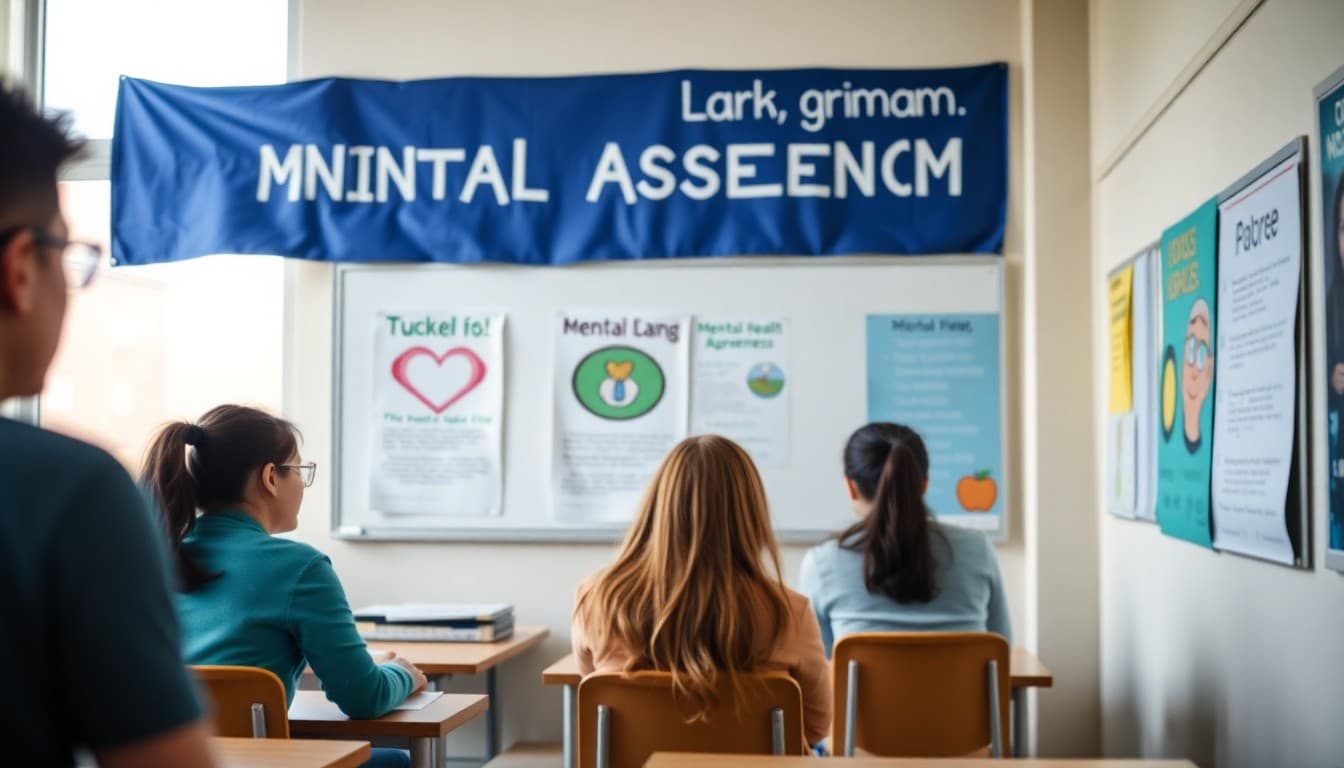
Psychology Teacher Newsletter: National Month Newsletter Ideas

Psychology teachers have more relevant national awareness months than almost any other subject area. Mental health, neuroscience, trauma, stress, and human behavior each have dedicated awareness periods that align almost exactly with standard psychology curriculum units. Using these moments in your newsletters does not require extra work; it requires pointing out connections that already exist between what you are teaching and what the broader world is talking about.
The Psychology Awareness Calendar
Here are the most useful awareness months and days for psychology teachers, with a curriculum angle for each:
September: Suicide Prevention Awareness Month. This one requires the most care. A newsletter that shares school counselor contact information, normalizes help-seeking, and previews how your course addresses mental health sets a responsible tone for the year without being alarmist.
October 10: World Mental Health Day. A natural hook for a semester-start newsletter if you teach spring courses. For fall courses, it can anchor a brief update on how your class approaches mental health content.
March: Brain Awareness Week (third week of March). The Dana Foundation coordinates this internationally. If your class covers biological psychology, this is your awareness month. Student interest in neuroscience typically spikes during this week.
April: Stress Awareness Month. Connects to your stress and health psychology content, and is conveniently timed when students are dealing with AP exam pressure.
May: Mental Health Awareness Month. The biggest awareness moment of the year for psychology teachers. If you send one awareness month newsletter all year, this is the one.
Building a Mental Health Awareness Month Newsletter
May is the most impactful month for a psychology teacher newsletter. Structure it around three elements: what your class is doing, one statistic that gives the awareness month scale, and what families can do.
For what your class is doing: "This month, we are finishing our unit on psychological disorders, which covers how mood disorders, anxiety disorders, and trauma-related conditions are understood and treated. Students have been discussing how stigma affects treatment-seeking, which is directly relevant to what Mental Health Awareness Month campaigns are addressing nationally."
For scale: "1 in 5 adults in the US experiences a mental health condition each year, and most conditions begin in adolescence. The research on early intervention is clear: identifying and addressing mental health challenges early produces significantly better outcomes than treatment that begins in adulthood."
For families: "If you are concerned about your student's mental health, the school counselor is [name] at [contact]. For resources beyond school, the NAMI helpline (1-800-950-6264) offers free support for families."
Sample Newsletter Excerpt: Brain Awareness Week
Here is a template for a Brain Awareness Week newsletter section:
"This week is Brain Awareness Week, and our timing is perfect: we are mid-unit in biological psychology, covering how the brain's structure relates to behavior and memory. This week specifically, students are studying neuroplasticity: the brain's ability to change in response to experience. One finding that students consistently find surprising is that the adolescent prefrontal cortex is not fully developed until the mid-20s, which helps explain why decision-making patterns change significantly between the teenage years and early adulthood. Ask your student what part of the brain controls decision-making and what that means for how teenagers are treated in the legal system. The answers are more complicated than most people expect."
Handling Suicide Prevention Month with Appropriate Care
September's suicide prevention awareness requires a specific approach. Lead with education and resources, not statistics. Share the school counselor's information. Explain how your class covers mental health topics responsibly. Include a brief note on warning signs for families and a specific resource. Avoid framing the newsletter as a warning; frame it as an opportunity to open conversations. If your school has a specific protocol for this communication, follow it and note in the newsletter that you are following school guidelines.
Avoiding the Generic Awareness Trap
The weakest awareness month newsletters share a fact and a link and nothing else. "May is Mental Health Awareness Month. Check out these resources." That is not a psychology newsletter; it is a flyer. Strong awareness month newsletters connect the national moment to something specific happening in your classroom, a student response, a concept that surprised them, or a discussion that went longer than planned. Specificity is what makes families feel like they received a window into their student's actual experience.
Get one newsletter idea every week.
Free. For teachers. No spam.
Frequently asked questions
Which national awareness months are most relevant for psychology teachers?
Mental Health Awareness Month in May is the most directly relevant. Brain Awareness Week in March connects to neuroscience and biological psychology units. World Mental Health Day (October 10) is useful for a semester-opening newsletter. Suicide Prevention Awareness Month in September is relevant if your course includes abnormal psychology or mental health units. PTSD Awareness Month in June can anchor end-of-year reflection on trauma content.
How do I connect national awareness months to psychology curriculum standards?
Most awareness months in psychology map directly to AP or state standards. Mental Health Month connects to the psychological disorders unit. Brain Awareness Week connects to biological bases of behavior. World Mental Health Day connects to treatment and therapy. The connection is usually explicit enough that your newsletter can note both the awareness context and the standard being addressed without much bridging.
How do I handle mental health awareness content sensitively in a newsletter?
Frame it around education and awareness, not treatment or crisis. Include resources at the end (school counselor contact, national hotline) without making the newsletter feel like a crisis communication. Most families appreciate mental health awareness content from a psychology teacher because it comes from an academic rather than clinical context, which feels less alarming.
Can I use national month newsletters to recruit students to mental health clubs?
Yes, briefly. A one-paragraph mention of your mental health awareness club within a Mental Health Month newsletter is natural and appropriate. Keep the club mention separate from the educational content so the newsletter does not feel like a recruitment tool with academic dressing.
What tool helps psychology teachers send timely national month newsletters?
Daystage lets you build and schedule national month newsletters in advance so they go out on the right day without requiring you to stop what you are doing mid-semester. Many psychology teachers set up their awareness month templates in August and fill in the class-specific content as each month arrives, which turns a 45-minute first-year task into a 10-minute annual update.

Adi Ackerman
Author
Adi Ackerman is a former classroom teacher and curriculum writer with 8 years in K-8 schools. She writes about school communication, parent engagement, and what actually works in real classrooms.
More for Subject Teachers
Ready to send your first newsletter?
3 newsletters free. No credit card. First one ready in under 5 minutes.
Get started free