
Psychology Teacher Newsletter: Club and Activity Newsletter Guide
Psychology teachers who sponsor extracurricular activities often find themselves writing two very different kinds of newsletters: one for their class that covers curriculum, and one for their club that builds community and keeps families invested in the group's work. Here is how to write both well, with specific attention to the unique challenges of psychology-related extracurriculars.
Psychology Extracurriculars Worth Highlighting
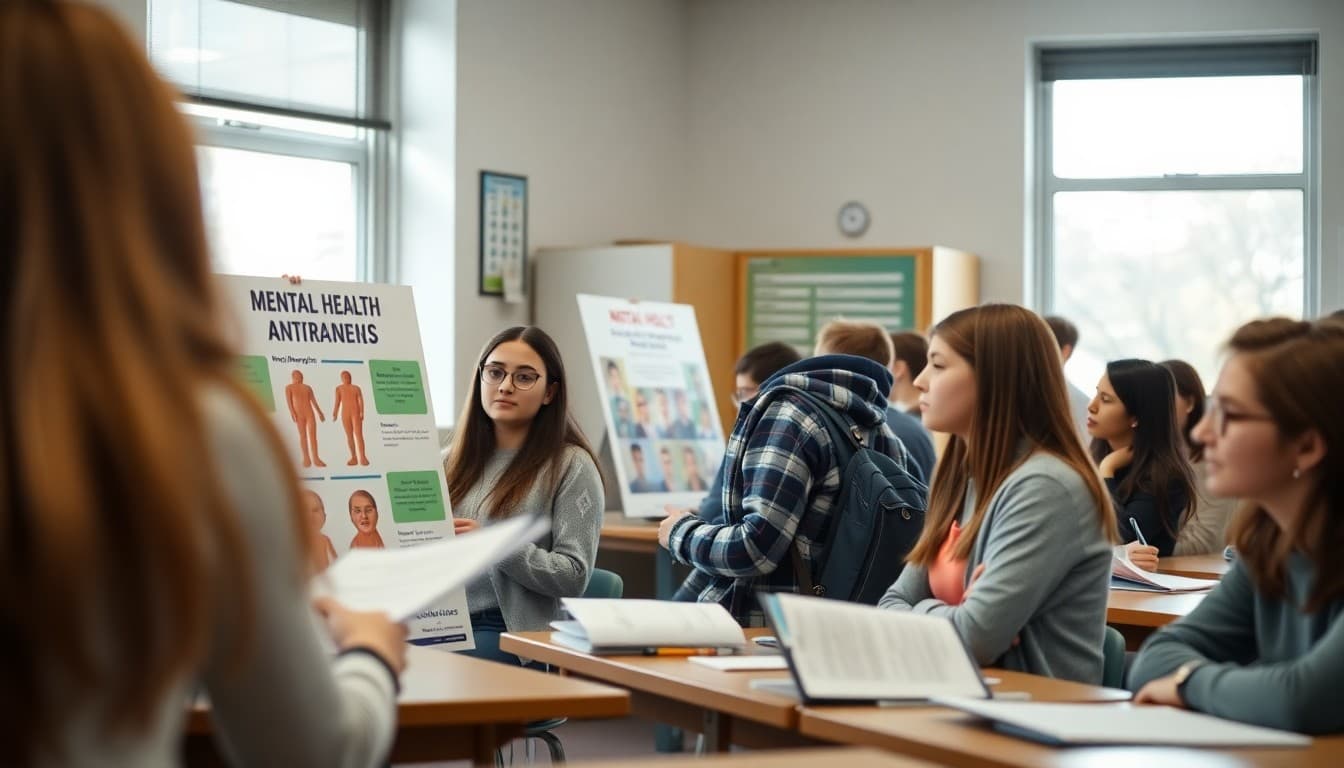
The most common psychology-adjacent extracurriculars in high schools fall into four categories. Mental health advocacy groups work to reduce stigma around mental illness in the school community through events, campaigns, and peer education. Neuroscience clubs explore brain science through experiments, guest speakers, and competitions. Peer counseling or peer mentoring programs train students to support their classmates under adult supervision. Psychology research clubs support students who want to conduct behavioral research for science competitions or independent study.
Each of these has a different profile and a different family communication need. Know which type you are promoting before you write the newsletter.
Writing the Recruitment Section
For a mental health awareness club, the recruitment message should emphasize impact and action. "We run three events a year designed to change how our school community talks about mental health: a classroom visit series in October, a film screening in January, and a campus-wide awareness campaign in May. If you have ever felt like mental health stigma is a problem worth solving, this club is doing that work." Students who want to make a difference respond to specificity about what that difference looks like.
For a neuroscience club: "We meet weekly to explore brain science beyond what the curriculum covers: current research, demonstrations, and preparation for the Brain Bee competition. Last year's team placed second in the regional competition. If you are interested in neuroscience as a possible career direction, this club gives you a real preview."
The Parent Section of the Newsletter
For mental health clubs especially, parents want to understand what the club is and is not. Address this directly: "A note for families: this club is an advocacy and education group, not a support group. Students are not expected to share personal experiences. Our work focuses on organizing school events that normalize mental health conversations. Participation requires no prior knowledge of mental health and is appropriate for all students."
This kind of clarity prevents both the families who might be worried the club is too clinical and the families who might wonder if it is appropriate for their student.
Sample Recruitment Newsletter Opening
Here is a template for a psychology research club:
"The psychology research club is looking for eight to ten students this year who want to design and run an actual behavioral study. This is not reading about research; it is doing it. Students will develop a research question, choose a methodology, collect data from participants, and present findings in a formal poster session in April. Two members of last year's club submitted their projects to the school science fair and one advanced to the district level. If you want to understand how psychological research actually works and add a genuine research project to your college application, please come to our interest meeting on September 16th."
Monthly Club Update Newsletters
For active clubs, a monthly update to members' families covers three things: what the club accomplished last month, what is coming up, and any recognition or achievement worth celebrating. Keep it to one page. "This month, our mental health club finalized the script for our classroom visit series and trained 12 student presenters. In October, we will present to every 9th and 10th grade advisory class. We are still looking for two more presenters; any club member interested should speak to me by Friday."
After an Event or Presentation
Send a recap within 48 hours of any major club event. Describe what happened, who participated, and what the response was. Include a photo if possible. Families who hear about their student's participation in an event through a newsletter feel more connected to the club's work than those who only hear about it secondhand at home.
Get one newsletter idea every week.
Free. For teachers. No spam.
Frequently asked questions
What extracurricular activities do psychology teachers typically sponsor?
Common options include a mental health awareness club, a psychology research club, a debate team focused on social issues, a peer counseling or mentoring program, a neuroscience club, or a mindfulness and wellness club. Some psychology teachers also sponsor science fair preparation for students doing behavioral research projects. Mental health advocacy groups are increasingly popular and often partner with national organizations like Active Minds.
How do I write a recruitment newsletter for a psychology-focused club?
Lead with what students will actually do and why it matters, not with the club name and meeting time. For a mental health awareness club, this might be: 'This club organizes events that reduce stigma around mental health in our school community. If you have ever wanted to actually change how your school talks about depression or anxiety, this is where that work happens.' Specific and actionable beats abstract and aspirational.
How do I communicate about a mental health club in a way that is inclusive but not alarming?
Frame the club's work around education, awareness, and community rather than clinical support. A mental health awareness club is not a support group; it is a student group that works to normalize mental health conversations. Being clear about that distinction in your newsletter tells families that the club is appropriate for all students, not only those who are struggling.
How should I handle a psychology club newsletter differently from my class newsletter?
Club newsletters have a different audience (members' families rather than all class families), a different purpose (community building and updates rather than curriculum communication), and a different tone (more celebration-oriented). Keep the audience separate in your distribution so class families who are not club members do not receive club updates that are not relevant to them.
What tool helps psychology teachers manage both class and club newsletters?
Daystage lets you maintain separate family lists for your class and your club, design consistent branded newsletters for each, and send without mixing audiences. Many psychology teachers find that having a distinct look for club newsletters versus class newsletters helps families quickly identify what kind of communication they are reading.

Adi Ackerman
Author
Adi Ackerman is a former classroom teacher and curriculum writer with 8 years in K-8 schools. She writes about school communication, parent engagement, and what actually works in real classrooms.
More for Subject Teachers
Ready to send your first newsletter?
3 newsletters free. No credit card. First one ready in under 5 minutes.
Get started free