
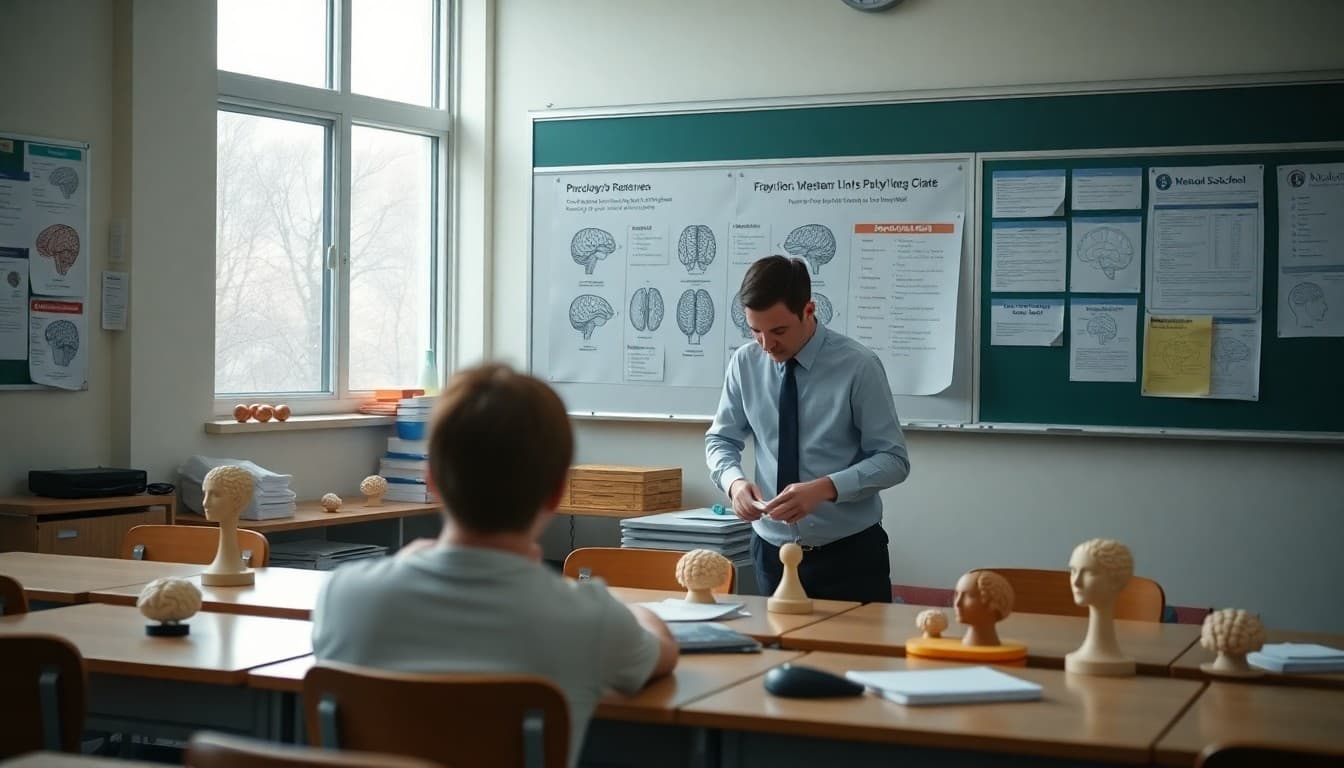
Psychology Teacher Newsletter: Setting Up the Year Right

Psychology is often the high school course that students talk about for years afterward. It is also the course where parent expectations are least predictable. Some families are enthusiastic; others are cautious about mental health content or concerned about what their student will encounter. Your beginning-of-year newsletter addresses both reactions before they become issues and sets up the communication relationship that will carry you through a year of genuinely interesting, sometimes sensitive material.
Why Psychology Parents Need a Strong First Newsletter
Psychology covers the human mind, and that includes mental illness, developmental stages, social pressure, persuasion, and trauma. These are not abstract topics for most students; they are personal. A parent who did not know the course covered abnormal psychology may be surprised when their student starts talking about schizophrenia or dissociative disorders at dinner.
The first newsletter is your opportunity to frame these topics as the empirical study of human behavior, not a clinical catalog of disorders. That framing makes a significant difference in how families engage with the content throughout the year.
Framing the Course
Lead with what makes psychology genuinely interesting, not with the official course description. "This year, your student will learn why people make decisions that seem irrational, how memory actually works (and why it often does not), what research reveals about personality and behavior, and how mental health conditions are understood and treated." That is more compelling than "Introduction to Psychology covers biological, behavioral, cognitive, and sociocultural approaches to understanding human behavior."
Major Units Overview
Give parents a roadmap for the year. Psychology units typically include: history and research methods, biological bases of behavior, sensation and perception, states of consciousness, learning and conditioning, memory, cognition and language, motivation and emotion, developmental psychology, personality, social psychology, and psychological disorders and treatment. Listing these by semester gives families a sense of where the course goes and when to expect the more sensitive material.
Addressing Sensitive Content Proactively
One paragraph in the newsletter should address how you handle sensitive topics. "Our unit on psychological disorders covers conditions like depression, anxiety, schizophrenia, and PTSD from a scientific perspective. We focus on how these conditions are understood, diagnosed, and treated based on current research. If your student is personally affected by any of these topics, I encourage them to speak with me privately. We can always find a way to engage with the material that respects their experience."
This paragraph tells families that you are thoughtful, not that you avoid difficult content. It also signals to students with mental health histories that they are seen.
Sample Newsletter Opening
Here is a template opener:
"Welcome to AP Psychology. This is one of the most practical courses you will take in high school, not because it teaches vocational skills but because it teaches you to understand yourself and other people. By the end of the year, your student will understand why people believe false memories, how social pressure shapes behavior, what research says about personality, and how clinicians think about mental health. We will ground everything in evidence: psychology is a science, and we will treat it like one. Here is what your family needs to know for the year ahead."
Grading and Materials
Be specific about the grading breakdown and required materials. Psychology often has a research component (students may need to find and evaluate studies), a vocabulary load that requires organized notes, and unit tests that cover a wide range of concepts. If you use a specific textbook, name it. If you recommend any supplemental resources (a podcast, a YouTube channel, a book), include those too.
Setting Communication Expectations
Tell families how you will communicate throughout the year and how they can reach you. For psychology specifically, add a note about how families can bring concerns to you if they notice their student responding strongly to course content. "Psychology occasionally surfaces topics that connect to students' personal experiences. If you notice changes in your student's mood that coincide with units we are covering, please reach out. I am happy to discuss how we are handling the material and whether any adjustments are appropriate."
Get one newsletter idea every week.
Free. For teachers. No spam.
Frequently asked questions
What should a psychology beginning-of-year newsletter cover?
The course overview, major units, grading policy, required materials, and an honest description of the content students will encounter. Psychology covers topics like mental illness, trauma, and human development that parents may have questions or concerns about. A brief note on how you approach sensitive topics builds trust before those units arrive.
Should I address sensitive psychology topics in the first newsletter?
Yes, briefly. Naming that the course covers topics like mental health disorders, abnormal psychology, and social influence tells families what to expect without creating alarm. Explaining that you approach these topics empirically and with appropriate sensitivity sets the right tone. Parents who are surprised by sensitive content mid-year are more likely to complain than parents who were informed from the start.
How do I frame psychology as a valuable course to parents who may not understand it?
Connect it to skills and knowledge students will use outside school. Psychology teaches students to understand their own behavior and thinking patterns, recognize cognitive biases, understand what research says about memory and learning, and develop empathy through understanding how others think. These benefits resonate with parents who want their student's education to have practical value.
What tone works for a psychology beginning-of-year newsletter?
Warm, intellectually curious, and direct. Psychology teachers who write newsletters that sound like they are genuinely excited about the subject attract more family engagement than those who write in formal institutional language. Families can tell the difference between a teacher who loves the subject and one who is going through the motions.
What tool works well for sending a beginning-of-year psychology newsletter?
Daystage lets you design a polished newsletter with a clear course overview, unit roadmap, and contact information all in one formatted document. You can include images from previous years' class projects if you have them, which makes the course feel concrete and inviting before students have spent a day in it.

Adi Ackerman
Author
Adi Ackerman is a former classroom teacher and curriculum writer with 8 years in K-8 schools. She writes about school communication, parent engagement, and what actually works in real classrooms.
More for Subject Teachers
Ready to send your first newsletter?
3 newsletters free. No credit card. First one ready in under 5 minutes.
Get started free