
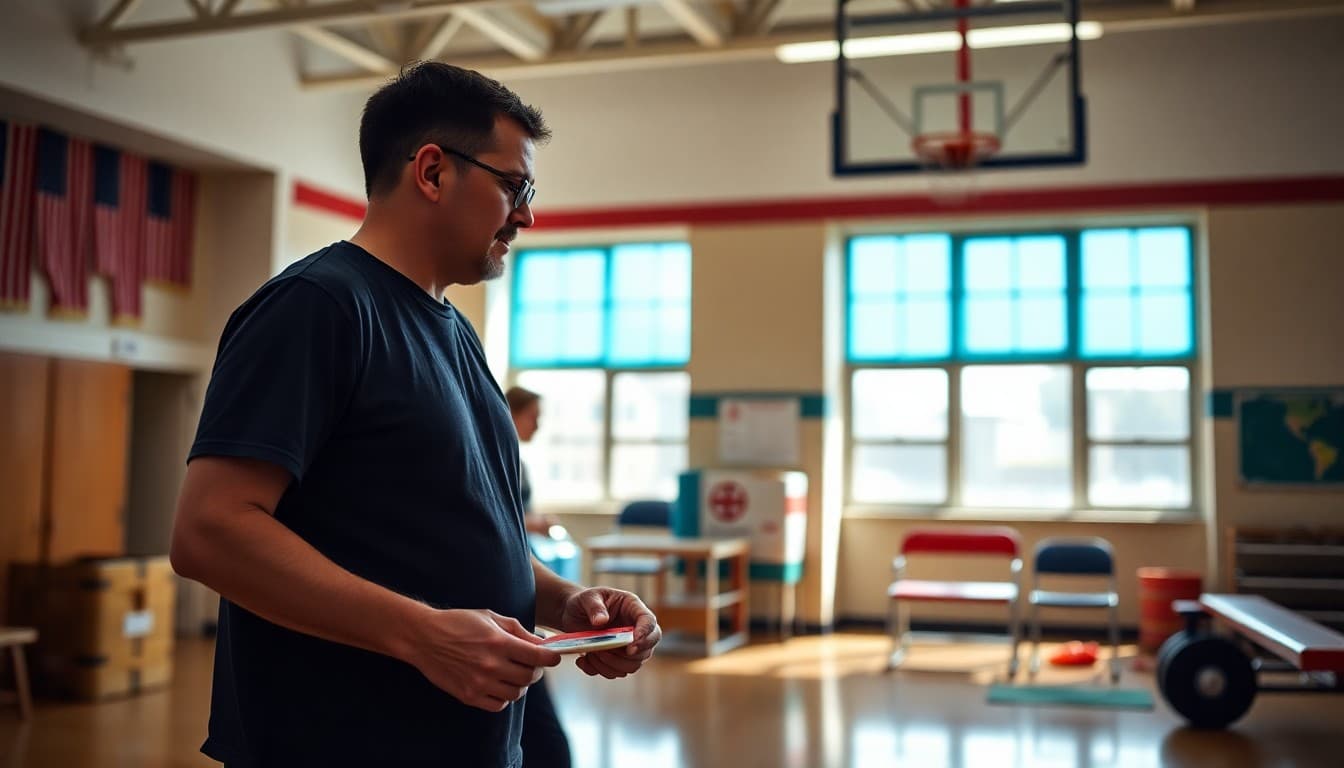
Physical Education Teacher Newsletter: Setting Up the Year

The beginning-of-year PE newsletter has one job that no other first-week letter has to do: convince families that physical education is a rigorous subject with clear outcomes, not a free period with a ball. Families who understand that PE develops specific physical literacy skills, assesses fitness development, and includes cognitive knowledge components are partners in the class. Families who think of PE as recess supervision are not.
Introduce yourself and your teaching philosophy
"I teach physical education because I believe that physical literacy, knowing how to move your body safely and effectively in a range of activities, is a foundational life skill that most adults wish they had developed more deliberately. Students who leave this class having learned to swim, lift properly, run efficiently, and play a handful of team and individual sports have tools that serve them their entire lives, regardless of whether they ever play competitive sports." That is more compelling than a description of your coaching record or your years of experience.
Preview the year's unit sequence
Give families a unit overview so they know what activities are coming and can anticipate clothing or equipment needs. "Unit 1 (September): Fitness baseline and aerobic conditioning. Unit 2 (October to November): Team invasion sports: soccer, flag football, basketball. Unit 3 (December): Gymnastics and body weight movement fundamentals. Unit 4 (January to February): Net and wall sports: volleyball, badminton, pickleball. Unit 5 (March): Individual and dual sports: tennis, track and field. Unit 6 (April to May): Wellness, stress management, and fitness planning." Families who see this sequence understand what year of PE you are running.
State clothing and equipment requirements clearly
Here is a newsletter excerpt that handles PE clothing requirements without shaming:
"What students need for PE: Athletic shoes with non-marking soles. This is a safety requirement, not an aesthetic one. Running shoes, cross-trainers, or sneakers are all fine. Sandals, flip-flops, dress shoes, and boots cause ankle injuries on the gym floor and leave black marks on the court surface. A note on clothing: any comfortable, movement-appropriate clothing is acceptable for PE. A dedicated set of PE clothes is optional. Students who wear jeans or dress pants will be asked to borrow shorts from the spare clothing bin. We keep a clean supply. If athletic shoes are a financial barrier, please email me privately and I will find a solution before the first class without announcing it to anyone."
Explain grading in PE-specific terms
PE grades are often mysterious to families because they do not understand what the rubric measures. Be explicit. "PE grades are based on three categories: Participation and effort (40%): students who are present, engaged, and trying earn full points in this category regardless of their skill level. Students who are present but disengaged, refuse to try, or sit out without a documented reason do not. Skill assessment (40%): at the end of each unit, students demonstrate specific skills. For the soccer unit, this means dribbling with both feet and executing a set piece. This is assessed by me, not by a peer evaluation. Fitness and health knowledge (20%): written components, fitness logs, and the FitnessGram assessment. Athletic talent is not a grading criterion."
Address the medical accommodation process directly
PE generates more medical accommodation requests than any other subject. Prevent the end-of-year surprise by naming the process upfront. "If your student has a medical condition that affects their participation in physical activity, please submit a doctor's note to the main office before the first week of school ends. Without documentation, students are expected to participate in all activities. A doctor's note should specify what activities the student should not do and what alternatives are acceptable. 'No PE' without specification does not result in full PE exclusion. Students who cannot run can walk. Students who cannot do upper-body work can do lower-body activities. We accommodate genuinely."
State the participation policy for illness and injury
Families need to know the answer to this question before the first injury happens. "Students who are ill or injured and cannot participate should bring a note from a parent or guardian, not a student-written note. Signed parent notes allow students to sit out one class per occurrence. For ongoing injuries or illnesses, a doctor's note is required. Students who sit out without a note receive a partial participation grade. Students who have documentation are not penalized for absences. The process exists to keep accurate records and to make sure we know about health conditions that might need monitoring."
Close with your communication plan and contact information
"I send a newsletter at the start of each new unit covering what students will do, what they need to wear or bring, and any upcoming fitness assessments. For medical or health concerns about your student's participation, email is best. For immediate concerns on a PE day, the main office can reach me during my classes. I check email after school and respond within 24 hours." Families who know how to reach you with legitimate concerns are less likely to let small issues become large ones.
Get one newsletter idea every week.
Free. For teachers. No spam.
Frequently asked questions
What should a PE teacher cover in a beginning-of-year newsletter?
Cover the year's unit progression (team sports, fitness, dance, outdoor education), clothing and footwear requirements, how grading works, the fitness assessment schedule if applicable, any medical documentation you need from families, your participation policy for students who are injured or ill, and your communication plan. PE is one of the subjects most likely to generate family concerns about medical accommodations, so addressing that process clearly in the first newsletter reduces individual questions throughout the year.
How do I explain PE grading to families who think it should just be about showing up?
Name the specific skills and behaviors you assess. 'PE grades in this class reflect three things: consistent participation and effort (40%), skill development assessed through specific performance benchmarks (40%), and knowledge of fitness concepts demonstrated through written components and fitness logs (20%). Students who show up and try hard earn strong grades. Students who are disengaged, refuse to participate, or do not complete fitness logs earn lower grades regardless of their athletic ability. Athletic talent is not a factor in grading. Effort and engagement are.'
How do I address the clothing and footwear requirement without embarrassing families who cannot afford dedicated PE clothes?
Be specific about what is needed and what is not, and name your accommodation process. 'Students need athletic shoes with non-marking soles for indoor activities. Running shoes or cross-trainers are ideal. Sandals, dress shoes, boots, and Crocs are not safe for PE activities. For clothing, any comfortable, non-restrictive clothing that allows movement is fine. A separate set of PE clothes is not required. If appropriate footwear is a financial barrier, please email me privately and we will find a solution quietly before the first class.'
Should I include the Presidential Fitness Test or similar assessment schedule in the first newsletter?
Yes. Name the assessment, describe what it measures, and tell families when it will happen. 'In October we will complete the FitnessGram assessment, a standardized fitness evaluation that measures cardiovascular endurance, muscular strength and endurance, flexibility, and body composition. The assessment is informational, not competitive. It gives students a baseline and a goal. Results are private and shared only with the student and family. No student is compared to classmates on any fitness measure. The goal is self-knowledge and personal improvement.'
What platform works for PE teacher beginning-of-year newsletters?
Daystage lets you send a clean, organized newsletter directly to family email inboxes covering all the first-week PE communication in one send. For a subject like PE where families often have questions about medical accommodations, clothing requirements, and the participation policy, having all of that information in a searchable email, rather than a paper flyer sent home in a backpack, means families can find the policy when the question comes up rather than having to email you to ask.

Adi Ackerman
Author
Adi Ackerman is a former classroom teacher and curriculum writer with 8 years in K-8 schools. She writes about school communication, parent engagement, and what actually works in real classrooms.
More for Subject Teachers
Ready to send your first newsletter?
3 newsletters free. No credit card. First one ready in under 5 minutes.
Get started free