

Newsletter for Your Genetics Unit: A Guide for Parents
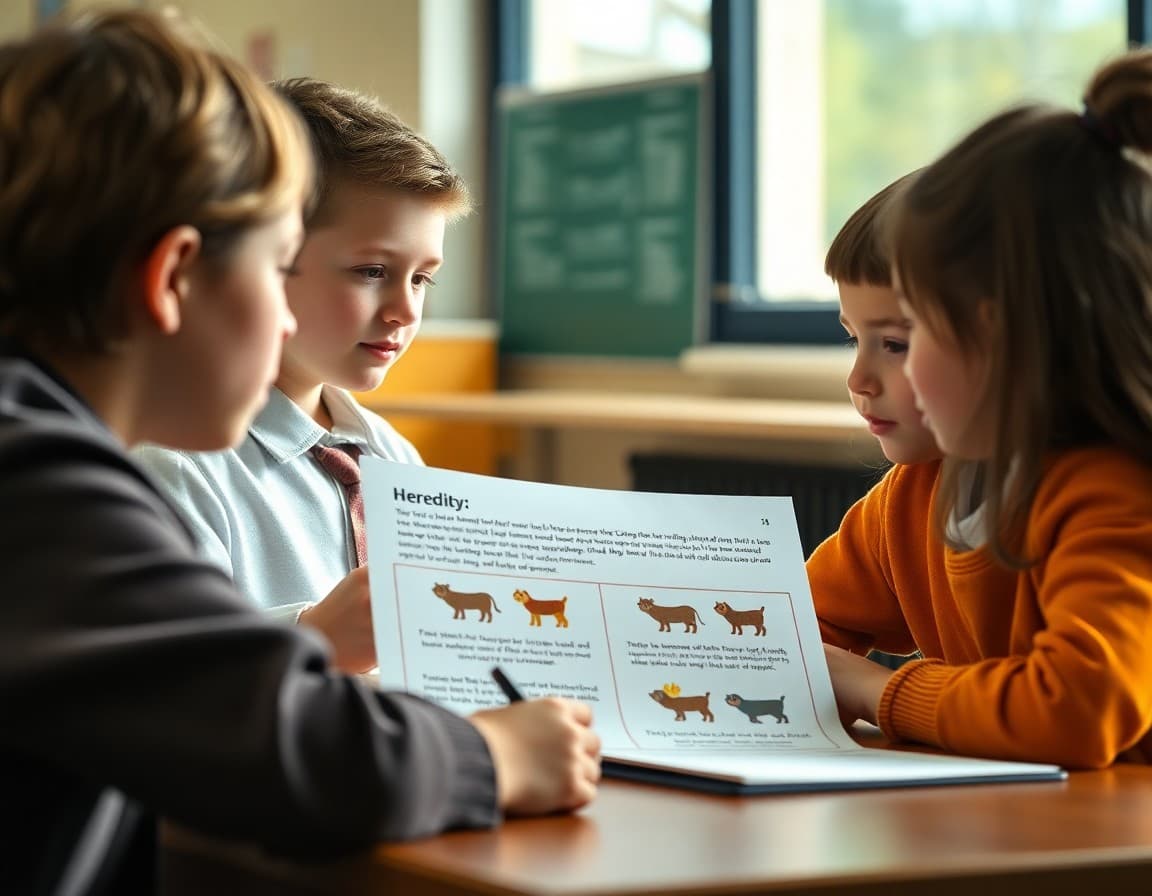
The genetics unit is one of the most personally meaningful topics in biology. Families can see the concepts at work in their own features, in family resemblances, and in medical histories. A parent newsletter that connects the science to these personal contexts makes the unit feel immediately relevant rather than abstract.
What Students Are Studying in the Genetics Unit
Students are working through the fundamental mechanisms of heredity: how traits are passed from one generation to the next through genes. The unit covers DNA structure, how genes code for traits, the concepts of dominant and recessive inheritance, and the mathematical tools used to predict inheritance patterns.
By the end of the unit, students will be able to look at a family pedigree and determine how a trait is likely inherited, calculate the probability that offspring will express or carry a specific trait, and explain why some traits appear to skip generations.
DNA: The Starting Point
DNA is the molecule inside every cell that carries the instructions for building and running a living organism. It is organized into segments called genes, and each gene provides the code for a specific protein or trait. Humans have approximately 20,000 genes, all stored in 46 chromosomes packed inside the cell nucleus.
Students inherit two copies of most genes, one from each parent. Which version of a gene they inherit, and how those two versions interact, determines many of their traits.
Dominant and Recessive Traits
Some gene versions, called alleles, are dominant. A dominant allele is expressed whenever it is present, even if only one copy is inherited. Other alleles are recessive: they are only expressed when two copies are present. A person with one dominant allele and one recessive allele will show the dominant trait but can pass the recessive allele to their children.
Example at home: ask your student why two brown-eyed parents can have a blue-eyed child. If they can explain the recessive allele mechanism, they understand this concept.
Punnett Squares
Students use a tool called a Punnett square to predict the probability of offspring inheriting specific gene combinations. The grid format shows every possible combination of parental alleles and the mathematical probability of each outcome. This is the same probability reasoning students apply in math class, applied to a biological question.
Patterns of Inheritance
Beyond simple dominant-recessive patterns, students will study incomplete dominance (where neither allele fully dominates and the result is a blend), codominance (where both alleles are expressed simultaneously), and sex-linked traits (traits coded on the X or Y chromosome, which are inherited differently in males and females). These patterns explain why inheritance is more complex than a simple either-or.
Real-World Connections: Medical Genetics
Many human diseases follow predictable inheritance patterns. Cystic fibrosis is recessive. Huntington's disease is dominant. Colorblindness is X-linked recessive. Understanding these patterns allows geneticists and physicians to estimate risk and advise families. Students will apply the same analytical tools they use on abstract genetics problems to real medical scenarios.
How Families Can Engage at Home
Ask your student to explain why you look the way you do using genetics. What traits are dominant in your family? Can they identify any traits that might be recessive? Building a simple family pedigree together, tracing one trait like hair color or attached earlobes through two or three generations, is a direct application of the unit content that makes genetics personal and memorable.
Upcoming Assessment
The genetics unit assessment covers DNA structure, dominant and recessive inheritance, Punnett square calculations, pedigree analysis, and the interpretation of non-Mendelian inheritance patterns. A review guide will be distributed [timeframe] before the test.
Get one newsletter idea every week.
Free. For teachers. No spam.
Frequently asked questions
How do biology teachers explain dominant and recessive traits to parents in a newsletter?
Use a concrete family example. Eye color is a classic starting point: brown eye color is typically dominant over blue, which means a parent with one brown-eye gene and one blue-eye gene will have brown eyes but can pass the blue-eye gene to their children. This is why two brown-eyed parents can have a blue-eyed child. The dominant gene masks the recessive one when both are present, but the recessive gene is still there and can appear in the next generation.
Should genetics newsletters address genetic testing and medical genetics?
A brief mention is appropriate if your unit covers it. Note that students will learn the principles behind genetic testing, including how diseases like cystic fibrosis and sickle cell anemia follow predictable inheritance patterns. If families have questions about their own genetic history in the context of what students are learning, encourage them to reach out. Connecting the biology to its medical applications makes the content more meaningful.
How do teachers explain Punnett squares to parents who don't remember biology?
A Punnett square is a simple grid used to predict the probability that offspring will inherit specific traits. The two parents' gene versions go along the top and side of the grid. Filling in the grid shows all the possible combinations an offspring could inherit and the probability of each. It is a visual tool for the same kind of probability students cover in math, applied to genetics.
What are the most common misconceptions about genetics that families bring home?
Three come up frequently: that traits are determined by just one gene (most traits are influenced by multiple genes), that dominant means more common (a trait can be dominant and still rare in the population), and that traits skip generations unpredictably (when a trait appears to skip a generation, it is because a carrier parent had one recessive gene but did not express the trait). Addressing these briefly in the newsletter prevents families from reinforcing misconceptions at home.
What tool works best for subject teacher newsletters?
Daystage allows biology teachers to embed diagrams, Punnett square images, and lab photos alongside written content. A clean newsletter template with standing sections makes the genetics unit newsletter consistent with your other unit communications throughout the year.

Adi Ackerman
Author
Adi Ackerman is a former classroom teacher and curriculum writer with 8 years in K-8 schools. She writes about school communication, parent engagement, and what actually works in real classrooms.
More for Subject Teachers
Ready to send your first newsletter?
3 newsletters free. No credit card. First one ready in under 5 minutes.
Get started free