
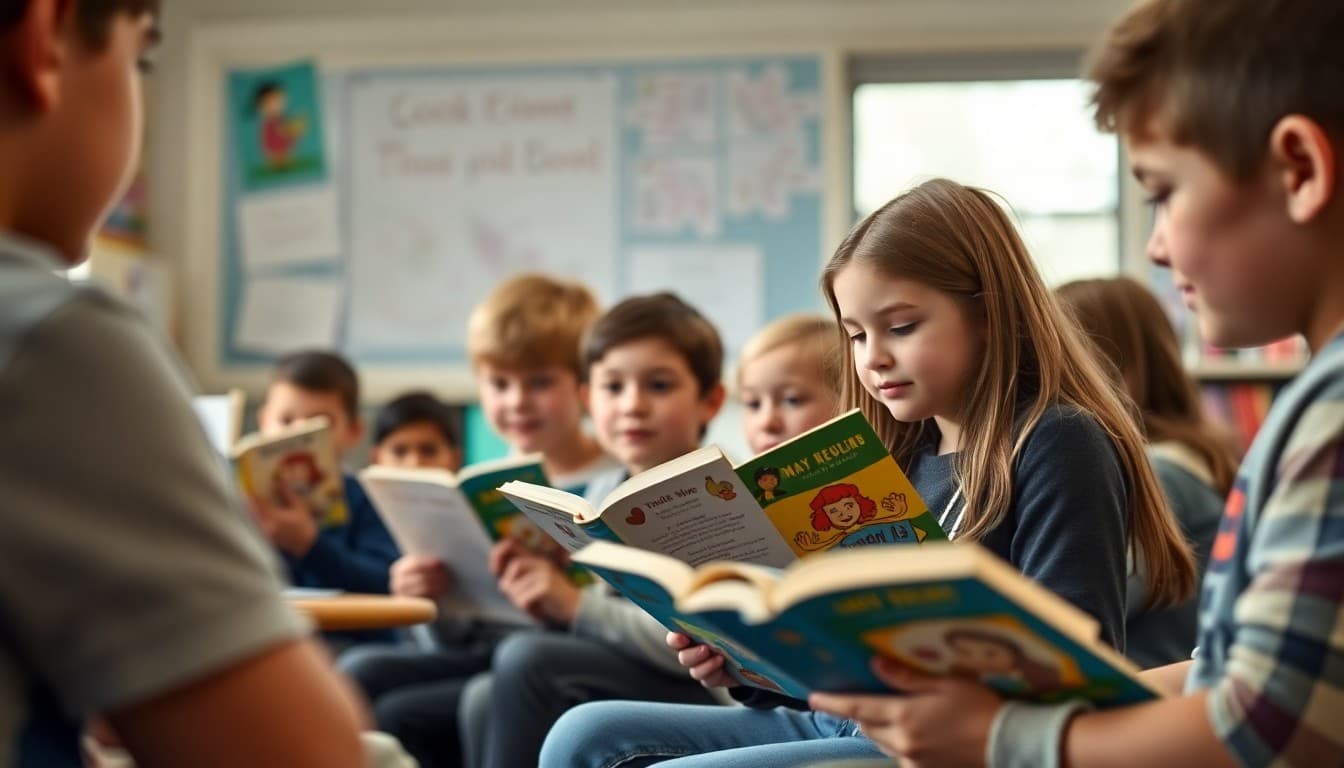
May Reading Class Newsletter: What We Are Learning

May is the last month to communicate formally with the families who trusted you with their child's reading life all year. A strong May reading newsletter does three things: it wraps up the academic year with clarity, it celebrates genuine growth without being vague about it, and it sets up families for a summer that does not undo what you spent ten months building.
Open With Specific Growth
Start by naming two or three things students can do now that they could not do in September. "Students who struggled to identify main idea in September can now analyze theme, compare two author's arguments, and write a full paragraph of text evidence." That kind of specific summary is more powerful than any general praise. Parents hear a lot of warm generic endings in May. Specificity stands out.
Name the Final Unit
Tell parents what you are teaching in May and why you chose to end the year with it. Whether that is a poetry unit, an independent reading project, an author study, or a culminating discussion of the year's books, give families the rationale. A teacher who explains choices is a teacher families trust.
Describe Any End-of-Year Projects or Celebrations
If you have a book talk, reading showcase, portfolio, or any kind of culminating project, give parents the details now. Include the date, what students will do, and whether family members are welcome to attend. End-of-year reading events are some of the most memorable school experiences for families, so make sure they know about them.
A Template Excerpt for May
Here is a section to adapt:
"We are finishing the year with an author study and book talk unit. Each student chose a favorite author, read two of their books, and prepared a short recommendation to share with the class. Book talks happen the week of May 18. It has been remarkable to watch students who started the year nervous about public speaking stand in front of their peers and talk passionately about a book they love. That is one of my favorite moments every year."
Give Summer Reading Recommendations
This is the most practical section of your May newsletter. Give three to five specific book recommendations with one sentence about each. Include the reading level or age range. Pair recommendations with what students read in class: if the class read a realistic fiction novel, suggest similar titles. If students loved a nonfiction text, suggest a follow-up.
Explain the Summer Slide and How to Fight It
Be direct about what summer does to reading skills. Students who do not read over the summer lose vocabulary, fluency, and comprehension ground. Tell families that 20 minutes of reading per day, any book, any format, dramatically reduces that loss. Give one practical suggestion for a reluctant summer reader: audiobooks, graphic novels, or choosing a series so the next book is already chosen.
Address Final Grades and Report Cards
Tell parents when report cards arrive and what the reading grade reflects. If any families might have questions about the final mark, invite them to reach out before school ends.
Close With Genuine Appreciation
A May newsletter can afford one or two sentences of sincere acknowledgment. Thank families for the reading routines they maintained at home, the books they bought, and the questions they asked. Then close with your contact information and a warm offer to connect any time. End the year the way you started it: with clarity, warmth, and a specific invitation to stay in touch.
Get one newsletter idea every week.
Free. For teachers. No spam.
Frequently asked questions
What should I include in a May reading newsletter?
Cover the final unit or project, celebrate growth since September, give specific summer reading recommendations with title names, and close with any end-of-year reading events or celebrations. May is the one newsletter where a warmer, reflective tone works well without feeling indulgent.
How do I write summer reading recommendations parents will actually use?
Be specific and brief. Give three to five titles at different reading levels, each with a one-sentence description. Tell parents what level each book is appropriate for and why students who liked a particular kind of book in class will enjoy it. Concrete recommendations get read and acted on. A long list of titles does not.
Should I address final grades in my May reading newsletter?
Yes, briefly. Explain what the final reading grade reflects and when report cards arrive. If any families might have questions, invite them to contact you before the year ends rather than over the summer. An open invitation before the final day is more useful than an email address after school is out.
How do I make a May reading newsletter feel celebratory without being sentimental?
Focus on specific accomplishments rather than emotions. Instead of writing that it has been an amazing year, name two or three concrete things students can do now that they could not do in September. Specific growth signals are far more meaningful than warm adjectives.
What is the best way to send a final school year newsletter?
Daystage makes it easy to send a polished May newsletter and archive it for future reference. You can also add summer reading lists as part of the newsletter without any formatting work. Many teachers save a May template and update it each year, which means the final newsletter of the year takes less than 15 minutes to write and send.

Adi Ackerman
Author
Adi Ackerman is a former classroom teacher and curriculum writer with 8 years in K-8 schools. She writes about school communication, parent engagement, and what actually works in real classrooms.
More for Subject Teachers
Ready to send your first newsletter?
3 newsletters free. No credit card. First one ready in under 5 minutes.
Get started free