
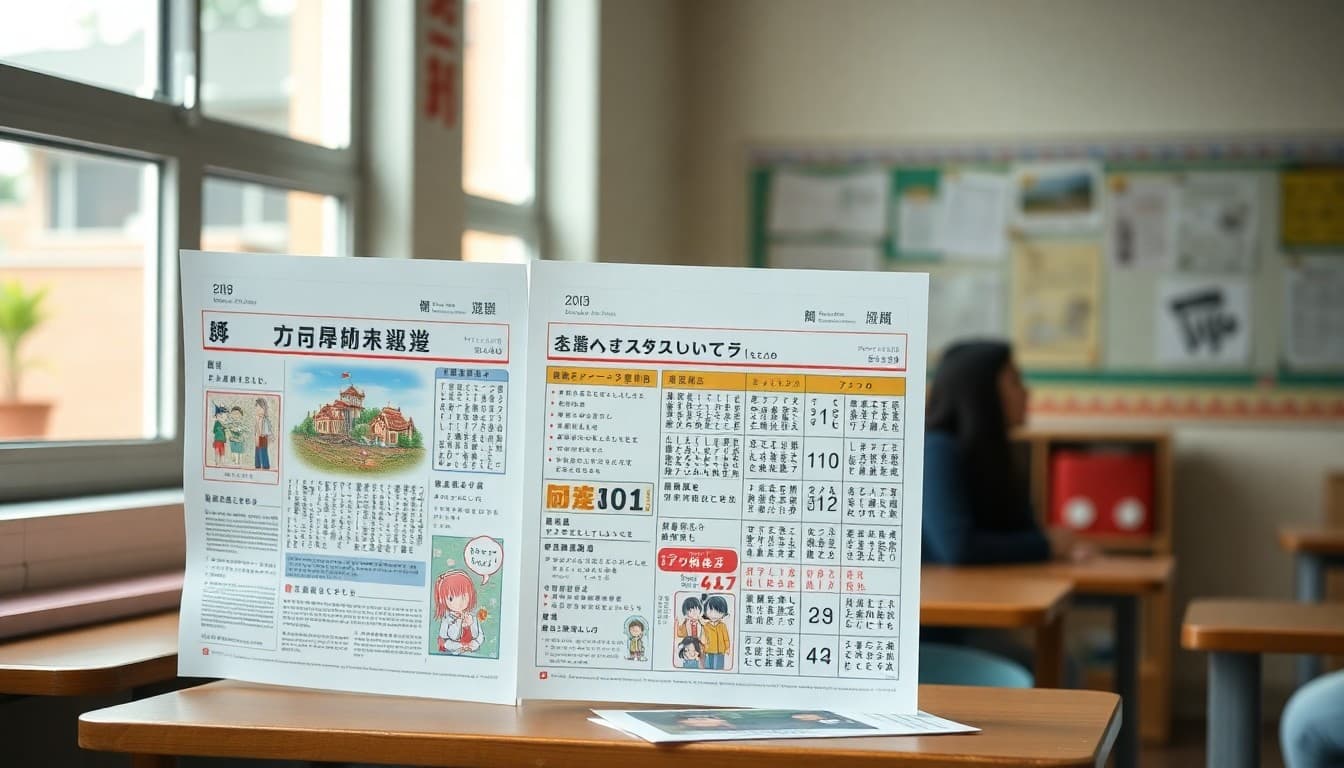
Japanese Teacher Newsletter Examples and Templates
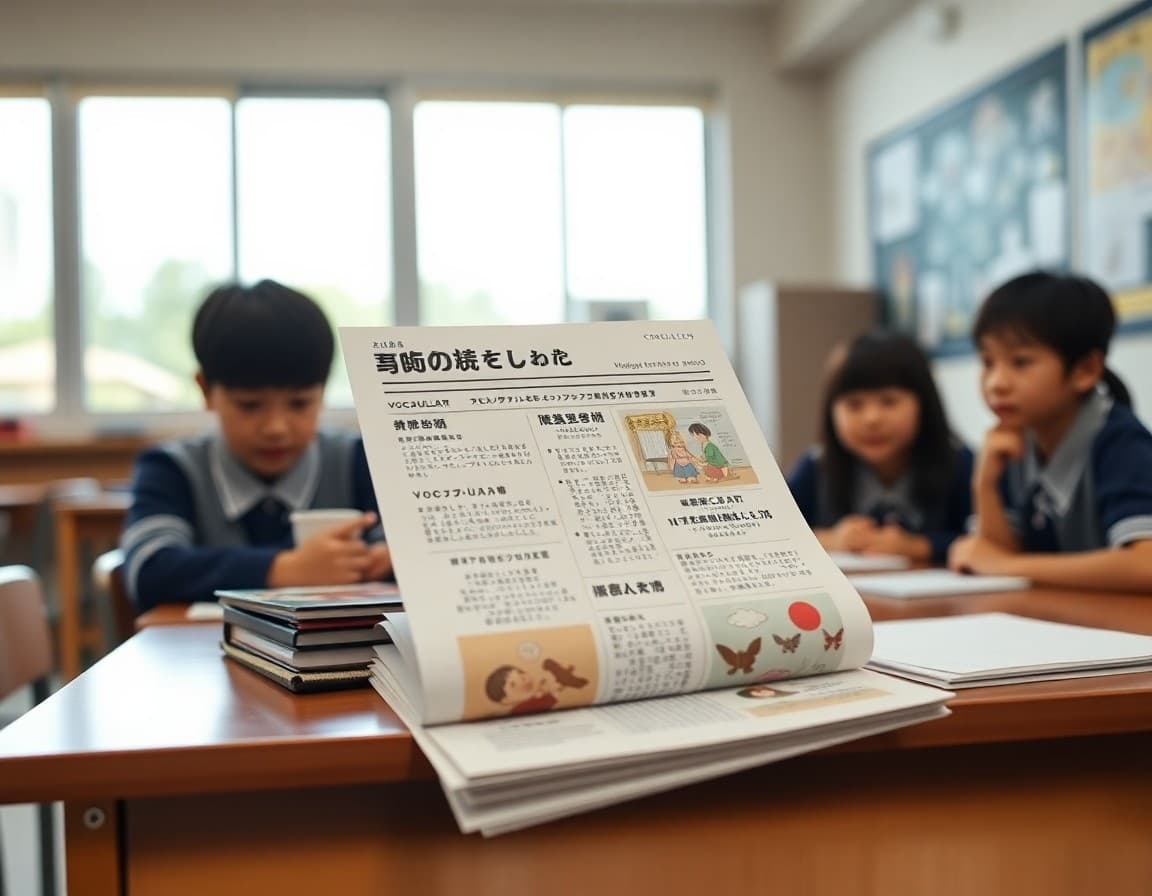
The most useful newsletter examples are ones you can actually adapt for your own class. Below are sample sections and full newsletter structures that Japanese teachers can use as starting points. Each example reflects a specific communication scenario you will face throughout the year.
Example 1: Back-to-School Newsletter
Subject: Japanese I: Welcome to the Year and What to Expect
Hello families, Welcome to Japanese I. This year students will learn to read and write hiragana and katakana, build a vocabulary of around 300 words, and hold basic conversations in Japanese. We will also explore Japanese culture throughout the year as a way to connect language to context. Course supplies: a notebook dedicated to Japanese practice and a set of colored markers for character work. Grades will be based on speaking assessments (30%), written quizzes (40%), and class participation (30%). The best way to reach me is by email. I look forward to a great year together.
Example 2: Hiragana Unit Newsletter
Subject: Japanese Class Update: We're Learning Hiragana
This week we began hiragana, the phonetic alphabet used for native Japanese words. There are 46 characters, and students will master them over the next three weeks through daily practice. A quiz covering the first two rows (a, i, u, e, o and ka, ki, ku, ke, ko) is scheduled for Friday. A free app called Kana Quiz is a great way for students to practice at home. This week's characters to know: a (ah), ka (kah), sa (sah).
Example 3: Cultural Festival Newsletter
Subject: Japanese Class: Tanabata and July Vocabulary
July brings Tanabata, the Japanese Star Festival celebrated on July 7th. According to legend, two stars separated by the Milky Way are allowed to meet once a year on this night. Students are writing wishes on strips of paper and decorating them in the traditional style. This connects to our current unit on expressing hopes and desires in Japanese. If your family wants to celebrate at home, a simple way is to write wishes together and hang them from a small branch. This week's vocabulary: hoshi (star), negai (wish), matsuri (festival).
Example 4: Assessment Prep Newsletter
Subject: Japanese II: Upcoming Speaking Assessment
Our mid-term speaking assessment is scheduled for the week of October 14th. Students will conduct a two-minute conversation with a partner covering self-introduction, family, and hobbies. They may use notes during preparation but not during the assessment itself. The rubric focuses on comprehensibility, vocabulary range, and fluency. To prepare: practice introducing themselves and asking basic questions out loud, even if it feels awkward. Speaking the language every day is far more effective than reviewing vocabulary silently.
Example 5: End-of-Unit Newsletter
Subject: Japanese Class: Finishing the Food Unit
We wrapped up our food and restaurant unit this week. Students can now order food politely in Japanese, describe meals, and express preferences. A writing assessment on this unit will be returned next week with feedback. Our next unit covers transportation and directions, which connects well to the geography content students may be covering in other classes. New vocabulary preview: densha (train), basu (bus), michi (road/path).
What These Examples Have in Common
Every example above is short, specific, and written in plain language. Each one names a concrete learning outcome parents can understand, includes a small vocabulary touchpoint, and either previews an upcoming event or reflects on recent progress. None of them assume parents know anything about Japanese.
Adapting These for Your Class
Use these as starting blocks, not scripts. Swap in your actual unit content, your quiz dates, and your specific vocabulary lists. The structure stays the same: what we are working on, what to expect next, and how families can help. Keeping that three-part frame consistent means parents always know where to look for the information they need.
Building a Repeatable Newsletter Routine
The teachers who communicate most effectively with families are the ones who make newsletters a habit rather than a one-off effort. A monthly or bi-weekly cadence is sustainable for most Japanese teachers. Once you have a solid template, updating it takes fifteen minutes. The consistency builds trust with families over time, and parents become more engaged when they know communication will be regular and predictable.
Get one newsletter idea every week.
Free. For teachers. No spam.
Frequently asked questions
What should a back-to-school Japanese newsletter include?
A back-to-school Japanese newsletter should cover course expectations, an overview of the year's learning goals, a brief introduction to the writing systems students will encounter, supply requirements, and how you plan to communicate throughout the year. Including a short vocabulary list for basic greetings gives parents an immediate taste of what their child will be learning.
How do I write a newsletter about a hiragana or katakana unit?
Explain what hiragana and katakana are in one or two sentences, then describe what students will be able to read and write by the end of the unit. Include a small sample chart showing a few characters. Let parents know how many characters students are expected to master and any upcoming quizzes. Suggesting a free character practice app gives families a concrete way to support their child.
What tone works best for Japanese teacher newsletters?
Direct and warm works best. Parents appreciate knowing exactly what is happening in class without wading through educational jargon. Write the way you would talk to a parent at a back-to-school night. Enthusiasm for the subject comes through naturally when you share specific examples of what students are doing and learning.
How do Japanese teachers handle newsletters for parents at different language levels?
Assume parents speak no Japanese. Use plain English throughout and explain any Japanese terms you use. A small vocabulary section with romanized text and English translations helps parents engage without prior knowledge. For schools with significant Japanese-speaking parent populations, a bilingual format can help, though the English version should always stand alone.
What tool works best for subject teacher newsletters?
Daystage lets Japanese teachers build a polished newsletter template and reuse it each month or unit cycle. The platform handles formatting and delivery, so you spend time on content rather than layout. Adding a vocabulary table or embedding cultural images takes a few clicks.

Adi Ackerman
Author
Adi Ackerman is a former classroom teacher and curriculum writer with 8 years in K-8 schools. She writes about school communication, parent engagement, and what actually works in real classrooms.
More for Subject Teachers
Ready to send your first newsletter?
3 newsletters free. No credit card. First one ready in under 5 minutes.
Get started free