

How to Write a Science Newsletter to Parents That Sparks Curiosity
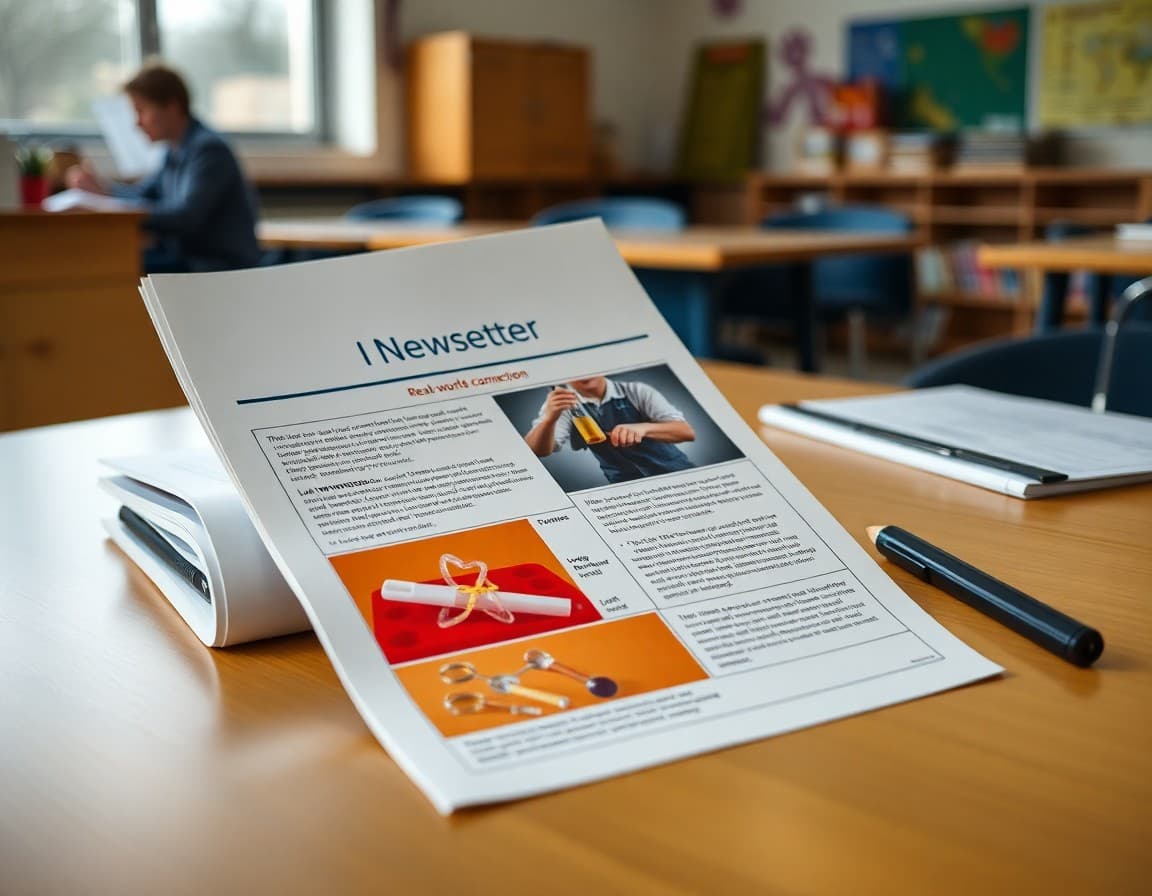
Science newsletters are most effective when they make the subject feel like something that extends beyond the classroom. Parents who see science as connected to what happens in the world around them, in the news, in the kitchen, in the garden, are better positioned to support their student's curiosity and engagement. Here is how to write a newsletter that does that.
Start With a Curiosity Hook
Open the newsletter with a question or a surprising fact from the current unit. Why does the sky turn red at sunset? How can a tiny cell contain a full set of instructions for building a human body? What makes one element explosive and the one next to it on the periodic table completely inert? A good opening question signals to parents that science class is about exploring ideas, not just memorizing facts.
Describe the Current Unit in Accessible Language
After the hook, describe what students are studying in plain language. Name the unit, explain the central concept, and describe the key skills students are building. Avoid technical jargon without translation. If the unit covers cellular respiration, explain it as the process cells use to convert food into usable energy. Accessibility does not mean dumbing down; it means choosing language that connects rather than excludes.
Lab Highlight
Describe one lab or investigation students completed recently. Frame it as a question, an investigation, and a result. What were students trying to figure out? What did they do? What did they find? A brief, narrative-style lab description is more engaging than a procedure list. Include a photo of the lab if you have one and if media consent allows it.
Real-World and News Connection
Connect the current unit to something happening in the world right now. For a biology unit on ecosystems, mention a current conservation story. For a chemistry unit on reactions, point to a materials science innovation in the news. For a physics unit on forces, connect to a recent engineering or space news story. One specific connection is more valuable than a general statement that science is relevant.
Safety and Materials Overview
When the class is beginning a lab-intensive unit, include a brief safety overview. Describe the protective equipment students use, the safety procedures they follow, and any materials that will be handled during the unit. This proactive communication prevents parent concern and reinforces with students that safety is taken seriously. It also gives students the chance to explain safety rules to their family.
How Families Can Extend Science at Home
Suggest one or two ways families can engage with the current unit topic at home. For an ecosystems unit, suggest a backyard biodiversity survey. For a chemistry unit, suggest a kitchen experiment that illustrates a reaction. For a physics unit, suggest a simple engineering challenge using household materials. The more accessible and fun the suggestion, the more likely families are to try it.
Include a specific resource, a YouTube channel, a website, or a documentary, for families who want to explore further.
Upcoming Labs, Tests, and Projects
List upcoming assessments with dates and a brief description of the content. For lab practicals, describe the format. For unit tests, note what concepts are covered. For research projects, include the assignment description and the due date. Parents who know what is coming can support preparation in a way that actually aligns with the assessment.
Contact and Curiosity Questions
Close with your email and an invitation for families to ask questions. Leave parents with one or two curiosity questions to discuss at home: What is one thing in your environment that science explains? What is one question about nature you have always wondered about? Science newsletters that spark household conversations extend the class beyond the school day in a meaningful way.
Get one newsletter idea every week.
Free. For teachers. No spam.
Frequently asked questions
What is the best way to explain lab activities to parents in a newsletter?
Describe the lab in terms of what question students were trying to answer, what they did to find the answer, and what they discovered. Avoid technical procedure lists. Instead of writing that students performed titration using a standardized sodium hydroxide solution, write that students measured the concentration of an acid using a precise chemical reaction that changes color at the point of balance. The translation from procedure to story is what makes lab descriptions readable.
How do science teachers connect current units to news and real life in a newsletter?
Look for one current event per newsletter that connects to your unit content. Climate data for earth science. A new medical study for biology. A materials science breakthrough for chemistry. A space mission for physics. Even a brief mention of a current event alongside what students are learning makes the subject feel relevant rather than abstract. Include a link if it is a publicly available article.
Should science newsletters include lab safety information for parents?
Yes, especially at the start of a unit that involves chemicals, heat, or live organisms. A brief note on the safety procedures the class follows and the protective equipment students use gives parents confidence that the lab work is conducted responsibly. It also gives students an opportunity to explain the safety protocols to their family, which reinforces the importance of those rules.
How do science teachers write newsletters about abstract topics like quantum mechanics or genetics without losing parents?
Start with a question or a real-world application before explaining the concept. Begin with: have you ever wondered why some traits skip generations? That is one of the things genetics helps explain. Then describe what students are learning. Leading with a question or phenomenon that parents recognize makes abstract content accessible. Every abstract concept in science has a concrete application or origin story.
What tool works best for subject teacher newsletters?
Daystage is well suited for science newsletters because you can embed lab photos, infographic images, and resource links alongside your text. A clean, image-friendly template makes the visual nature of science content easier to communicate.

Adi Ackerman
Author
Adi Ackerman is a former classroom teacher and curriculum writer with 8 years in K-8 schools. She writes about school communication, parent engagement, and what actually works in real classrooms.
More for Subject Teachers
Ready to send your first newsletter?
3 newsletters free. No credit card. First one ready in under 5 minutes.
Get started free