
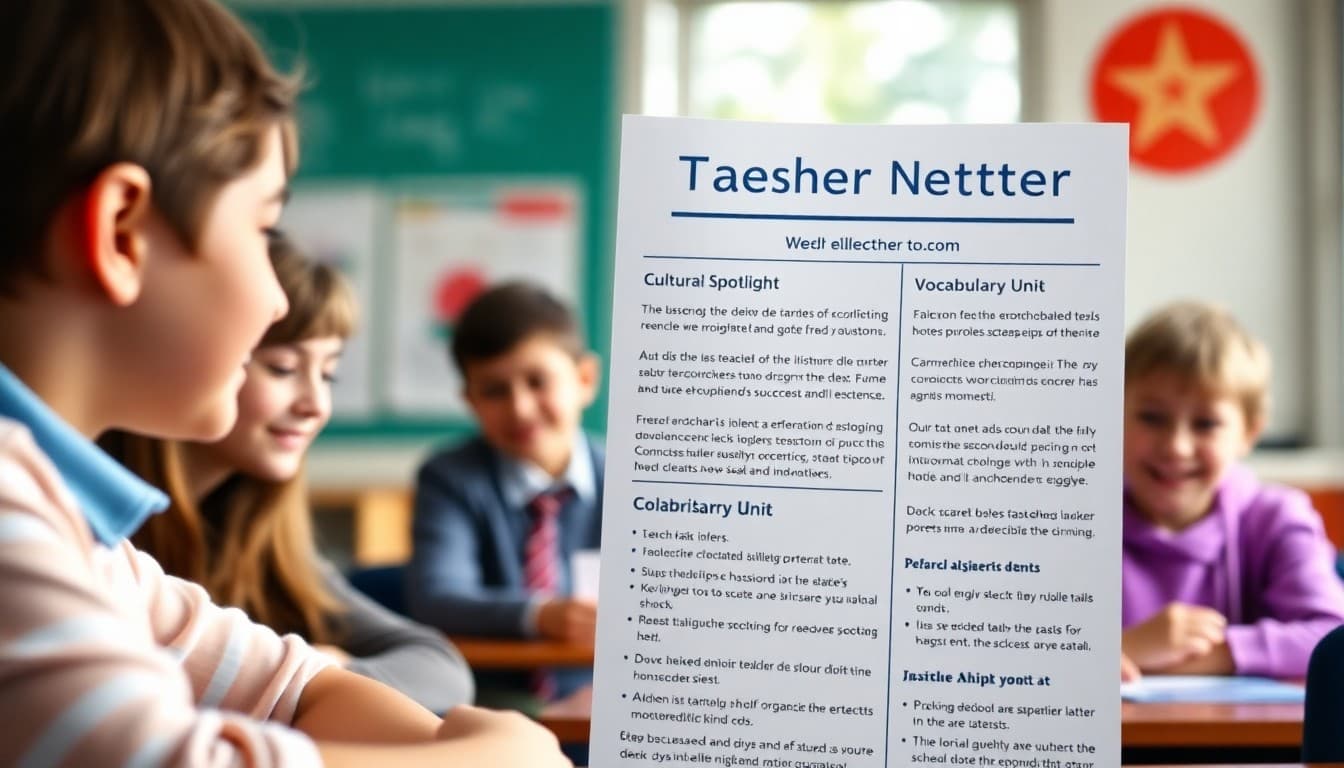
French Teacher Newsletter Examples for Every Unit of the Year

Why Examples Help World Language Teachers Most
French teacher newsletters often feel harder to write than other subject newsletters because the content is so varied. Vocabulary, grammar, speaking, culture, and literature all need representation. Examples solve this problem by showing you one coherent structure that covers the essentials in under 400 words.
Example 1: September Orientation
"Welcome to French [level]. French is spoken in 29 countries across five continents, and this year we will explore the language and cultures of the Francophone world. By year's end, students at this level will be able to [proficiency goal in plain language]. Assessments include written compositions, vocabulary evaluations, and speaking exams. The most effective at-home support is 10 minutes of French exposure daily: a French podcast, show, or YouTube channel. Try asking your student to teach you one word from each week's vocabulary list. Merci et bienvenue! (Thank you and welcome!)"
Example 2: Cultural Spotlight
"This month we are exploring [Francophone country/region]. [Brief description of the country and one fascinating cultural fact.] This connects to our current unit on [vocabulary or grammar theme]. Our class discussion helped students understand [what they learned]. Ask your student to tell you one thing that surprised them about [country]. Cultures are most interesting when they challenge what we expect."
Example 3: Grammar Unit Launch
"We have started our passé composé unit. This is the past tense French uses to describe completed actions, like 'I went' or 'She ate.' It is one of the most used tenses in everyday French speech and also one of the most common sources of error for beginners. Students will spend three weeks on this structure before we apply it in conversation practice. Students who review their verb conjugation notes each night for 10 minutes during this unit will find the following weeks significantly easier."
Example 4: Oral Assessment Prep
"Our speaking assessment is [date]. Students will [describe format]. At home, families can help by listening while their student speaks French out loud, even if they do not understand the words. Timing the performance, offering calm feedback, and simply being a patient audience is the most effective oral exam support any family can give. Students who practice speaking French out loud every day in the week before an oral exam consistently perform better."
Using These Examples
Two examples combined create a complete newsletter in under 400 words. Keep the format consistent and update the specific details each month. Families who read your newsletter consistently know what to expect and actually look forward to it.
Get one newsletter idea every week.
Free. For teachers. No spam.
Frequently asked questions
What should a French class newsletter say at the start of the year?
Cover which level students are in, what they will be able to do by year's end, how speaking assessments work, and one at-home French activity to start right away. Under 350 words sets the foundation for the whole year.
What does a good Francophone cultural spotlight newsletter look like?
Name the country or region, describe one specific cultural tradition, festival, or historical moment, connect it to the current vocabulary or grammar unit, and include one conversation starter for families.
Can French newsletter examples be adapted for AP French Language?
Yes. AP French newsletters add exam-specific communication: the exam date from February onward, format explanation (interpersonal, interpretive, and presentational modes), and a specific review plan in April. The cultural and vocabulary structure stays the same.
Should French newsletter examples include phrases parents can practice with students?
Yes. Including two or three French phrases with pronunciation guidance (even approximate) and English translations gives parents a way to engage with the language directly. Parents who feel they can participate are more supportive than parents who feel excluded.
What tool makes French newsletter sending easy?
Daystage allows you to build structured newsletters with vocabulary sections, cultural spotlights, and assessment updates, then send to all French families at once without managing email lists.

Adi Ackerman
Author
Adi Ackerman is a former classroom teacher and curriculum writer with 8 years in K-8 schools. She writes about school communication, parent engagement, and what actually works in real classrooms.
More for Subject Teachers
Ready to send your first newsletter?
3 newsletters free. No credit card. First one ready in under 5 minutes.
Get started free