

How to Write a French Teacher Newsletter to Parents That Builds Buy-In
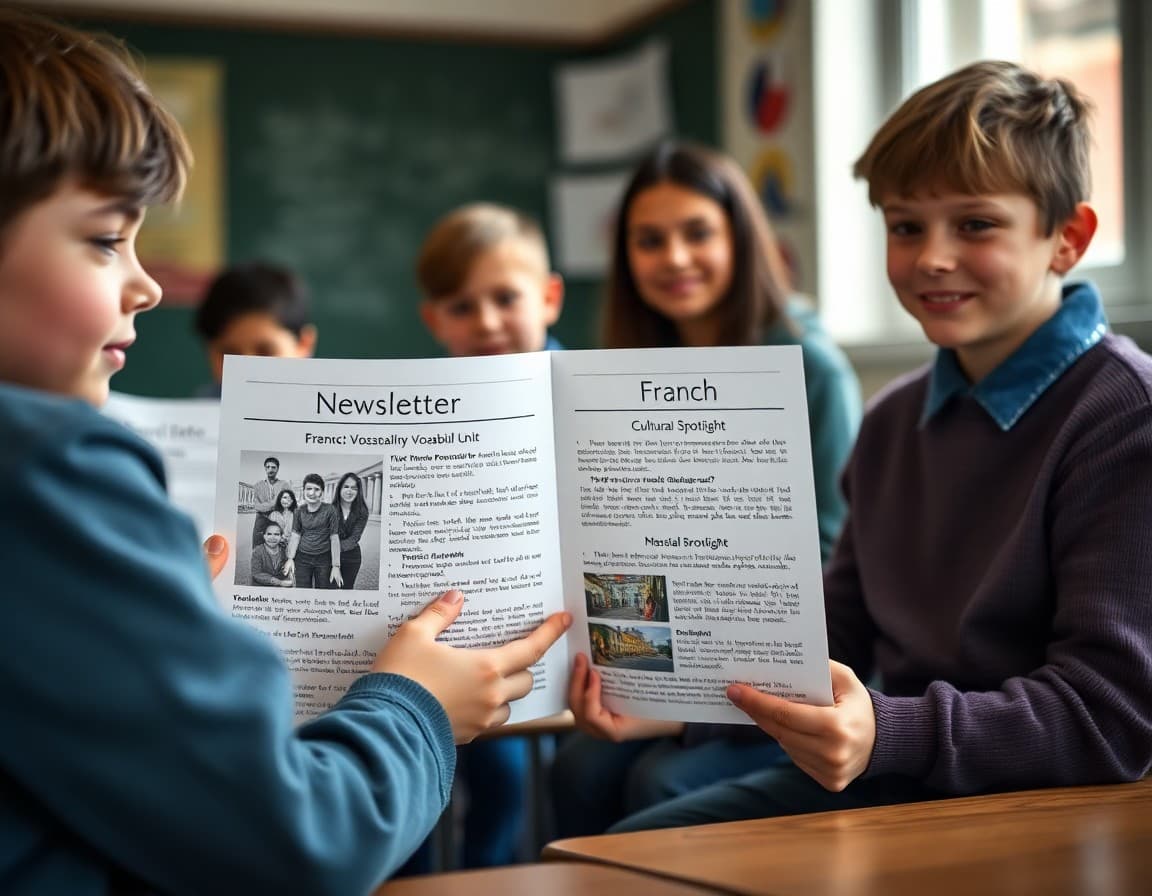
French Newsletters Have Cultural Depth to Draw On
French is spoken in more than 29 countries across five continents. The cultural richness this gives you as a teacher is enormous and your newsletter can reflect it. Every month, there is a Francophone cultural event, literary tradition, culinary tradition, or historical moment worth mentioning. This richness makes French newsletters easier to write engagingly than almost any other subject newsletter.
Lead With What Students Can Now Do
Open every newsletter with a brief statement of what students have gained the ability to do. "Students can now describe their physical appearance, their personality, and their daily routine in French" is a proficiency milestone parents can understand and celebrate. "We have completed Unit 3" is not. Proficiency-focused opening lines make language learning feel like genuine acquisition rather than content coverage.
Vocabulary Samples in Every Newsletter
Include three to five key vocabulary words or phrases from the current unit with English translations. Pick words that are interesting, useful, or have a cultural connection. "Flâner (to stroll leisurely), avoir le cafard (to feel down or blue, literally 'to have the cockroach'), le coup de foudre (love at first sight, literally 'lightning strike')" give parents a genuine flavor of the language. French etymology and idiomatic expressions are endlessly interesting to parents who never studied the language.
Francophone Cultural Spotlight
Every newsletter should include a brief cultural spotlight. Rotate through Francophone regions over the course of the year. Paris in September, Quebec in October, Senegal in November, Louisiana in December. Each spotlight connects to vocabulary or themes being studied in class. Parents who understand that French class covers five continents of culture respond differently to the subject than parents who think it is just about France.
Oral Exam Preparation
When an oral assessment is coming, tell parents about it in advance. Explain what the format is, what students are being asked to do, and how families can help at home. Even parents who do not speak French can help their student practice by listening, responding in English, and timing the performance. This is one of the most practical support suggestions you can include.
Close With a French Experience for Home
End every newsletter with one French language or culture activity families can try at home. Watch a five-minute clip of a French cooking show. Look up the French version of a song they know. Ask your student to teach you three phrases from the current unit. These simple invitations build the at-home exposure that accelerates acquisition in any language class.
Get one newsletter idea every week.
Free. For teachers. No spam.
Frequently asked questions
How do I explain French to parents who have never studied the language?
Focus on what students can do rather than what they know. 'Students can now hold a short conversation about their daily routine in French' is more meaningful to most parents than 'students know 200 vocabulary words and the present tense conjugation.'
What is the best way to communicate about French pronunciation in a newsletter?
Briefly and with humor. French pronunciation is famously challenging for English speakers. A quick note about the nasal vowels, the silent letters, or the liaison rule with a lighthearted tone makes parents feel included in the experience their student is having.
Should French newsletters cover Francophone culture beyond France?
Absolutely. French is spoken in over 29 countries. Newsletters that spotlight Senegal, Quebec, Haiti, Morocco, and Belgium alongside France give parents a more complete picture of why French is globally significant and why learning it matters.
How should French newsletters handle grammar units?
With a plain-language explanation of what the grammar does, not how to conjugate it. 'Students are learning the subjunctive, which French uses to express doubt, wishes, and hypothetical situations. It is one of the most challenging and most useful grammatical structures in the language.'
What tool helps French teachers send professional newsletters to all families?
Daystage is built for teacher-to-parent communication. You can create a structured newsletter with vocabulary samples, cultural spotlights, and assessment updates, then send to all French class families at once.

Adi Ackerman
Author
Adi Ackerman is a former classroom teacher and curriculum writer with 8 years in K-8 schools. She writes about school communication, parent engagement, and what actually works in real classrooms.
More for Subject Teachers
Ready to send your first newsletter?
3 newsletters free. No credit card. First one ready in under 5 minutes.
Get started free