
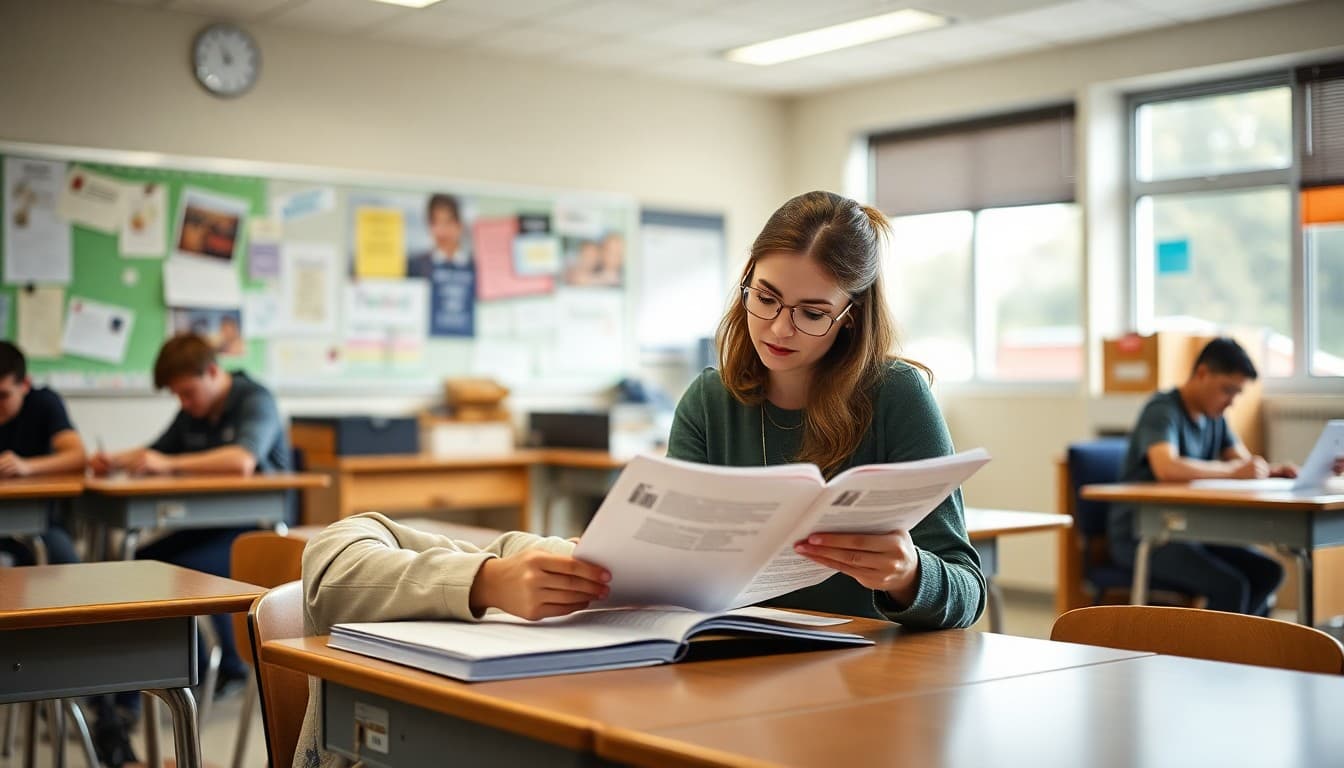
Health Teacher Newsletter: Summer Work Newsletter Guide

Summer health assignments work best when families understand them as well as students do. A clear newsletter sent before school ends takes the guesswork out of what students should do, when they should do it, and why it matters. This guide walks through what to include, how to write it, and a sample template you can adapt for your class.
Why a Summer Work Newsletter Matters for Health Class
Health content is personal. When you assign a physical activity log or a nutrition journal, you are asking students to pay attention to their own bodies and habits over weeks without your supervision. That requires more context than a worksheet sent home in a folder. A newsletter gives you space to explain the rationale, set the tone, and tell families how to support the assignment without hovering.
Teachers who send a clear pre-summer newsletter consistently report higher completion rates. One health teacher in a suburban middle school tracked a 40 percent jump in returned journals after she started sending a two-paragraph email to parents alongside the student handout.
What to Include in the Newsletter
Keep the structure simple. Five elements cover almost everything families need:
Assignment summary. One sentence on what students will do. "This summer, your student will keep a 30-day wellness journal tracking sleep, physical activity, and one meal per day."
Why it matters. Connect the assignment to what they learned. Mention the specific unit so parents see continuity rather than busywork.
Exactly what to submit. Specify format (paper log, printed sheet, Google Doc), length, and due date for the first week back.
How to reach you. A school email address and a note about when you check it in summer.
Optional resources. A link to a free app for tracking, a suggested book, or a short YouTube series related to the topic.
Sample Template Excerpt
Below is a template opener you can copy and adjust:
"Hello families, I hope your summer is off to a great start. This year's 8th grade health class finishes with a personal wellness project that continues through July. Students will track their sleep (hours per night), physical activity (minutes per day), and one observation about their eating habits each morning. There is no minimum word count for each entry, but each one should be honest. The log sheet is attached to this message. Please remind your student to bring it on the first day back, August 25th. Questions? Reach me at [email]. I check messages on Mondays through the end of July."
How to Frame the Assignment for Students vs. Parents
Students and parents need different framings. Students respond to autonomy and relevance: tell them this is their data, no one else's, and that patterns they notice might actually surprise them. Parents respond to clarity and low burden: tell them the assignment takes five minutes a day and they do not need to supervise it.
If your newsletter goes to both, write two short sections with different openings rather than trying to serve both audiences in one voice.
Handling Sensitive Topics in Summer Assignments
If your assignment touches on nutrition, body weight, or mental health, add a brief note that acknowledges the personal nature of the work. Something like: "If any part of this assignment feels uncomfortable for your student, please reach out so we can find an alternative that meets the same learning goals." This protects students who may be dealing with eating disorders or mental health challenges and signals to families that you are a thoughtful professional.
Timing: When to Send the Newsletter
Send the newsletter two to three weeks before the last day of school, not on the last day. Families are distracted during finals week and end-of-year events. An earlier send gives parents time to buy a journal, download an app, or ask clarifying questions before school ends.
Send a follow-up reminder the day before summer break starts. Keep it to three sentences: what the assignment is, when it is due, and your email address.
Making the Log Format Concrete
Vague assignments produce vague responses. Give students a log format with specific columns or prompts. For a fitness log, include: date, activity type, duration, and one sentence on how they felt afterward. For a nutrition journal, include: meal time, two foods eaten, and a one-word mood rating. Specificity makes the assignment easier to complete and much easier to grade.
Following Up in the Fall
Your first-week-back newsletter should reference the summer assignment directly. Thank students for completing it, tell them when you will collect it, and let them know how it connects to the next unit. This closes the loop for students who followed through and gently signals to those who did not that the work still matters.
Get one newsletter idea every week.
Free. For teachers. No spam.
Frequently asked questions
What should a health teacher include in a summer work newsletter?
A summer work newsletter from a health teacher should explain the purpose of the assignment, list exactly what students need to do, set a clear deadline, and tell families how to reach you if questions come up. Keep the tone encouraging rather than clinical. If students are tracking physical activity or nutrition, give them a simple log format so they are not inventing one themselves.
How long should summer health assignments be?
Most health teachers assign 2-4 weeks of light work: a wellness journal, a fitness log, or a food diary. Anything longer risks low completion rates. Frame the assignment as a personal challenge rather than a graded task if possible, which tends to produce more honest and meaningful responses from students.
Should I contact families about summer health work or just students?
Both. Students need the logistics, but families help create the conditions at home that make completion possible. A short parent note explaining why the assignment matters and how they can support it without doing it for the student goes a long way. Health assignments often touch on personal habits, so a heads-up to parents builds trust.
What tone works best for a summer health newsletter?
Warm and practical. Health class already carries some stigma around personal habits and body image. A newsletter that sounds like a wellness coach rather than a grader will get better buy-in from students and families. Use 'you' instead of 'students' when possible.
What tool makes it easy to send summer health newsletters to families?
Daystage lets you design a polished newsletter with sections for the assignment overview, a sample log format, and a direct contact link, then send it to all families at once. You can include photos of last year's completed journals to show students what good work looks like, which raises the quality of submissions every time.

Adi Ackerman
Author
Adi Ackerman is a former classroom teacher and curriculum writer with 8 years in K-8 schools. She writes about school communication, parent engagement, and what actually works in real classrooms.
More for Subject Teachers
Ready to send your first newsletter?
3 newsletters free. No credit card. First one ready in under 5 minutes.
Get started free