

English Language Arts Teacher Newsletter: Summer Work Newsletter
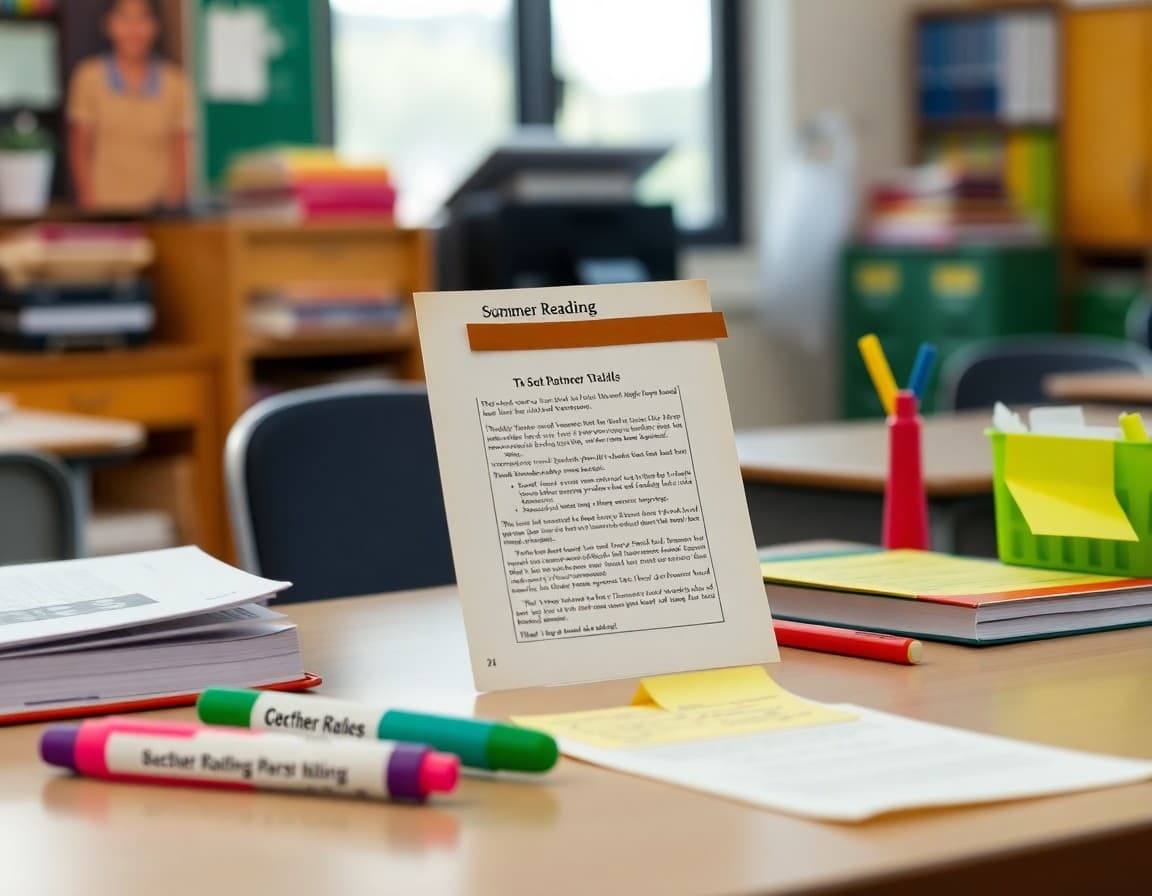
A summer work newsletter for ELA is easy to write badly. The version that lists five book titles with no context, no access instructions, and no explanation of what students are actually supposed to do with them produces a familiar September result: half the class did not read, a quarter read the wrong edition, and a few students show up anxious because they annotated but are not sure they did it right. A clear summer work newsletter prevents all of that.
Start with the why before the what
Families and students are more likely to follow through on summer work when they understand what it is preparing them for. "Next year in AP Language and Composition, we will spend the first unit analyzing how authors construct arguments and use rhetorical strategies to influence their audience. The summer reading is designed to give you a shared set of texts we can reference throughout that unit, and to give you practice reading at the pace the course demands." This framing converts summer reading from an obligation into preparation with a clear purpose.
If the summer work is for an incoming class rather than a returning one, give students a brief picture of what the course covers. Students who are curious about what is coming are more likely to engage with the work than students who are reading in a vacuum.
Give the complete book information families need to find the text
Title, author, full ISBN, and a note about which edition matters for your annotation assignment. If you have marked specific chapter divisions, page ranges, or appendices that students need for the assignment, note that only certain editions work. "The Penguin Classics edition of Their Eyes Were Watching God includes the foreword by Edwidge Danticat, which we will use as a companion reading. Any edition of the novel works for the assignment itself, but do not use a condensed or adapted version."
Include the purchase link and the approximate price, then immediately list every free and low-cost alternative: the public library, Libby with a library card, Project Gutenberg for public domain texts, and any school loaner copies. Never leave families to solve the access problem on their own.
Explain annotation expectations with concrete examples
Most students who do not annotate correctly have not been shown what a useful annotation looks like. In your newsletter, give them a model. "Here is an example of the kind of annotation we are looking for: In chapter four, when the narrator describes the river as 'something alive and watching,' underline that phrase and write in the margin: personification, builds sense of nature as witness or threat. That is the kind of observation we will be building on in class discussion."
If you want students to focus on specific literary devices or techniques, name them. Asking students to annotate for "anything interesting" produces scattered, inconsistent notes. Asking them to annotate for unreliable narration, shifts in tone, and moments of irony gives them a reading lens that sharpens their attention.
Describe the written assignment clearly with the due date upfront
If there is a written component, make it the clearest section of the newsletter. Here is a sample section that works:
"Summer Assignment Due: September 8 (first full week of school). Write a 500 to 750 word rhetorical analysis of one passage you selected and annotated from the summer reading. Your analysis should identify the author's purpose in the passage, explain two rhetorical strategies the author uses to achieve that purpose, and use specific textual evidence with page citations. Submit as a printed hard copy on September 8. No late submissions will be accepted without prior arrangement."
State the due date before describing the assignment, not after. Families who skim newsletters often only read the first line of any section.
Address common concerns before families have to ask
The three questions ELA teachers get most often about summer work: Can my student read a different book? Can they use SparkNotes? What if they did not take this class last year and are new to the school? Answer all three in the newsletter. "The book listed is the required text. Alternate titles are not accepted because our first unit is built around shared analysis of the same passages. CliffsNotes and SparkNotes are not substitutes for reading. Students who rely on them for the written assignment will not have the annotation evidence the assignment requires. Students who are new to our school this year and did not receive this assignment in time should email me at [address]. I have a small number of loaner copies available."
Set a realistic pacing guide for students who need one
Ten weeks of summer feels infinite in June and disappears in August. Give students a pacing guide they can use if they need it. "If you want to finish the book before August 1 and leave yourself two weeks for the written assignment, read about 30 pages per week starting the first week of July. The novel is 286 pages." Simple math, no pressure, genuinely useful for students who need a structure to start.
Close with your contact information and a clear invitation to ask questions
Families and students who have questions about summer work often do not ask them because they do not know if they are allowed to email over the summer. Say explicitly: "Questions about the assignment are welcome all summer. I check email on weekdays through August 15 and will respond within 48 hours." Families appreciate knowing the door is open. Students who ask a clarifying question in July do better on the September assignment than students who guessed.
Send the newsletter twice, once before school ends and again on the last day, and save both sends in the same platform so you can reference them if a family claims they never received the information. Daystage keeps your sent newsletters organized so you can look up what you sent and when without hunting through your email outbox.
Get one newsletter idea every week.
Free. For teachers. No spam.
Frequently asked questions
What should an ELA summer work newsletter include?
It should include the complete reading list with titles, authors, and ISBNs so families can find the books, a clear explanation of what students are expected to do while reading (annotate, journal, complete a graphic organizer), any written assignments that are due in the fall and when they are due, and information about where to get the books. For families who cannot afford to purchase books, include library and free digital options. Clear expectations prevent the frustration of students arriving in September having read the wrong thing or done no preparation.
How do I explain annotation expectations to families?
Be specific. 'Annotation means writing in the margins or on sticky notes as you read. For this assignment, students should underline or mark passages where the author uses a literary device we studied this year, particularly metaphor, foreshadowing, or unreliable narration. For each marked passage, they should write a one-sentence note explaining what they noticed and why it matters.' Parents cannot support this work at home if they only know their student is supposed to annotate.
How do I handle students who do not have access to books over the summer?
Name the options explicitly in the newsletter. Include the public library card signup link, any school or district library summer programs, Project Gutenberg for public domain texts, and any free ebook options through apps like Libby or Hoopla that connect to a library card. If the district has loaner copies, explain how to check one out. Students who know exactly how to get the book are more likely to read it. Students who run into one barrier early in the summer often give up entirely.
Should I send the summer work newsletter before or after the final exam period?
Send it twice: once two weeks before the school year ends so families have time to find books, and again on the last day of school as a reminder. The first send is for families who plan ahead and want to start right after school lets out. The second send catches everyone who forgot. Include both sends in your planning calendar so you do not have to draft a new newsletter from scratch in June when you are already managing end-of-year grading.
What tool makes sending a summer work newsletter straightforward?
Daystage lets you build the newsletter once, include the book list, assignment expectations, and library links in one clean email, and send it to all families at once. You can schedule the second reminder send for the last day of school so you do not have to remember to send it manually. It delivers to the family's regular inbox, which means they are more likely to save it or forward it to their student rather than looking for it in a classroom app they stop checking once summer starts.

Adi Ackerman
Author
Adi Ackerman is a former classroom teacher and curriculum writer with 8 years in K-8 schools. She writes about school communication, parent engagement, and what actually works in real classrooms.
More for Subject Teachers
Ready to send your first newsletter?
3 newsletters free. No credit card. First one ready in under 5 minutes.
Get started free