
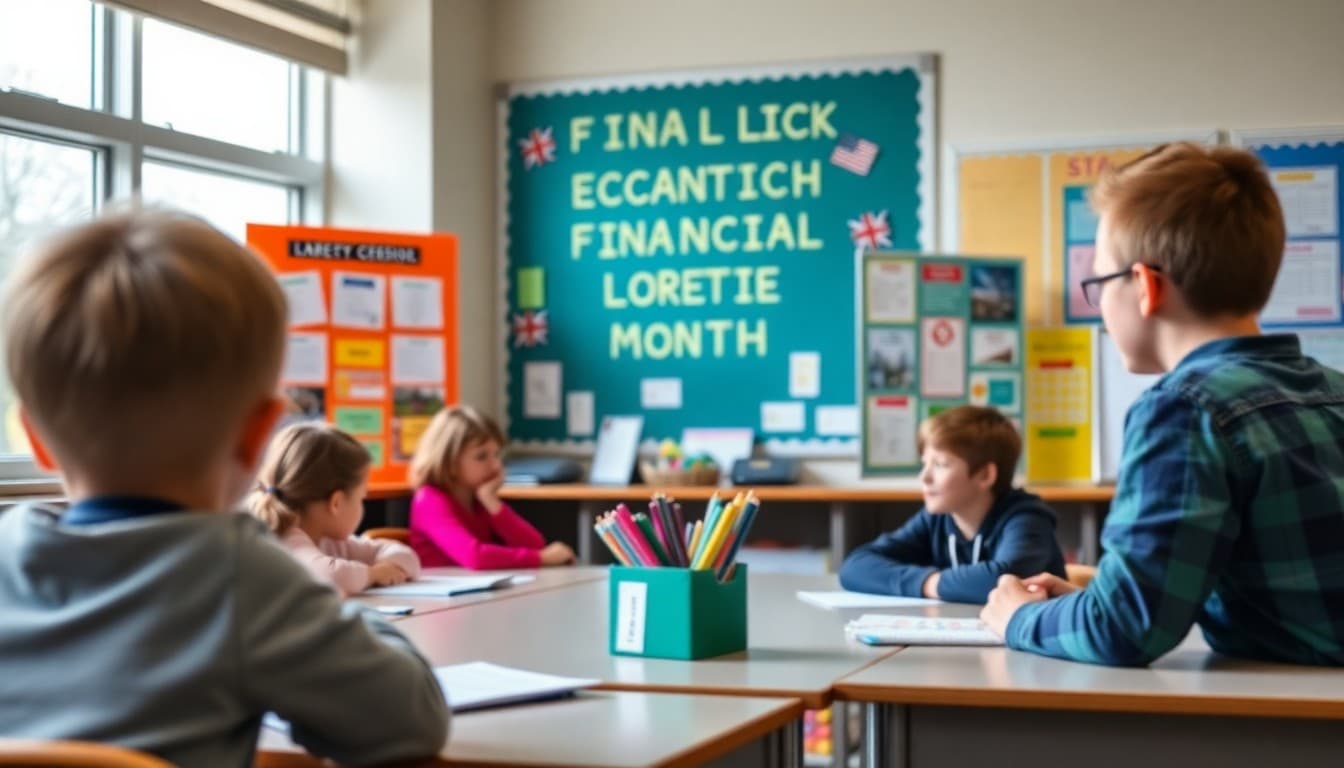
Economics Teacher Newsletter: National Month Newsletter Ideas

Economics sits at an unusual advantage when it comes to national awareness months. Financial literacy, labor rights, tax education, consumer protection: these are not peripheral topics bolted onto the economics curriculum. They are the curriculum. That means the national awareness calendar gives you ready-made relevance hooks for content you are already teaching.
The Economics Awareness Calendar
Here is a map of the most useful national months and days for economics teachers:
April: National Financial Literacy Month. The best single awareness month for economics. Connects to personal finance, budgeting, savings, and credit units. High media coverage means students are likely already seeing financial literacy content outside school.
April 15: Tax Day. Not a national month but a moment. Use it to reinforce tax literacy content: how income tax works, what tax brackets mean, why withholding exists.
September: Labor Day area. Labor economics is a natural unit tie-in: minimum wage, collective bargaining, unemployment data.
October: World Financial Planning Day (first Wednesday). Connects to long-term savings, retirement basics, and compound interest.
November: Get Smart About Credit Day. Useful for a personal finance unit focused on borrowing, interest rates, and credit scores.
Building a Newsletter Around Financial Literacy Month
April is the most natural fit. Your newsletter should connect the national month to whatever your class is studying and give families something concrete to do with the awareness. A strong Financial Literacy Month newsletter structure:
Opening: acknowledge the month and connect it to your classroom. "April is National Financial Literacy Month, and our timing is not accidental: this is the same month we finish our personal finance unit in economics class."
Middle: describe one specific activity students completed and what it revealed. "This week, students built their first monthly budget using the 50/30/20 rule. The most common surprise was how quickly necessities consume income, especially once transportation and food are accounted for."
Close: give families something actionable. "One conversation starter for this week: ask your student what percentage of their income they would spend on housing in their ideal city after college. The answers usually lead to an interesting discussion."
Sample Newsletter Excerpt: Tax Day
Here is a template section for the Tax Day newsletter angle:
"With Tax Day on April 15th, our macroeconomics unit this week focused on how the federal tax system works. Students often come in thinking taxes are a fixed percentage everyone pays. By the end of this week, every student can explain progressive taxation: that your tax rate applies only to income within each bracket, not to your total income. We spent one class period working through three hypothetical tax returns at different income levels. If your student seems confident about this, ask them to explain marginal vs. effective tax rate. It is one of the most misunderstood concepts in personal finance, and your student now knows it."
Connecting Labor Day to Economics Class
September falls early in the school year, but the Labor Day timing works well for setting up your labor economics content. A newsletter around Labor Day can preview the unit: "We will spend October on labor markets: how wages are set, what factors affect unemployment, and how unions function in the economy. Labor Day is a good moment to start that conversation at home."
Avoiding the Generic Awareness Trap
The weakest national month newsletters share a general fact and call it a day. "April is Financial Literacy Month. Here is a tip: save 20% of your income." That is not a newsletter; it is a poster. Strong national month newsletters connect the awareness context to something specific your class is doing, a data point your students found surprising, or a question that emerged in class discussion. Specificity is what makes families feel like they received a window into their student's actual learning experience.
Planning the Year's Awareness Calendar
In August, map your unit timeline against the awareness calendar and identify the four or five months where there is a strong overlap. Build a newsletter template for each one. When the month arrives, fill in the class-specific details. This approach takes about 30 minutes once a year and produces a consistent, timely communication calendar that requires almost no extra effort in the moments when you are already busiest.
Get one newsletter idea every week.
Free. For teachers. No spam.
Frequently asked questions
Which national awareness months are most relevant for economics class?
April is National Financial Literacy Month, which maps directly to personal finance units. October has World Financial Planning Day and Get Smart About Credit Day. January brings New Year financial planning content. Tax season in March and April works well for tax literacy discussions. Labor Day in September connects naturally to labor market and wage units. Each of these gives you a timely hook for content you are likely already teaching.
How do I connect a national month to my current economics unit?
Look for the overlap between the awareness theme and what your standards require. Financial Literacy Month falls right when most economics teachers are covering personal finance. Tax Day arrives when market intervention and government revenue are natural discussion topics. If the overlap is not direct, you can still use the awareness month as a hook for a brief supplemental activity without disrupting your main unit timeline.
Should national month newsletters replace my regular unit updates?
No, but they can enhance them. A national month newsletter works best when it is layered into a regular unit update rather than sent as a standalone piece. Include one section on the awareness month context and the rest of the newsletter covers what students are actually doing in class. This keeps the newsletter informative rather than just thematic.
How do I make economics awareness content feel useful rather than generic?
Tie it to a specific classroom activity, student response, or real data point. During Financial Literacy Month, describe one budgeting exercise your class completed and share a result that surprised students. During Tax Day, share one fact students did not know at the start of your tax unit versus what they know now. Specific and personal beats general every time.
What tool helps economics teachers send timely national month newsletters?
Daystage lets you schedule newsletters in advance and set up reusable templates for each awareness month. Many economics teachers build their full-year awareness calendar in August and create newsletter templates for each month, then fill in class-specific details as each month arrives. This system makes consistent communication manageable throughout a busy school year.

Adi Ackerman
Author
Adi Ackerman is a former classroom teacher and curriculum writer with 8 years in K-8 schools. She writes about school communication, parent engagement, and what actually works in real classrooms.
More for Subject Teachers
Ready to send your first newsletter?
3 newsletters free. No credit card. First one ready in under 5 minutes.
Get started free