

Economics Teacher Newsletter Ideas: Connecting Class to Real World
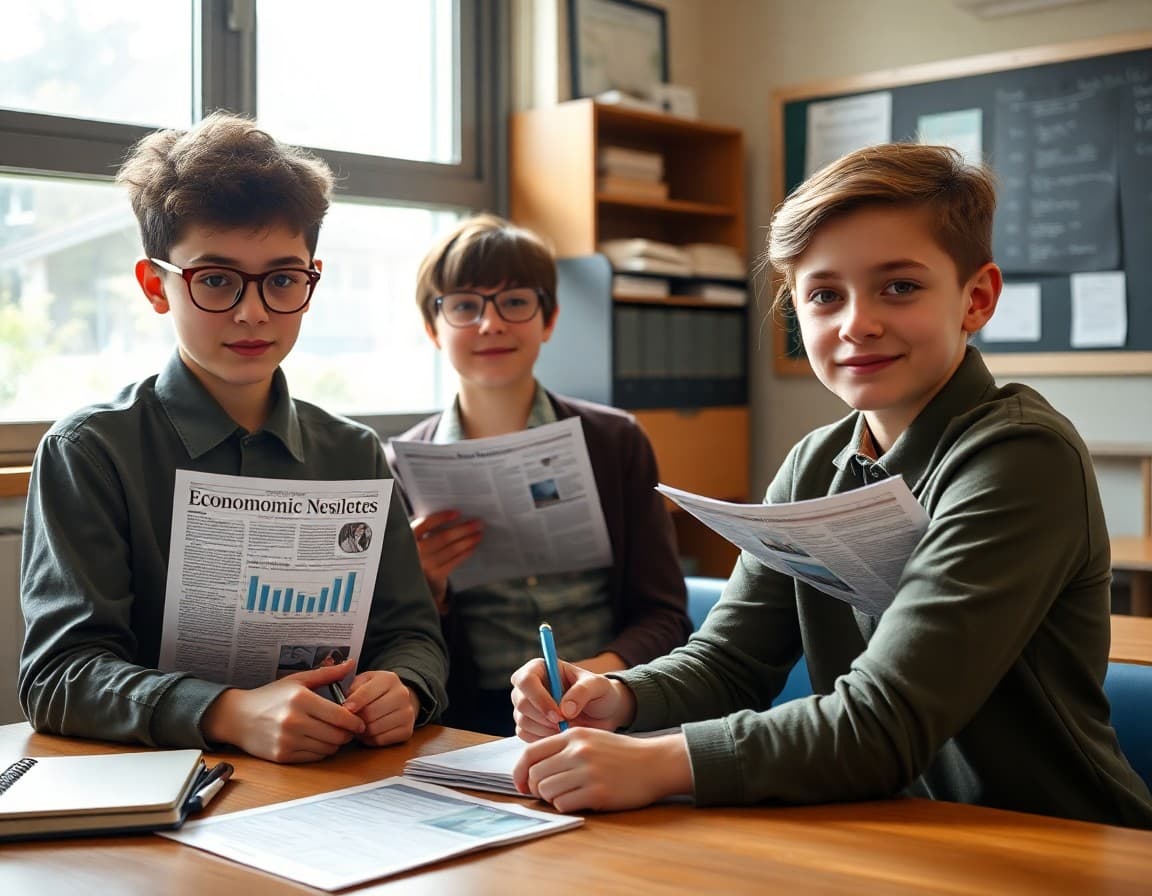
Economics is the subject most directly connected to the news, and that is both its greatest advantage and its biggest challenge for newsletter writing. There is always a relevant current event. The challenge is choosing the right one and explaining the connection clearly enough that parents without an economics background can follow it. Here is a unit-by-unit guide to economics newsletter content that works.
Scarcity and Economic Thinking
Lead with a decision families make every week: why does a restaurant charge more on Friday night than Tuesday afternoon? Students are learning that scarcity drives every economic decision: when something is limited, people make trade-offs, and prices signal those trade-offs to everyone in the market. Tell families to ask their student to explain the economics of a line at a popular restaurant.
Supply and Demand
The best supply and demand newsletter opens with a recent price change in the news: housing, gas, eggs, used cars. Pick one real example and walk families through the analysis. What shifted supply? What shifted demand? What did price do in response? Tell parents that students are doing exactly this analysis in class and practicing it on real data, not hypothetical markets.
Market Structures and Competition
Connect market structure to brands families recognize. Why does your phone's operating system cost $0 while others charge hundreds? Why are airline tickets priced the way they are? Students are learning the difference between perfect competition, monopolistic competition, oligopoly, and monopoly, and why it matters who controls a market. Give families a real example of each.
Macroeconomics: Inflation and Monetary Policy
Lead with a Federal Reserve decision if one has been in the news. Tell families that students are learning what inflation is, why central banks try to control it, and what tools they have available. Here is an example section:
"This month we are studying inflation and monetary policy. Inflation means prices are rising on average across the economy. The Federal Reserve tries to keep inflation around 2% per year by adjusting interest rates. When rates go up, borrowing becomes more expensive, which slows spending and eventually slows price increases. Students are analyzing historical inflation data and the Fed's response to it. Ask your student: why does the Fed not just set interest rates to zero and keep them there?"
Fiscal Policy and Government Spending
Lead with the question many families already discuss: why does the government spend more than it collects? Students are learning the tools of fiscal policy, including taxation and government expenditure, and how economists debate their effects. This unit connects directly to every political debate about the budget, and students are learning the analytical tools to evaluate those debates without being told what to conclude.
International Trade and Globalization
Lead with a product: why does your phone have components from 15 different countries? Students are studying comparative advantage, trade policy, and what tariffs actually do. Tell families to ask their student what happens to a domestic industry when foreign goods become cheaper, and what happens to consumers. The answer is not simple, and that complexity is the lesson.
Personal Finance Unit
The personal finance unit newsletter should be the most practical of the year. Tell families exactly what students are learning: how to build a budget, how compound interest works over time, what a credit score measures, and how to compare loan options. Give one calculation from class: if you invest $100 per month at 7% annual return for 40 years, what do you end up with? Tell parents the answer: about $263,000. That kind of concrete example generates genuine conversation.
Labor Markets and Income
Lead with a wage question families find relevant: why do some jobs pay significantly more than others with similar education requirements? Students are studying how labor markets work, what human capital means, and how wage differences reflect both productivity and market power. Ask families to discuss a job someone in their extended family does and analyze together what determines the wage.
Close every economics newsletter with your contact information and an invitation to bring current event examples to class. Daystage makes it easy to keep this content flowing consistently month after month without significant logistics overhead.
Get one newsletter idea every week.
Free. For teachers. No spam.
Frequently asked questions
How do I write newsletter content for a microeconomics unit?
Lead with a decision families recognize: why does the store brand cost less than the name brand even when the ingredients are the same? That question opens a discussion about competition, information, branding, and consumer behavior. Microeconomics is full of questions like this. Find the one that connects most directly to your current unit and use it as your hook.
How do I write newsletter content for a macroeconomics unit?
Lead with a headline: why are interest rates going up, and what does that mean for you? Macroeconomics connects to news stories every week. Find one current headline that directly illustrates the concept you are teaching and open your newsletter with it. Parents who see the classroom in the news are far more engaged than those who do not.
What should I include in a personal finance unit newsletter?
Tell families specifically what personal finance skills students are building: creating a budget, understanding compound interest, comparing loan options, evaluating an investment. Practical financial literacy newsletters are the ones parents share with other parents. Include one calculation or scenario students worked through and invite families to try it at home.
How do I write an economics newsletter during election season?
Economics connects directly to political debates about taxation, spending, trade policy, and employment. Be neutral in tone but specific in content. Tell families what economic concept the current debate illustrates and what students are learning to evaluate. Your job is to build analytical tools, not to advocate for a position.
What newsletter tool helps economics teachers connect class to current events?
Daystage lets you include current event links or references in your newsletter alongside the unit description. You write the content, select your class list, and send. Many economics teachers keep a running list of current event connections for each unit and pull from it when writing each monthly newsletter.

Adi Ackerman
Author
Adi Ackerman is a former classroom teacher and curriculum writer with 8 years in K-8 schools. She writes about school communication, parent engagement, and what actually works in real classrooms.
More for Subject Teachers
Ready to send your first newsletter?
3 newsletters free. No credit card. First one ready in under 5 minutes.
Get started free