
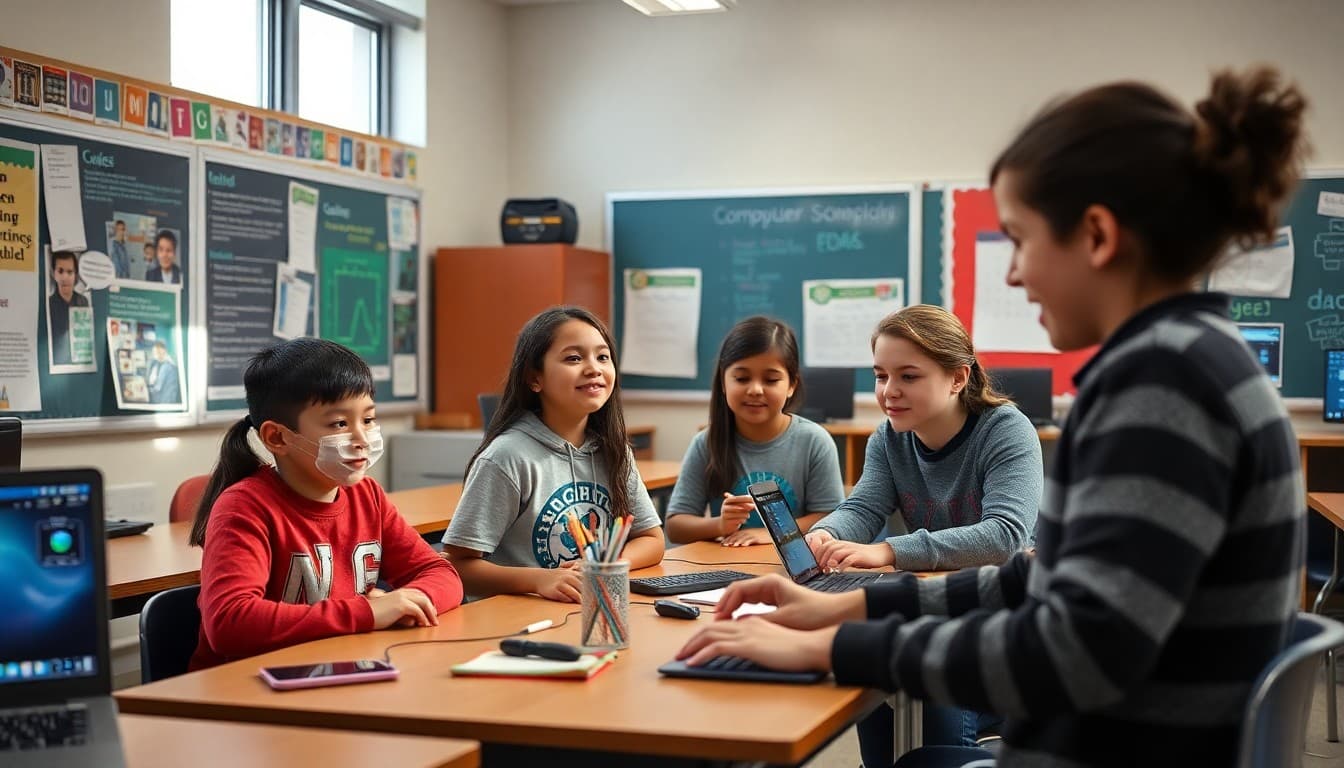
Computer Science Teacher Newsletter: National Month Newsletter Ideas
National awareness months and events give CS teachers a natural reason to send a newsletter that goes beyond logistics. Computer Science Education Week in December, Hour of Code, Digital Citizenship Week in October, and related observances are opportunities to connect families to what students are learning, celebrate student work, and build enthusiasm for a subject that often operates invisibly to the outside world.
This guide covers which events matter most for CS teachers, how to build a newsletter around them, and how to keep the content specific enough to be genuinely useful rather than just ceremonial.
Computer Science Education Week: the anchor event for December
CS Ed Week, held each December during the week that contains December 9, is the highest-profile CS awareness event in K-12 education. It includes the Hour of Code global initiative, which invites students everywhere to complete a one-hour introduction to computer programming. For CS teachers, this is the easiest week of the year to generate family interest because the event has national media coverage and a simple family-facing activity available at code.org.
A CS Ed Week newsletter can do three things: explain what Hour of Code is and invite families to try it at home, highlight what students in your class are currently building, and share one fact about computing history that connects to the week's theme. In 2023, CS Ed Week celebrated the legacy of pioneers like Grace Hopper, whose work on programming languages made modern software possible. In 2024, the theme centered on AI and how it connects to CS fundamentals students learn in school.
Hour of Code: family-facing activities to include in your newsletter
The Hour of Code at code.org offers dozens of free, self-guided activities for all age groups and experience levels. When you send a CS Ed Week newsletter, include a direct link to the age-appropriate Hour of Code activity for your students' grade level and a short description of what they will do. "Your student can try the same Python activity we did in class this week at home with a parent. It takes about 45 minutes and no experience is required. Go to code.org/learn and filter by Python to find it."

Digital Citizenship Week in October
Digital Citizenship Week, organized by Common Sense Media and typically held in the third week of October, is directly relevant to CS classrooms because it addresses how students use technology responsibly. A newsletter during this week can cover what digital citizenship means in your class specifically: how students handle data privacy in their coding projects, how they give credit for code they found online, and what responsible use of AI tools looks like when completing assignments.
Share one or two specific classroom policies that connect to digital citizenship, and invite families to reinforce the same principles at home. "This week we are discussing how to evaluate whether a source of code or algorithm is reliable, similar to evaluating any other information source. Ask your student tonight what they do when they are not sure if code they found online is safe to use."
Women in Computing and representation in CS: February and March
February (Black History Month) and March (Women's History Month) both offer strong hooks for CS newsletters about representation in the field. Grace Hopper invented one of the first compiler programs and made computing accessible to non-mathematicians. Katherine Johnson, Dorothy Vaughan, and Mary Jackson performed critical calculations for NASA's early space missions before computer programming was even a recognized field. Annie Easley developed code for early NASA propulsion systems.
A newsletter that shares one of these stories alongside what students are building right now in class creates a direct connection between history and the work students do daily. "The Python program your student is debugging this week uses the same logical structure Katherine Johnson used to verify early orbital calculations by hand. The logic has not changed; the tools have."
Include a classroom highlight from the awareness period
Every national month newsletter should include at least one specific example of what students in your class are doing during that period. General awareness facts are available everywhere. What makes your newsletter worth reading is the connection to your specific classroom. Describe a project, a student breakthrough, or a class discussion that happened during the awareness event. Keep it to two to three sentences and use first names only if you mention students.
Share a template excerpt for a CS Ed Week newsletter
Here is a short excerpt from a CS Education Week newsletter:
"This week is Computer Science Education Week, a global celebration of the people and ideas that made modern computing possible. In our class this week, students are finishing their Python quiz programs, the same type of interactive program that runs everything from online job applications to voting systems. If your family wants to try a free one-hour coding activity together, visit code.org/learn and look for the Python beginner track. No experience needed. Happy CS Ed Week."
Connect the awareness event to year-round learning
Close by reminding families that what CS Ed Week celebrates is not separate from what you do the other 35 weeks of the year. "The skills students are building in this class, from logical thinking to debugging to collaboration on complex problems, are the same skills that every technology career and most non-technology careers now depend on. CS Ed Week is a good time to celebrate that, but these skills matter every week."
Include a family activity recommendation and your contact information
End the newsletter with one specific thing families can do during the awareness period, a link if applicable, and your email address for questions. A concrete action item makes the newsletter useful rather than merely informational, and giving families something to do together creates a memory around the subject that outlasts the newsletter itself.
Get one newsletter idea every week.
Free. For teachers. No spam.
Frequently asked questions
What national months or events are most relevant for CS teachers to celebrate in a newsletter?
Computer Science Education Week in December (the week containing December 9, the birthday of computing pioneer Grace Hopper) is the biggest one. Hour of Code, which runs during CS Ed Week, is a global event where schools participate in a one-hour coding activity. Women and Girls in STEM Month in February and Black History Month, which often features content about Black pioneers in computing like Katherine Johnson and Claude Shannon, are also strong newsletter hooks. Digital Citizenship Week in October works for CS and tech classes across all grade levels.
How does a CS teacher make a national month newsletter feel meaningful rather than performative?
Tie it to something students are actually doing in class during that time, not just a general awareness message. If CS Education Week coincides with a Python project unit, show families how the project connects to the broader story of what computing has made possible. Share a specific student accomplishment or project alongside the awareness message. A newsletter that shows families what is happening in the room feels authentic; one that pastes in generic awareness facts feels hollow.
Should CS teachers include family activity suggestions in national month newsletters?
Yes, and keep them simple and free. Suggest families try the Hour of Code activity at code.org with their student at home. Point them to a free documentary or YouTube series about computing history, like the series on YouTube about Grace Hopper or the documentary 'Hidden Figures.' Suggest asking their student to teach them one thing they learned in CS class this week. Activities that do not require special equipment or knowledge are the most likely to actually happen.
How do you feature student work during CS awareness events without violating privacy?
Use first names only, or get explicit permission before including photos or detailed student work in a newsletter. Many schools require a signed media release before a student's work or image can be shared, even in internal newsletters. If you have releases on file, feature student projects with brief descriptions. If you do not, describe the projects in general terms: 'Three students in the advanced programming cohort built a word-guessing game that now has over 200 plays from classmates.'
How does Daystage help CS teachers create a polished national month newsletter?
Daystage lets you embed images of student work, format a timeline of classroom activities for the awareness month, and include links to external resources like the Hour of Code site. The newsletter looks professional without requiring design skills, and you can send it to families and optionally to school administration if you want to highlight the program during a visibility event like CS Education Week.

Adi Ackerman
Author
Adi Ackerman is a former classroom teacher and curriculum writer with 8 years in K-8 schools. She writes about school communication, parent engagement, and what actually works in real classrooms.
More for Subject Teachers
Ready to send your first newsletter?
3 newsletters free. No credit card. First one ready in under 5 minutes.
Get started free