

Chemistry Teacher Newsletter: Setting Up the Year the Right Way
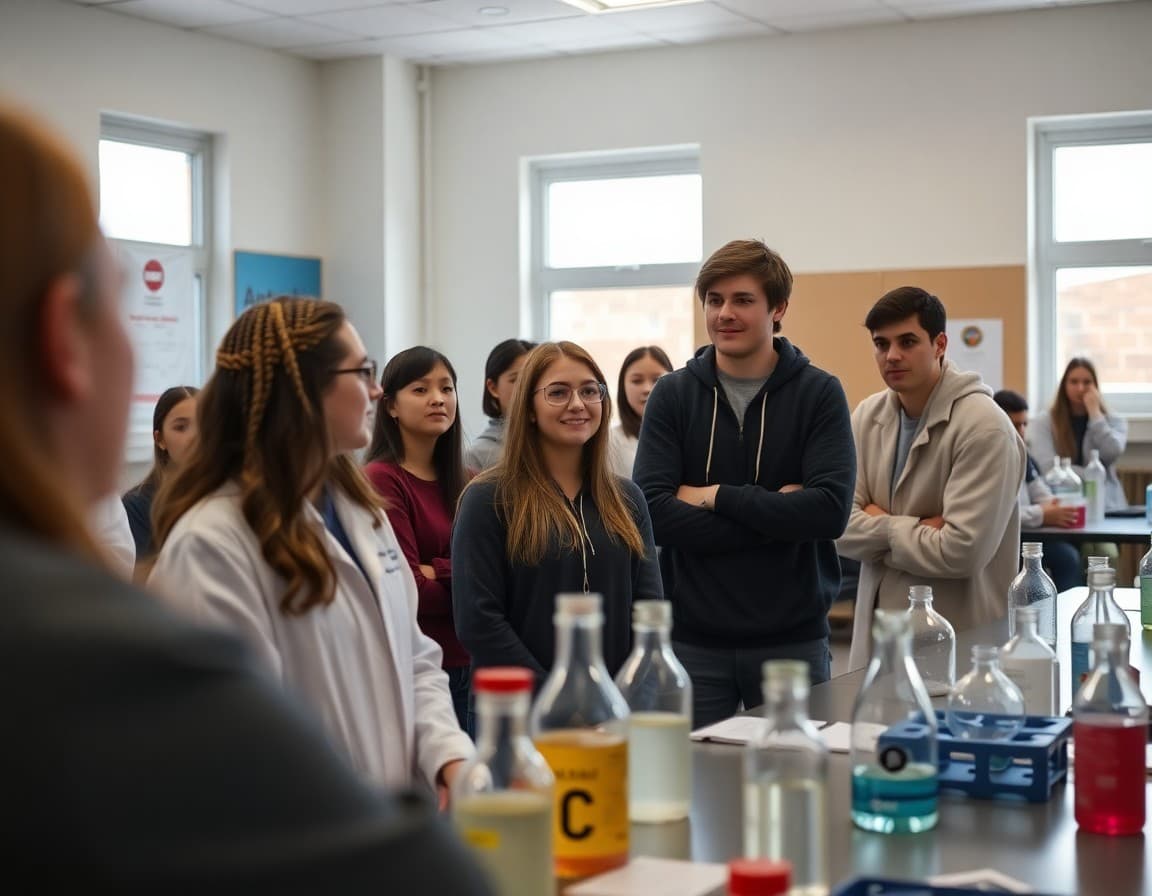
Chemistry is the subject where beginning-of-year communication matters most for two reasons. First, the lab component genuinely requires safety protocols that families should understand. Second, the course has a reputation for difficulty that discourages students before they start. A strong first newsletter addresses both: it builds family confidence in your safety practices and reframes chemistry as a relevant, fascinating science rather than a gauntlet to survive.
What Chemistry Parents Actually Want to Know
Parents of chemistry students have four main questions at the start of the year. Is the lab safe? How demanding is the course? What math is involved? And how will you communicate with us when something is wrong? A newsletter that answers all four directly, in plain language, builds the trust that makes the rest of the year easier.
The lab safety question generates the most anxiety and deserves the most space. Most parents have seen news stories about chemistry accidents at schools and want to know that your classroom has real protocols, not just good intentions.
Lab Safety: The Most Important Section
Give lab safety its own section in the newsletter. Cover what safety training students complete before their first lab, what protective equipment is required and when, what the procedure is for spills or accidents, and what students are never allowed to do in your lab.
A sample paragraph: "Before the first lab, every student completes a written lab safety exam and demonstrates proper goggle and equipment use. Goggles are required from the moment students enter the lab to the moment they leave. Lab aprons are worn during all chemical work. Horseplay, unauthorized experiments, and failure to follow safety protocols result in immediate removal from the lab and a zero for that session. Safety is not a value; it is a non-negotiable operating condition for this class."
Framing the Course
Tell families what makes chemistry genuinely interesting. "This year, your student will understand why fireworks are different colors, how soap cleans grease, what happens at the molecular level when an antacid neutralizes stomach acid, and why certain materials conduct electricity and others do not. Chemistry is the science of matter at the molecular level, and once students can see the molecular story behind everyday phenomena, they find it everywhere." This is more compelling than the official course description.
The Math Component
Address the quantitative nature of chemistry directly. "Chemistry involves significant problem-solving: converting between units, calculating reaction quantities, solving equilibrium problems. Students who are comfortable with algebra will find this approachable. Students who struggle with math should plan to spend extra time on the quantitative sections. I am available for math support during office hours every Tuesday and Thursday."
Acknowledging the challenge while providing a path to support is more useful than minimizing it.
Sample Newsletter Opener
Here is a template:
"Welcome to AP Chemistry. This course will challenge your student in two ways: conceptually, in understanding the molecular-level behavior of matter; and quantitatively, in solving complex problems using the concepts they learn. By the end of the year, they will have completed 14 college-level labs, developed genuine problem-solving ability in physical and chemical systems, and prepared for an AP exam that earns college credit at most universities. Lab safety is the foundation of everything we do. Here is what your family needs to know before day one."
Required Materials and Communication
List supplies specifically: safety goggles (student-provided or school-provided), dedicated notebook, calculator requirements (most chemistry courses need a scientific calculator; AP Chemistry students benefit from one that handles logarithms and exponential functions easily), lab apron if student-supplied. Set communication expectations: how often you send newsletters, your email address, response time, and office hours. For chemistry, also note how you will communicate before labs involving unfamiliar chemicals or procedures so families are never surprised by what their student encountered in class.
Get one newsletter idea every week.
Free. For teachers. No spam.
Frequently asked questions
What should a chemistry beginning-of-year newsletter include?
The course overview, major units, grading breakdown, lab safety expectations, required materials, and how you will communicate throughout the year. For chemistry specifically, lab safety deserves its own paragraph: parents should know that students will work with chemicals, heat sources, and glassware in a supervised setting, and that safety training is the first thing students complete before any lab work begins.
How do I communicate lab safety expectations to parents without alarming them?
Be matter-of-fact and specific about protocols. 'Students complete a written lab safety test before their first lab. During any chemical work, they wear ANSI-rated goggles, lab aprons, and gloves when handling corrosives. All labs are supervised directly by me throughout the session.' This level of specificity tells families that your lab is professionally managed. Vague reassurances like 'we take safety seriously' are less convincing than specific protocols.
How do I make chemistry sound engaging to parents who associate it with difficult math?
Connect it to the real world early. Chemistry explains why food tastes the way it does, how medications work in the body, what happens in a car engine, and how climate change affects ocean chemistry. A first newsletter that makes these connections tells families that chemistry is not abstract mathematical torture but the science of how matter and energy interact in the world their student already lives in.
Should I describe the math component of chemistry in the first newsletter?
Yes, briefly. Chemistry involves significant quantitative work: stoichiometry, dimensional analysis, equilibrium calculations. Parents who are not prepared for this math component are sometimes surprised when their strong reader suddenly struggles. A brief note that 'chemistry involves both conceptual understanding and quantitative problem-solving, and both are graded equally' sets appropriate expectations.
What tool helps chemistry teachers send beginning-of-year newsletters effectively?
Daystage lets you design a polished newsletter with a course overview, lab safety summary, and supply list in a visually professional format. You can include a photo of your safety equipment setup or a previous year's lab, which communicates the professional nature of your classroom more convincingly than any text description.

Adi Ackerman
Author
Adi Ackerman is a former classroom teacher and curriculum writer with 8 years in K-8 schools. She writes about school communication, parent engagement, and what actually works in real classrooms.
More for Subject Teachers
Ready to send your first newsletter?
3 newsletters free. No credit card. First one ready in under 5 minutes.
Get started free