
Biology Teacher Newsletter: National Month Newsletter Ideas

Biology teachers have access to some of the most scientifically meaningful awareness months and days in the academic calendar. National DNA Day, Earth Day, World Oceans Day, and cancer awareness months all connect directly to standard biology curriculum topics. Using these moments in your newsletters gives your content a sense of currency and relevance that makes families more interested in what their student is learning and why it matters right now.
The Biology Awareness Calendar
Here are the most useful national months and days for biology teachers with curriculum angles for each:
April 22: Earth Day. Connects to ecology, biodiversity, and environmental biology units. If you cover ecosystems in the spring, this is your most natural awareness moment.
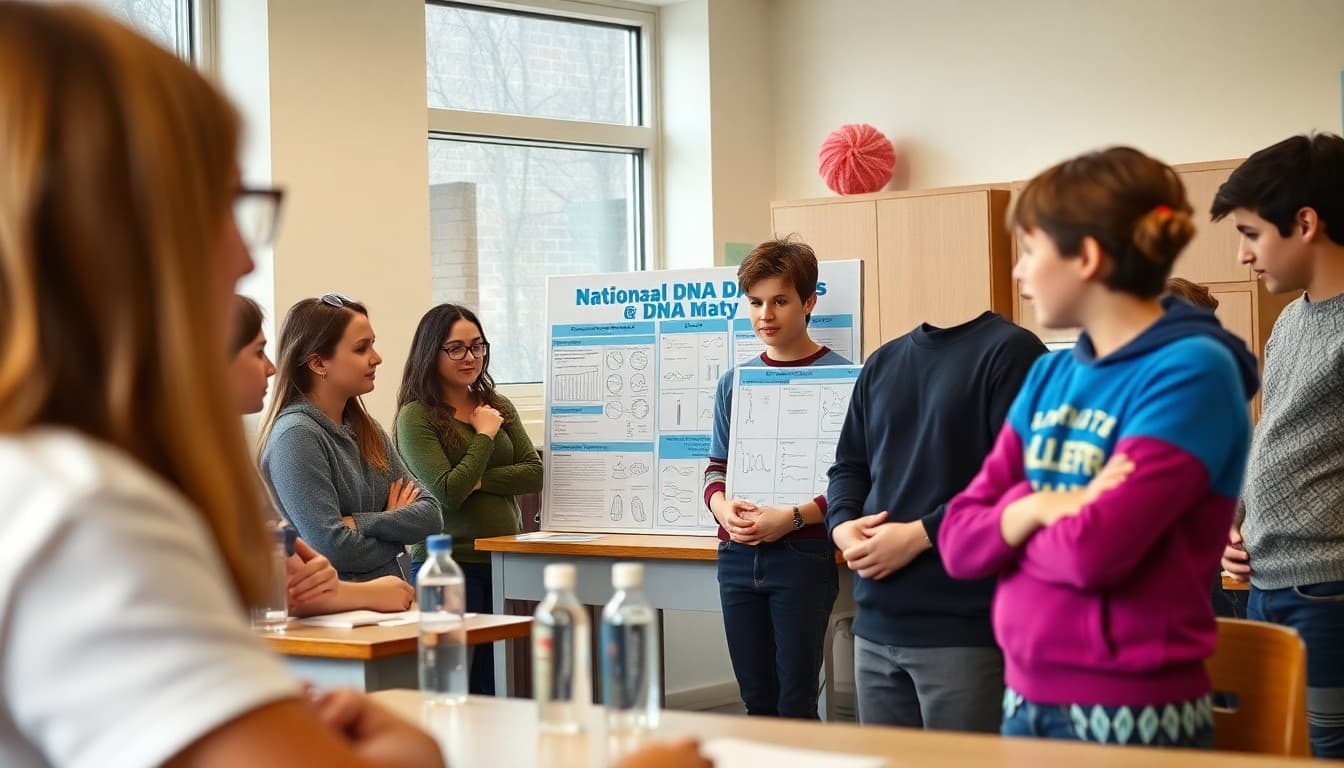
April 25: National DNA Day. Celebrates the completion of the Human Genome Project in 2003. Connects to genetics, DNA structure, molecular biology, and genomics. The most biology-specific awareness day of the year.
October: Breast Cancer Awareness Month. Connects to cell cycle regulation, mutation, and oncogene units. Biology teachers who cover cell division in October have a perfect awareness hook.
May: National Cancer Research Month. Broader than breast cancer awareness, this month connects to any unit covering cell biology, genetics, and the mechanisms of cancer development.
June 8: World Oceans Day. Connects to marine biology, ecological units covering aquatic ecosystems, and biodiversity.
December 1: World AIDS Day. Connects to immunology and virology units. If your course covers the immune system or viral replication, December 1 gives you a timely anchor.
Building a National DNA Day Newsletter
National DNA Day on April 25 is the most directly relevant awareness day for most biology teachers. The best newsletter section for this day connects the historical milestone to what students are currently studying: "Today is National DNA Day, marking the anniversary of the completion of the Human Genome Project in 2003. The project took 13 years, 20 institutions, six countries, and $2.7 billion to complete. Today, a single human genome can be sequenced in hours for under $1,000. This week in class, students are learning the molecular mechanisms that made sequencing possible: the same DNA replication and base-pairing rules that students memorize for tests are the foundation of every genomics technology currently being used to develop treatments for genetic diseases."
Earth Day Newsletter Example
Here is a sample section for an Earth Day newsletter that connects to an ecology unit:
"This week, as we prepare for Earth Day, students are completing our food web unit. We have been studying how energy flows through ecosystems from producers to primary consumers to secondary consumers, and what happens when a population at any level is removed. This week's activity: students modeled the collapse of a Pacific kelp forest food web when sea urchin populations exploded after sea otters were removed by hunting. The ecosystem collapse took 30 years. This is the kind of real example that makes theoretical ecology immediately concrete. Ask your student to explain one thing that would happen to a local ecosystem if one species was suddenly removed."
Cancer Awareness Month and Cell Biology
Cancer awareness months are particularly useful for biology teachers who cover cell division and genetics. The biology of cancer is one of the most powerful illustrations of why cell cycle regulation matters, and families who hear their student explain it at a level they understand are often genuinely impressed by what biology class teaches. "This October, as part of Breast Cancer Awareness Month, our cell division unit covers the genetic mutations that allow cancer cells to bypass the normal checkpoints that prevent uncontrolled cell division. Students now understand why mutations to tumor suppressor genes like BRCA1 and BRCA2 increase cancer risk, and how targeted therapies work by attacking the specific molecular pathways that cancer cells depend on."
Avoiding the Generic Awareness Trap
Biology awareness month newsletters fall flat when they share a fact and a link without connecting to classroom content. Any biology newsletter that uses an awareness month should include: what students are actually doing in class right now, how the awareness month connects to that content specifically, and one thing families can discuss at home. Specific and connected to real classroom work beats generic every time.
Get one newsletter idea every week.
Free. For teachers. No spam.
Frequently asked questions
Which national awareness months are most relevant for biology teachers?
National DNA Day (April 25), Earth Day (April 22), World Oceans Day (June 8), National Cancer Research Month (May), World AIDS Day (December 1), and National Genetics Awareness Month (none officially, but biology teachers use April around DNA Day) are all directly relevant. Each of these connects to a standard biology unit and gives you a timely hook for a newsletter.
How do I use National DNA Day in a biology newsletter?
National DNA Day celebrates the completion of the Human Genome Project in 2003. If your class is covering genetics, use it to connect your current unit to the history of molecular biology and to current genomics applications. 'This week, as we study DNA replication, we are also recognizing National DNA Day: the anniversary of the day the Human Genome Project was completed. Your student now understands the molecular process that made that project possible.' Specific connection to current coursework makes the awareness day feel integrated rather than added on.
How do I connect Earth Day to biology content?
Earth Day connects naturally to ecology, environmental biology, and biodiversity units. If you are covering ecosystems, food webs, or human impact on the environment in April, the connection is direct. If you are covering genetics or cellular biology, you can connect Earth Day to conservation genetics or the role of cellular processes in ecosystem health. The key is finding the genuine overlap rather than forcing the connection.
How do I handle national awareness months for health topics like cancer in a biology newsletter?
Frame cancer awareness months through the biology content: cell cycle regulation, mutation, tumor suppressor genes, and oncogenes. 'October is Breast Cancer Awareness Month, and our cell division unit connects directly: cancer is what happens when the cell cycle loses its regulatory controls. Students who understand cell cycle checkpoints understand why some cancers respond to certain treatments and not others.' This framing makes the awareness month feel like a biology application, not a health class sidebar.
What tool helps biology teachers send timely national month newsletters?
Daystage lets you set up national month newsletter templates in advance and fill in class-specific content as each month arrives. Many biology teachers build their awareness calendar in August alongside their unit plan, identifying which months have the strongest curriculum overlap and creating template drafts for each. This turns a mid-semester newsletter into a 15-minute update rather than a from-scratch writing task.

Adi Ackerman
Author
Adi Ackerman is a former classroom teacher and curriculum writer with 8 years in K-8 schools. She writes about school communication, parent engagement, and what actually works in real classrooms.
More for Subject Teachers
Ready to send your first newsletter?
3 newsletters free. No credit card. First one ready in under 5 minutes.
Get started free