
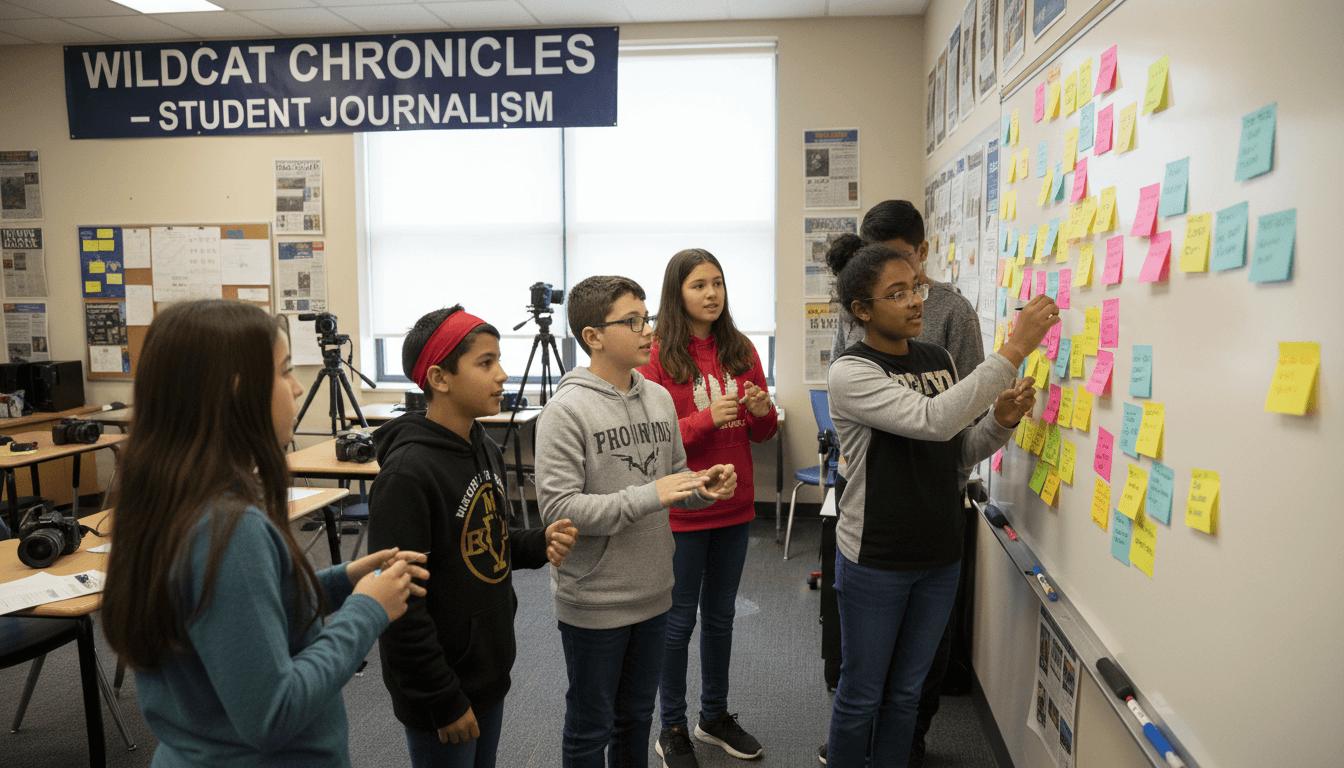
Student Newsletter Source Building Guide: How Student Journalists Develop Reliable Sources

Student journalists often find sources by reacting to assignments: a story is given, a source is needed, someone is contacted. Professional journalists work the other way: sources are cultivated over time, and stories emerge from those relationships. The second approach produces better journalism at every level.
Building a source map at the start of the year
At orientation, the editorial team should map the school's source landscape. Who are the administrators who make decisions? Who are the department heads who know what is happening in each academic area? Which teachers run significant programs? Who are the coaches with large student followings? Which staff members hear things the administration does not? Which students are deeply embedded in the school's extracurricular life?
Each beat should have a source map. A sports reporter who knows the athletic director, the coaches, and three or four athletes across different sports before any story is assigned covers the beat better than one who starts from scratch each story.
The introduction meeting
At the start of the year, student journalists should meet the key sources on their beats with no story in mind. A five-minute conversation that says "I'm covering the arts beat this year and wanted to introduce myself, what's happening in the music and theater programs this semester?" is not an interview. It is a relationship investment that pays dividends throughout the year.
Sources who meet a student reporter when there is no deadline pressure are more relaxed, more candid, and more likely to reach out when something worth covering happens in their area.
Student sources
Faculty and administrators are obvious sources. Student sources are often more credible for stories about the actual student experience of school life. Build a network of student sources across grades, programs, and social groups. Students who trust the publication and know how to reach a reporter bring tips that administrators never will.
Protect student sources who ask for confidentiality. A reputation for burning sources ends the source network. A reputation for protecting them builds it.
On the record, off the record, on background
Train student journalists to clarify sourcing status before accepting information. On the record means name and title can be used. On background means the information can be used but the source is not named. Off the record means the information cannot be used at all. These distinctions must be agreed upon before the source shares anything, not after. A source who shares something and then says "that was off the record" puts the journalist in an impossible position.
Sources across the community
Student publications that build source relationships outside the school building, with local officials, community organizations, and business owners who interact with the school, have access to story angles that no other student publication has. A city council member, a library director, or a local nonprofit leader who knows the student publication exists and what it covers is a potential source for stories that connect the school to the broader community.
Get one newsletter idea every week.
Free. For teachers. No spam.
Frequently asked questions
What makes a good source for student journalism?
A good source has direct knowledge of the topic they are describing, is willing to speak on record, can be verified as who they say they are, and has no undisclosed interest in how the story turns out. Sources with direct experience and nothing to hide produce the most credible journalism. Students should be trained to ask themselves: how does this person know what they are claiming to know?
How do student reporters build source relationships before a story is assigned?
Introduce yourself to department heads, club advisors, coaches, and administrative staff at the start of the year with no specific story in mind. Ask them what is happening in their area and what they think the publication should be covering. Sources who meet a student journalist in a low-pressure context before a story requires them are more likely to return calls and speak freely.
How do student journalists handle sources who want to go off the record?
Clarify what 'off the record' means before accepting it: the information cannot be published and cannot be used as a lead to other sources without their knowledge. Off-the-record information can sometimes be confirmed through other means and then used on the record from a different source. Train students to understand that off-the-record status must be agreed to before the source shares the information, not after.
How do student publications cultivate sources among students rather than just faculty and staff?
Student sources are often the most credible voices on how school policies and changes affect daily life. Build a culture where students know they can bring tips and story ideas to the publication. Protect the identity of student sources who ask for anonymity. Students who trust the publication to handle their information carefully become reliable sources over time.
How does Daystage support student publications in reaching and maintaining source relationships?
Daystage gives student publications a newsletter platform with broad school community distribution, which builds the publication's visibility and credibility over time, making it easier for sources across the school community to find and trust the publication.

Adi Ackerman
Author
Adi Ackerman is a former classroom teacher and curriculum writer with 8 years in K-8 schools. She writes about school communication, parent engagement, and what actually works in real classrooms.
More for Student-Led
Student-Led Environmental Newsletter: How Student Journalists Cover Sustainability and School Ecology
Student-Led · 5 min read
Student Mentorship Reporting Newsletter: How Student Journalists Cover Peer Support Programs
Student-Led · 5 min read
Student Newsletter Headline Writing Guide: How Student Journalists Write Headlines That Get Read
Student-Led · 5 min read
Ready to send your first newsletter?
3 newsletters free. No credit card. First one ready in under 5 minutes.
Get started free