
Teaching Journalism Ethics in the Student Newsletter Program

Journalism ethics is not an advanced topic reserved for professional reporters. It is the foundation that every student journalist builds on from the first article. A student newsletter program that teaches ethical decision-making through real editorial situations develops professional integrity faster than any ethics lecture, because the learning happens in context.
Teach Accuracy as Non-Negotiable
The first ethics principle is also the most practical. Everything in a published newsletter article must be verifiable. Names, dates, statistics, quotes, descriptions of events. The habit of checking everything before submitting, built early and reinforced consistently, becomes automatic. Students who develop the habit of asking "How do I know this is true, and how would someone else verify it?" before every claim produce accurate journalism by default.
Practice Fairness Through Perspective
An article about a school policy change is not fair if it only includes the perspective of students who dislike the change. It is fair when it includes the administration's rationale, the students' response, and the perspective of families who have not yet formed an opinion.
Teach students that fairness does not mean false balance, giving equal weight to positions that are not equally supported by evidence. It means making a genuine effort to include the perspectives that are most relevant to a complete understanding of the issue.
Address Conflicts of Interest Explicitly
Student journalists who cover friends, clubs they belong to, or teachers they have strong relationships with face conflicts of interest that professional journalists encounter every day. Teaching students to recognize and disclose potential conflicts, and to discuss with their editor whether the conflict is significant enough to require reassignment, builds the professional habit that careers in any communication field require.
Weigh Public Interest Against Potential Harm
Not everything that is true is worth publishing. Teaching students to ask "What public interest does this serve, and is it proportionate to the harm publication might cause?" develops the ethical judgment that distinguishes journalism from gossip.
Naming a student involved in a minor incident that is not part of a larger pattern serves no proportionate public interest and may cause significant harm to the named individual. Reporting on a school policy that affects hundreds of students serves a genuine public interest. Students who learn to make this distinction in school develop a judgment they use for life.
Build a Culture of Ethical Discussion
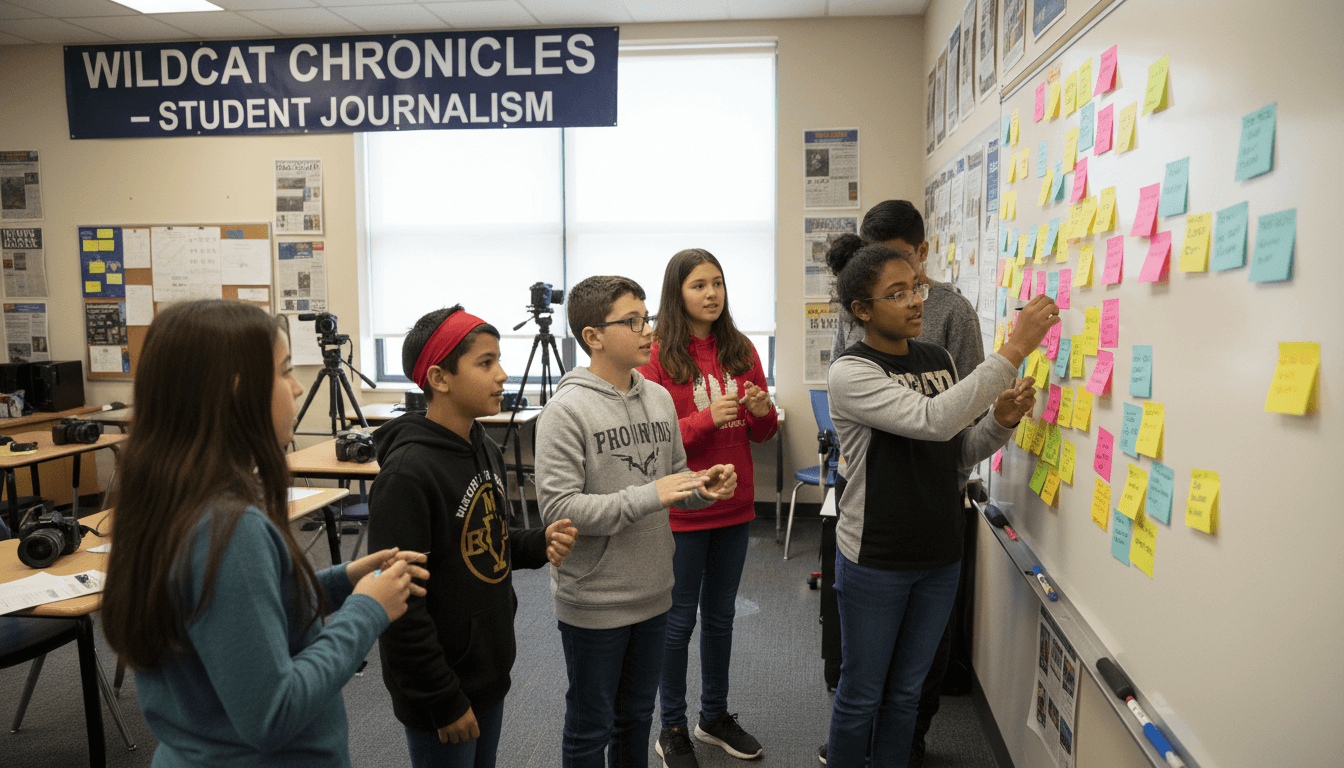
The most effective way to teach journalism ethics is through ongoing discussion of real editorial situations. When a student faces an ethical question, bring it to the editorial team. When a decision is made, explain the reasoning. A program where ethical questions are raised, discussed, and decided transparently produces more ethically sophisticated journalists than one where the advisor makes all sensitive decisions privately without explaining them.
Get one newsletter idea every week.
Free. For teachers. No spam.
Frequently asked questions
What are the most important journalism ethics principles for student newsletter reporters to learn?
Accuracy: report only what can be verified. Fairness: represent multiple perspectives on contested issues. Independence: do not let personal relationships or school relationships dictate coverage decisions. Minimizing harm: consider the consequences of publishing information that could harm individuals, particularly minors. Transparency: be honest with sources about who you are and how the information will be used. These five principles are the foundation of credible journalism at any level, and learning them in school is the foundation of ethical communication for life.
How do you handle a student reporter who has a personal relationship with a source or story subject?
Teach students to disclose the relationship to the editor and discuss whether it creates a conflict of interest. In some cases, a close relationship with a source makes a story impossible to cover fairly and the reporter should be reassigned. In others, the relationship is distant enough that the reporter can maintain journalistic independence. Developing the habit of disclosing and discussing potential conflicts is a professional skill that students carry into every future communication role.
How do you handle a source who asks to remain anonymous?
Teach students that anonymous sourcing is a tool of last resort that should be granted rarely and only when the source has information of genuine public interest that they cannot provide on the record without significant personal risk. Teach students to try to corroborate anonymous information with other sources. Teach them to tell the reader that a source asked for anonymity and why. Anonymous source requests in a school newsletter are almost always unnecessary, and teaching students to push back on them develops stronger journalism.
How do you teach students to balance the right to publish with the potential to cause harm?
Teach the minimizing harm principle: consider whether the information serves a legitimate public interest proportionate to the harm its publication might cause. Naming a student who was involved in a minor disciplinary incident serves no proportionate public interest. Reporting on a school policy change that affects all students does. Teaching students to weigh public interest against individual harm builds the ethical judgment that distinguishes responsible journalism from gossip.
How does Daystage support ethics education in student newsletter programs?
Daystage helps schools build student newsletter programs where ethics education is embedded in the daily practice of reporting, not taught once and then set aside. Schools use it to develop student journalists who approach every article with the ethical habits that produce trustworthy, fair, and accurate journalism throughout their careers.

Adi Ackerman
Author
Adi Ackerman is a former classroom teacher and curriculum writer with 8 years in K-8 schools. She writes about school communication, parent engagement, and what actually works in real classrooms.
More for Student-Led
Ready to send your first newsletter?
3 newsletters free. No credit card. First one ready in under 5 minutes.
Get started free