
Teaching Student Reporters to Interview for the School Newsletter
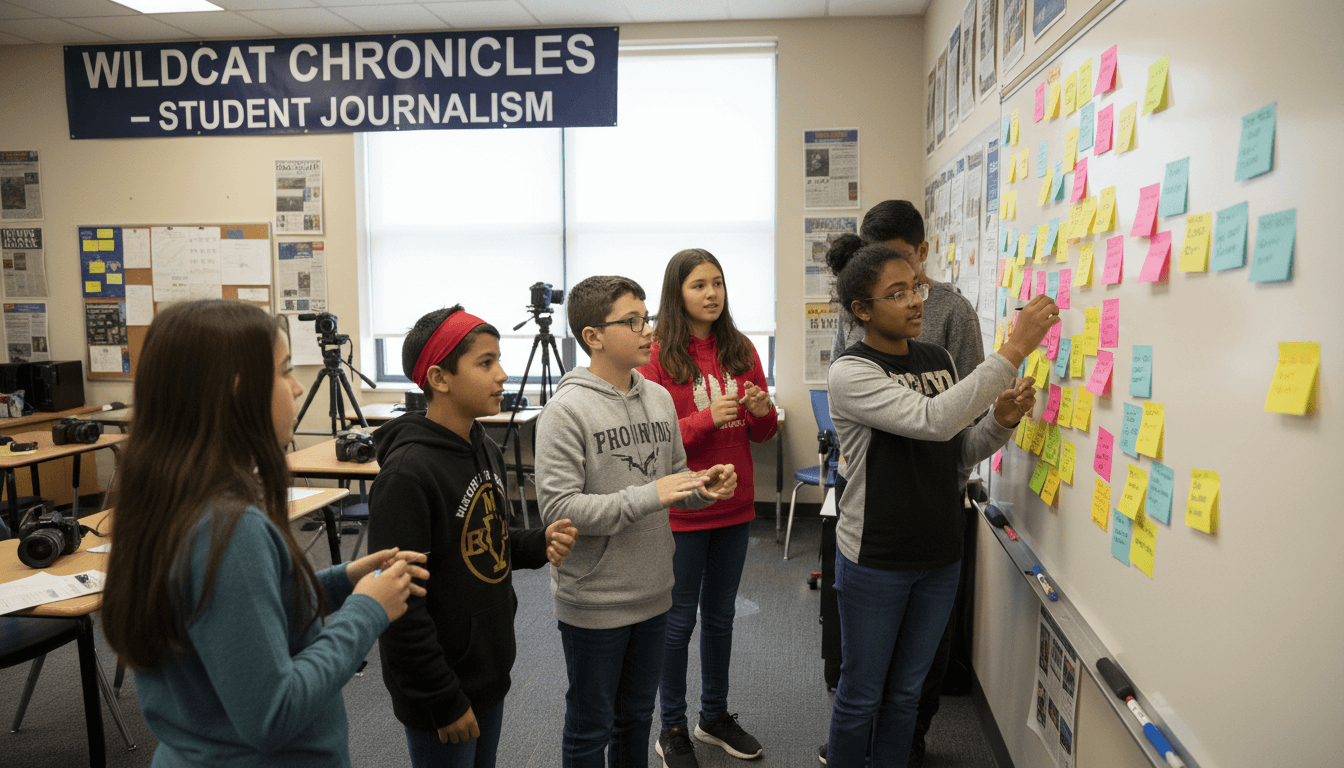
The difference between a student newsletter article that reads like a press release and one that reads like journalism is almost always the interview. Students who know how to prepare for an interview, ask questions that produce real answers, and follow up when the answer is generic produce content that the school community actually reads.
Teach Preparation as the Foundation
Students who arrive at an interview knowing almost nothing about their subject produce generic questions and get generic answers. Students who research the topic and the person before the interview ask specific questions and get specific, quotable answers.
Before any interview assignment, require students to complete a preparation checklist: what they already know about the topic, three things they want to understand better, and one thing the reader would want to know. That 15-minute preparation step produces dramatically better interviews.
Practice Open-Ended Questioning
A question that can be answered yes or no will be answered yes or no. "Did you like the project?" produces "Yes." "What surprised you most about the project?" produces a story. Students need to hear the difference between closed and open questions, practice generating open ones, and then hear the difference in the answers they get.
A classroom exercise where students interview each other using both question types, and then compare the answers, builds the intuition faster than any explanation.
Teach the Three Follow-Ups
Three follow-up questions work in almost every interview situation where an answer is too brief: "Can you tell me more about that?" "What was that like for you?" "Why do you think that is?" Students who know they can ask these questions, and who practice using them, get longer and more substantive quotes. Students who accept the first answer and move to the next prepared question rarely come back with enough material for a compelling article.
Build in Quote Verification
Before the interview ends, students should read their most important quotes back to the subject and confirm accuracy. This prevents the misquotation problems that damage the newsletter's credibility and the student's relationship with future interview subjects. It is also a habit that produces more confident student journalists.
Connect Interview Skills to the Final Article
The interview exists to produce material for the article, not as an end in itself. Students who understand the connection between the questions they ask and the article they are trying to write make better use of interview time. "If your article is about why the school changed the lunch schedule, your interview questions should produce quotes that explain the decision, the challenges, and what the subject expects the result to be." That level of purpose produces better interviews and better articles.
Get one newsletter idea every week.
Free. For teachers. No spam.
Frequently asked questions
What are the most important interview skills for student newsletter reporters to learn?
Preparation: researching the topic and the person before the interview so questions are specific rather than generic. Open-ended questioning: asking questions that require more than yes or no. Active listening: following up on what the subject actually says rather than moving rigidly to the next prepared question. Accuracy: reading back quotes to confirm they are correct. These four skills produce usable interview material. Students who try to interview without them typically come back with quotes like 'It was great' and 'I really liked it.'
How do you help students write better interview questions before an interview?
Teach students to ask themselves three things before writing any question: What do I already know about this topic? What do I want to understand better? What would the reader want to know that they do not currently know? Questions generated from those three prompts are more specific and more likely to produce interesting answers than questions generated from a template or from nothing at all.
How do you help students handle an interview subject who gives short or unhelpful answers?
Teach the follow-up: 'Can you tell me more about that?' and 'What was that like for you?' and 'Why do you think that is?' These three follow-ups work in almost every interview situation where the initial answer is too brief. Students who know they are allowed to follow up come back with longer, more substantive quotes than students who accept the first answer and move to the next question.
How should students handle quotes that are off the record or that the subject later wants changed?
Teach students to clarify at the start of an interview whether the conversation is on or off the record. A public interview with a school staff member or student for a school publication is generally on the record by default. If a subject asks to change or retract a quote after the fact, the student should consult the advisor before agreeing. These are professional norms that students learn most durably by encountering them in real situations.
How does Daystage support student interview journalism?
Daystage helps schools build student interview journalism programs that produce newsletter content with genuine depth, authentic voices, and professional standards. Schools use it to develop the student journalists whose interviews make the school newsletter worth reading rather than just worth skimming.

Adi Ackerman
Author
Adi Ackerman is a former classroom teacher and curriculum writer with 8 years in K-8 schools. She writes about school communication, parent engagement, and what actually works in real classrooms.
More for Student-Led
Student News Alumni Coverage Newsletter: How Student Journalists Report on Former Students
Student-Led · 5 min read
Student Newsletter Advanced Interview Skills Guide: How Student Journalists Conduct Better Interviews
Student-Led · 6 min read
Using Student Surveys to Create Data-Driven Newsletter Content
Student-Led · 5 min read
Ready to send your first newsletter?
3 newsletters free. No credit card. First one ready in under 5 minutes.
Get started free