
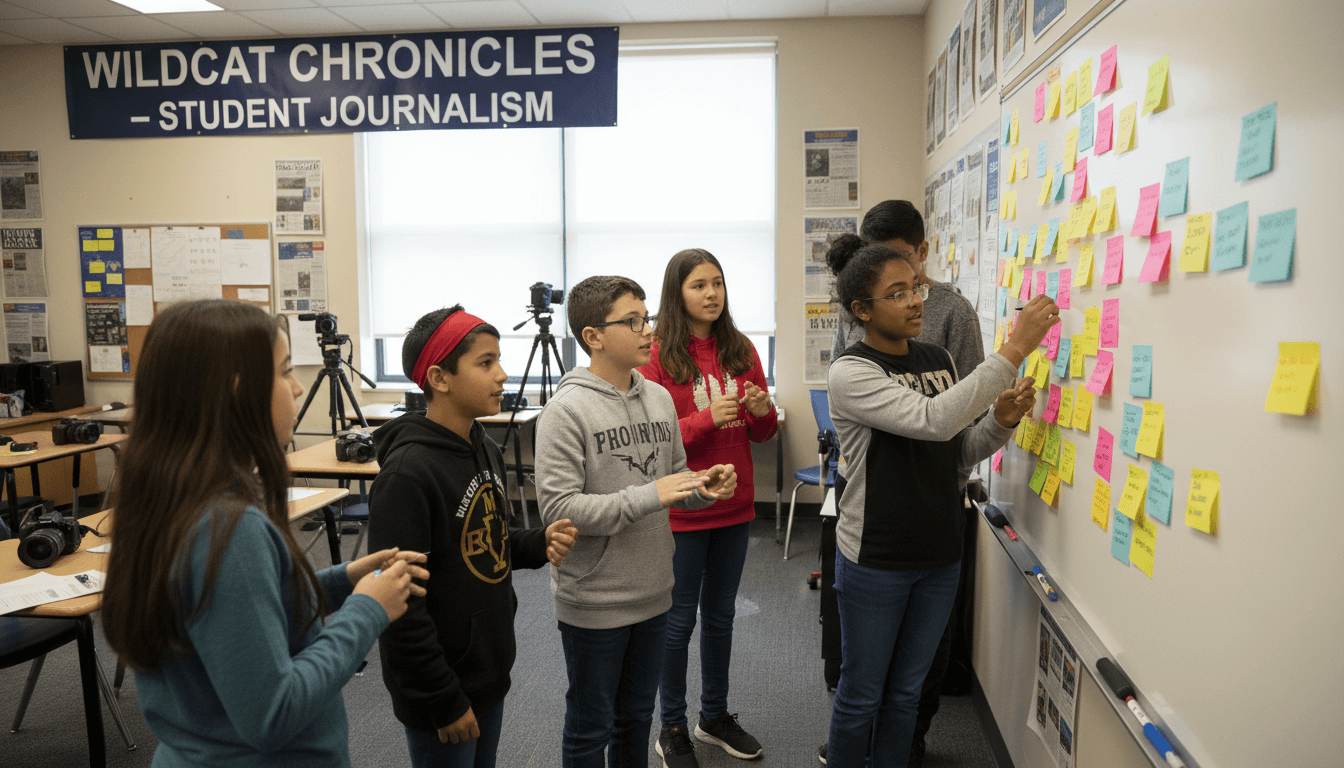
Student News Segment Newsletter: How Schools Launch and Sustain Student Video Journalism Programs

A student news segment program extends student journalism into a medium that reaches audiences who never read the print edition. Students who produce, anchor, and edit video news segments build a set of communication skills that transfer to virtually every academic and professional context. The newsletter communication around the program is what determines whether it reaches the audience it is capable of reaching.
Communicating the program structure
When launching or describing a student news segment program, be specific about what the program produces and how it is delivered. How long are segments? Are they daily, weekly, or monthly? Are they broadcast in the building, posted online, or both? What topics does the program cover? What are the roles within the production team?
Families who understand the program structure before they watch it are more invested in their student's role within it. A parent who knows their student is the segment producer rather than the anchor understands what to look for and what to appreciate.
Technical standards and training
Student news segments require technical discipline that written journalism does not. Camera framing, audio quality, lighting, and editing all affect whether a segment is watchable. Communicate technical standards clearly at orientation: what camera equipment is available and how to reserve it, what the acceptable audio setup is for field reporting, how to submit footage for editing, and what the editing and review process involves.
Technical training for new team members deserves its own session. Students who learn the equipment before their first assignment produce usable footage. Students who learn during their first assignment often produce unusable footage and a high level of anxiety.
The scripting process
Video journalism requires scripts that are written to be read aloud, not to be read on a page. Communicate the distinction early: shorter sentences, active voice, concrete language, no statistics that are hard to visualize. Students who understand that a broadcast script is a different discipline than a print article produce better segments from the start.
Distribution strategy
A student news segment that no one outside the school building can find is a missed opportunity. Post every segment to a dedicated school YouTube channel, share the link in the family newsletter, and post clips to the school's social media accounts. Each new segment is an opportunity to build the program's audience.
Connecting to the broader journalism program
If the school has both a written publication and a broadcast news segment program, communicate how they connect. Do the two programs collaborate on coverage? Do print reporters appear as sources or subjects in video segments? Cross-promotion builds each program's audience and creates a more integrated journalism program.
Get one newsletter idea every week.
Free. For teachers. No spam.
Frequently asked questions
What should a newsletter communicate when launching a student news segment program?
The format and length of each segment, how often it airs or posts, how students can watch or access it, what topics the program will cover, how students can submit story ideas or participate, any new equipment or infrastructure being added, and how families can see their students' work. A launch newsletter that answers these questions generates immediate engagement.
How do student news segments differ from written student journalism?
Video news requires scripting, presenting, filming, and editing skills that written journalism does not. Students learn to deliver information clearly in a limited time window, manage visual storytelling, and project confidence on camera. The skills transfer to presentations, interviews, and any role that involves communicating clearly under pressure.
How do schools distribute student news segments to families?
School YouTube channels, the school website's media page, links in the family newsletter, and posting to the school's social media accounts are all effective distribution channels. Some schools broadcast segments on monitors in the school building. The communication strategy should make the segment accessible to families who were not in the building when it aired.
How do advisors communicate technical requirements to student news team members?
Include a clear equipment list and technical standards document for video, audio, lighting, and editing. Students who know the technical standards before they start filming produce cleaner footage than those who discover the standards during the editing review. Technical orientation saves significant post-production time.
How does Daystage help schools communicate about student news segment programs with families?
Daystage gives advisors and principals a newsletter platform to announce new student broadcast programs, share links to published segments, and keep families engaged with the program throughout the year.

Adi Ackerman
Author
Adi Ackerman is a former classroom teacher and curriculum writer with 8 years in K-8 schools. She writes about school communication, parent engagement, and what actually works in real classrooms.
More for Student-Led
How to Run a Class Newsletter with Student Reporters
Student-Led · 6 min read
Student-Led End-of-Year Reflection Newsletter: How Student Journalists Close the School Year
Student-Led · 5 min read
Student Media Literacy Newsletter: How Student Journalists Teach Their Peers to Read the News
Student-Led · 5 min read
Ready to send your first newsletter?
3 newsletters free. No credit card. First one ready in under 5 minutes.
Get started free