
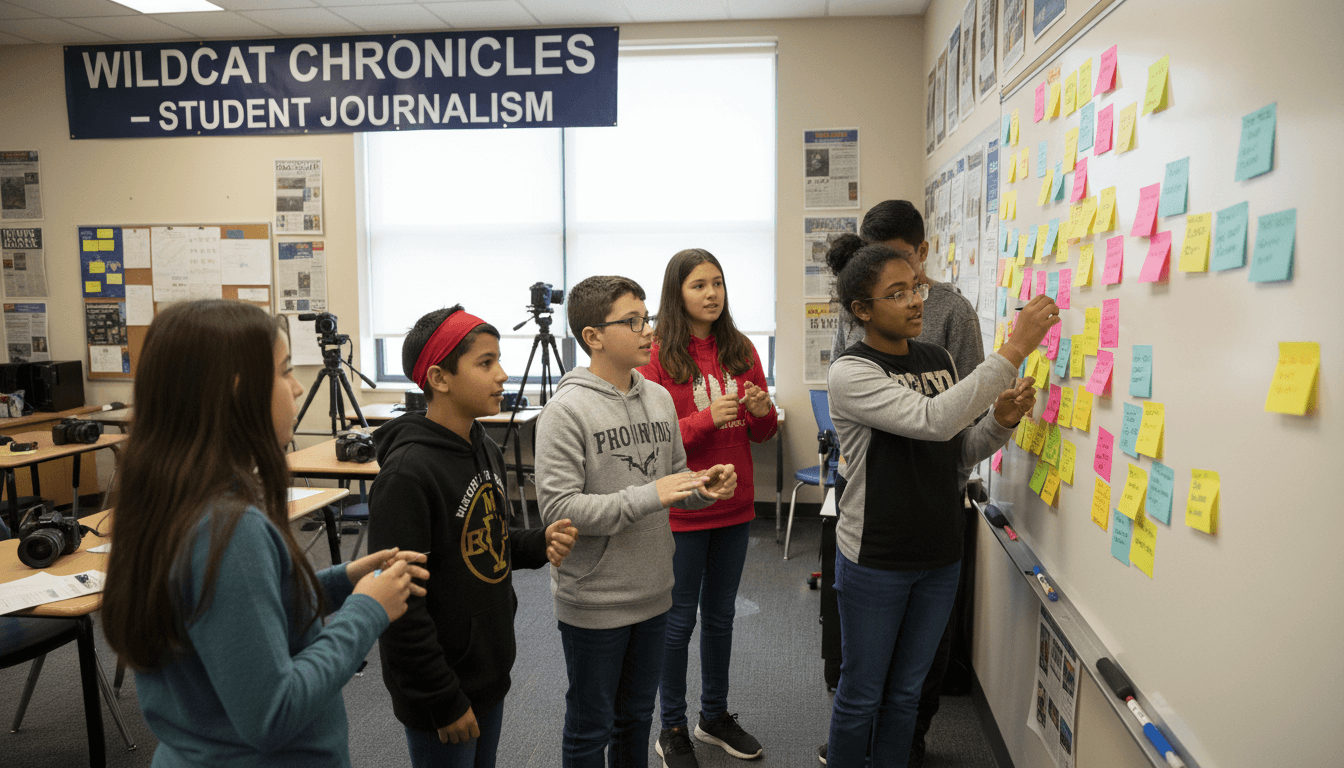
How Student Council Can Lead School Newsletter Communication

Student council newsletters that are actually written by student council members do two things at once: they give the school community authentic student perspective on school life, and they develop communication and leadership skills in the students who write them. The advisor's job is to make both things happen without substituting adult voice for student voice.
Define What Student Council Owns in the Newsletter
Student council should have a designated section of the school newsletter that is theirs to fill. Define the scope: one recurring section with a consistent name, a regular word count, and a clear focus on what student council is working on and what students care about.
A section with boundaries is easier for students to produce consistently than an open-ended contribution invitation. "Student Council Corner: 300 words, three items, due by Wednesday" is a manageable assignment. "Write something for the newsletter whenever you want" produces nothing.
Teach the Core Newsletter Writing Skills
Student council members do not need journalism training to write effective newsletter content. They need three skills: leading with the most important information, writing in plain language that every reader can understand, and distinguishing between what happened and why it matters to the reader.
A workshop at the start of the year that covers these three skills with examples from actual school newsletter articles produces publishable student content. Ongoing feedback from the advisor develops the skill further over the year.
Maintain Quality Without Removing Student Voice
The advisor's editorial role is to ensure accuracy and clarity, not to rewrite student content in adult language. A student who writes "The fundraiser was really awesome and we raised like $500 which is the most ever" can be helped to write "Our fall fundraiser raised $500, the highest single-event total in the council's history." That is editing. Rewriting the student's perspective entirely is replacing student voice with adult voice, which defeats the purpose of student-led communication.
Rotate the Contribution Role
Rotating newsletter contribution responsibilities among student council members builds skills across the whole council rather than concentrating them in the students who are already strong writers. A rotation schedule that pairs a less-experienced writer with a stronger one for each newsletter cycle builds skills through collaboration rather than only through solo production.
Celebrate Student Authorship Visibly
Student council newsletter contributions should include the author's name and role. "By [name], Student Council President" or "By [name], Class Representative" gives the student public credit for their work and signals to the school community that what they are reading was genuinely written by a student. That attribution is the difference between a student-led newsletter and a newsletter about students.
Get one newsletter idea every week.
Free. For teachers. No spam.
Frequently asked questions
What types of newsletter content should student council own?
Event announcements for student council-organized events, student opinion columns on school issues the council is addressing, updates on student government initiatives and votes, student-selected recognition features like student of the month, and reports on community service projects the council coordinated. Content that student council produces and owns is more authentic in student voice than content adults write about student activities.
How do you train student council members to write effectively for the school newsletter?
Teach the inverted pyramid: lead with the most important information, follow with supporting detail, end with context. Teach plain language over impressive vocabulary: the goal is communication, not demonstration of writing skill. Teach the difference between what happened and why it matters to readers. A 30-minute workshop on these three skills is sufficient to produce publishable student newsletter content.
How do you maintain editorial quality while preserving student voice?
Edit for accuracy, clarity, and factual errors. Do not edit out the student's perspective, tone, or way of describing things unless it is inaccurate or inappropriate. Student newsletter content that sounds like an adult wrote it has failed at the fundamental goal of student-led communication. The advisor's job is to ensure the content is true and clear, not to make it sound more professional.
How do you involve student council members who are not strong writers?
Assign roles that match skills. Students who are strong verbally can be interviewed by a student writer. Students who are visually oriented can produce infographics or captions. Students who are organized can manage the submission and editing workflow. A student council newsletter that includes multiple contribution types develops a wider range of skills than one that only produces written columns.
How does Daystage support student council newsletter communication?
Daystage helps student council advisors and school leaders integrate student council content into regular newsletters in a way that maintains quality, preserves student voice, and gives student council members real ownership over school communication. Schools use it to ensure that student government contributions are visible to the full school community, not only to students who attend council meetings.

Adi Ackerman
Author
Adi Ackerman is a former classroom teacher and curriculum writer with 8 years in K-8 schools. She writes about school communication, parent engagement, and what actually works in real classrooms.
More for Student-Led
Student Publication Print vs. Digital Newsletter: How Student Journalists Choose Their Format
Student-Led · 5 min read
Student-Led Club Spotlight Newsletter: How Student Journalists Cover Extracurricular Life
Student-Led · 5 min read
Student-Led School Pride Newsletter: How Student Journalists Build Community Identity
Student-Led · 5 min read
Ready to send your first newsletter?
3 newsletters free. No credit card. First one ready in under 5 minutes.
Get started free