
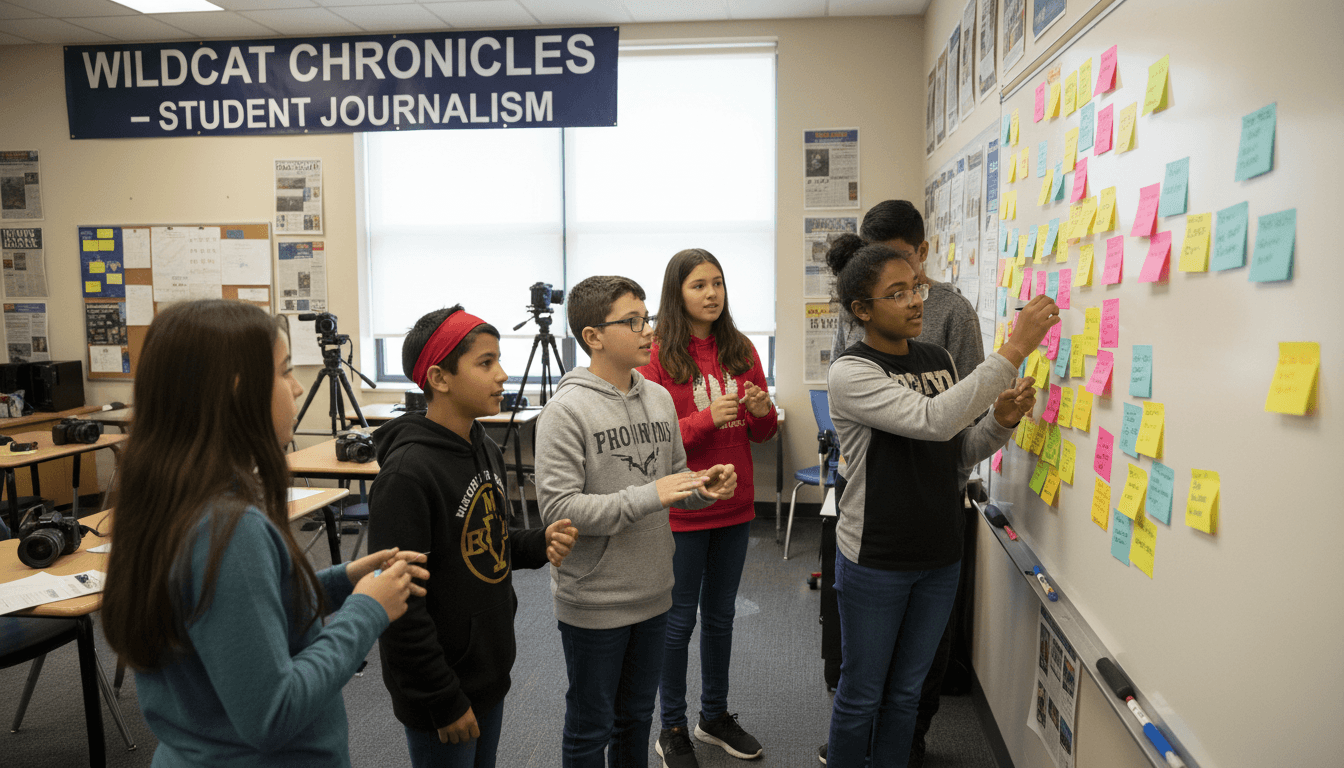
Student-Led Club Spotlight Newsletter: How Student Journalists Cover Extracurricular Life

School clubs are where student interests develop, friendships form, and leadership gets practiced in low-stakes environments. Most clubs operate almost invisibly outside their own membership. Student journalists who cover extracurricular life well make that life visible to the whole school community and give clubs coverage that directly supports their recruitment and sustainability.
Finding the story within the club
The question "what does this club do?" produces a description. The question "what is happening in this club right now that matters?" produces a story. A club spotlight should be built around something current and specific: the competition coming up, the project the members are working on, the advisor who just joined, the new direction the leadership is taking, or the membership challenge the club is working through.
Students who are genuinely engaged with the club's current moment are better sources than a club leader who provides a prepared description. Ask the president what kept them up last Tuesday. Ask the newest member what surprised them about joining. Ask the advisor what makes this particular group different from previous years.
Coverage rotation and planning
Planning club coverage as a beat, rather than responding to pitches, ensures that the publication covers the full range of extracurricular life. Map the clubs at the start of the year. Schedule spotlight coverage timed to when each club is most active, tournaments in the fall for competitive clubs, performances in the spring for arts groups. Coverage that aligns with club moments is more timely and more useful.
The new club story
New clubs are among the most compelling extracurricular stories. Who founded it? What need did they see that no existing club was meeting? How did they get administrative approval? How many members showed up for the first meeting? New club formation stories are stories about student agency and initiative, which gives them resonance beyond the club's subject matter.
Covering clubs fairly across the school
Publications that only spotlight high-profile clubs, the well-funded ones with competition seasons and external recognition, miss most of the extracurricular life of the school. The language club, the film appreciation club, the school garden group, and the cultural student organizations all deserve coverage. The full picture of extracurricular life reflects a more honest portrait of the school community.
Connecting club coverage to family engagement
Families want to understand what their students are doing outside the classroom. Club spotlight coverage that reaches families through the school newsletter tells parents what the drama club is rehearsing, what the math team is preparing for, and what the service learning group accomplished last semester. That knowledge builds family engagement with the extracurricular life of the building.
Get one newsletter idea every week.
Free. For teachers. No spam.
Frequently asked questions
What makes a club spotlight story worth reading?
The best club spotlights go beyond what the club does and explore why students chose it, what the club has actually accomplished, what challenges the club is navigating, and what it feels like to be part of it. A story about the robotics club that focuses on the team's strategy for this year's competition, the students who have been there longest, and what it takes to qualify for regionals is more compelling than a description of what robotics is.
How do student publications decide which clubs to spotlight?
A rotation system that covers all clubs over the course of the year ensures fairness and builds a complete picture of school extracurricular life. Prioritize clubs with timely news, a recent competition, a new advisor, a significant membership change, or an upcoming event that families can attend. Timeliness makes the coverage relevant beyond the club's members.
How do student journalists cover clubs that are struggling with membership or resources?
Struggling clubs deserve honest coverage. A club that cannot sustain its membership, is waiting for a faculty advisor, or is competing for space or funding with other programs is a story about school resource allocation and student interest. Covering only successful clubs produces a distorted picture of extracurricular life.
How does club spotlight coverage support school recruitment of new club members?
Students who read about what a club actually does and what current members say about it are better positioned to decide whether to join than students who only see a club fair table. Coverage that includes how to join and when the club meets serves as active recruitment communication.
How does Daystage help student publications share club spotlight coverage with families?
Daystage gives student publications a newsletter platform to distribute club spotlight coverage to families, helping families understand the full range of extracurricular opportunities available to their students and connecting them to the activities their students are involved in.

Adi Ackerman
Author
Adi Ackerman is a former classroom teacher and curriculum writer with 8 years in K-8 schools. She writes about school communication, parent engagement, and what actually works in real classrooms.
More for Student-Led
Ready to send your first newsletter?
3 newsletters free. No credit card. First one ready in under 5 minutes.
Get started free