
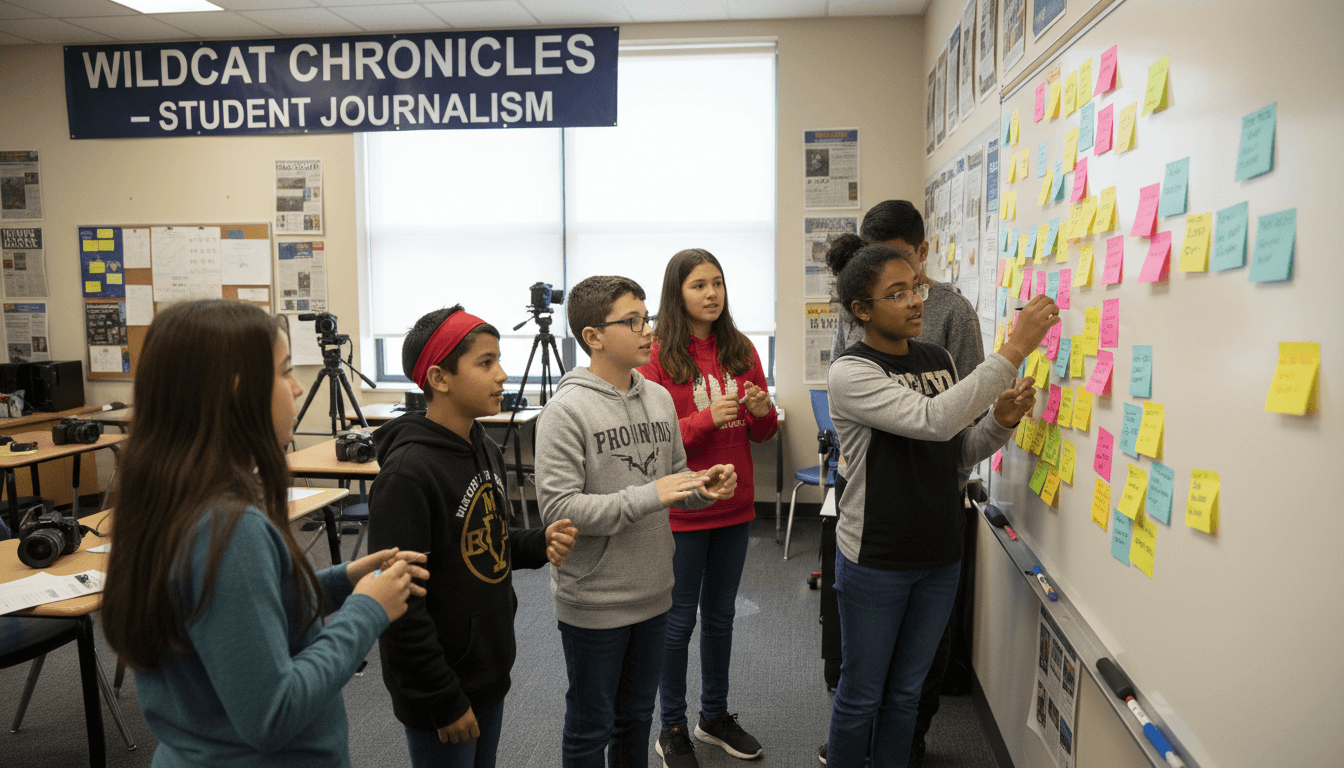
Publishing Student Book Reviews in the School Newsletter

A student book review published in the school newsletter has a real effect: it puts a specific book in front of hundreds of families, with a genuine student recommendation. Families who discover a book their child wants to read through a peer's newsletter review have a personal connection to that recommendation that a teacher list or a librarian display cannot produce.
Set a One-Sentence Plot Summary Rule
The most common failure mode of student book reviews is plot summary. A review that spends three quarters of its words describing what happens in the book tells the reader nothing they could not learn from the back cover. Require students to describe the book's premise in one sentence and then spend the rest of the review on why someone should read it.
"In this dystopian novel, teenagers compete in a televised survival contest to feed their families" is a plot summary sentence. Everything after that should be analysis and recommendation.
Require Specific Evidence from the Text
A review that says "this book is interesting" is not a book review. A review that says "the author's decision to tell the story from three alternating perspectives forces the reader to form a judgment about each character before seeing their actions from another angle" is. Requiring students to cite specific evidence from the text in their review develops the critical reading skill that the assignment is designed to build.
Connect Every Review to Library Availability
A review that generates reading interest and then leaves the reader without a path to the book misses most of its potential impact. Every published student book review should include where to find the book: the school library, the public library, and whether a digital lending version is available. The shorter the path from recommendation to checkout, the more students and families act on the recommendation.
Publish Reviews Across Genres
A book review section that only features literary fiction or classic literature communicates that those are the only books worth reading. A section that features graphic novels, sports biographies, science nonfiction, fantasy, mystery, and historical fiction alongside literary fiction communicates that reading is for everyone and that student tastes are valid in their full range.
Credit the Reviewer Prominently
Student book reviews should carry the reviewer's name and grade. "Reviewed by [name], Grade 7" gives the reviewer public credit and gives the reader context for the recommendation. A review from a fifth grader is likely to resonate most with parents of fifth graders. A review from a ninth grader speaks most clearly to families of high schoolers. The attribution makes the recommendation more specific and more useful.
Get one newsletter idea every week.
Free. For teachers. No spam.
Frequently asked questions
What makes a student book review publishable in the school newsletter?
A specific, genuine recommendation or critique supported by reasoning from the text. A review that says 'this book is good because it was interesting' is not publishable. A review that says 'this book changed how I think about loyalty because the main character's decision in chapter 12 revealed that loyalty and honesty can be genuinely incompatible, not just difficult' is. The distinction is specificity and reasoning. Requiring both before publication develops critical reading skills faster than any assignment that stays in the classroom.
How do you teach students to write a book review that goes beyond plot summary?
Restrict plot summary to one sentence. The student should be able to describe the book's premise in a single sentence and then spend the rest of the review on analysis, evaluation, and recommendation. The question to answer is not 'what happens in this book?' but 'why would someone want to read this book, and what does it offer that other books in this genre do not?' Teaching that distinction explicitly before students draft their reviews produces much stronger first drafts.
How do you use student book reviews to drive library checkouts?
Place the book review section near a feature that includes the book's availability: 'Available in the school library' with the call number, or a QR code that links to the library catalog entry. Readers who discover a book they want to read through a student review will act on the interest if the path from review to checkout is short. Adding a checkout link or availability note to every published review converts reading interest into reading.
How do you build a rotation system that allows all students to contribute book reviews?
Set a class or grade quota rather than accepting the first students to volunteer. A rotation that requires every student to produce one publishable review per year develops the skill broadly rather than concentrating it among the most motivated writers. Students who know their review will be published take the work more seriously than those who assume a stronger classmate's work will be chosen instead.
How does Daystage support student reading culture communication?
Daystage helps schools feature student book reviews in newsletters consistently, with the format and attribution practices that recognize student reviewers and connect their recommendations to library access. Schools use it to build a reading community across the school that the newsletter sustains throughout the year.

Adi Ackerman
Author
Adi Ackerman is a former classroom teacher and curriculum writer with 8 years in K-8 schools. She writes about school communication, parent engagement, and what actually works in real classrooms.
More for Student-Led
Ready to send your first newsletter?
3 newsletters free. No credit card. First one ready in under 5 minutes.
Get started free