
Student Journalism in Elementary School: Starting a Newsletter with Young Reporters
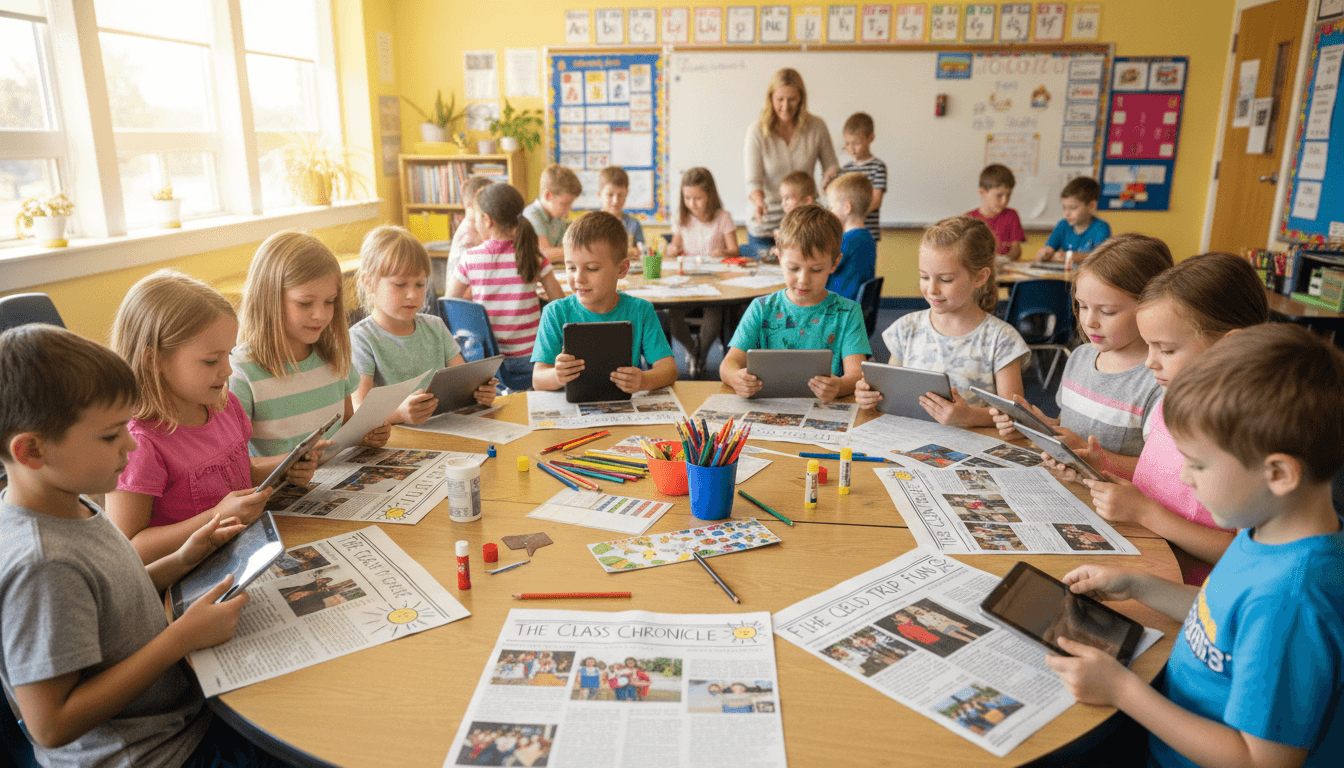
Elementary students can produce real newsletters for real audiences. Not simplified, not pretend-published, actually sent to families, actually read. Teachers who have run student newsletter projects in grades 3-5 consistently report the same thing: students rise to the responsibility in ways that do not happen with traditional writing assignments.
The key is matching the structure and expectations to what young students can actually do, while making the project real enough that they understand the stakes.
What Elementary Students Can Do
The range of age-appropriate contributions varies by grade:
- Grades 2-3: Caption writing, simple event reports ("On Thursday our class visited the library"), quotations from classmates, drawing illustrations with written descriptions. Focus on observation and accurate description.
- Grades 3-4: Short news reports (4-6 sentences), student profiles (with guided interview questions), event previews and recaps. Focus on who/what/ when/where structure.
- Grades 4-5: Full news stories with multiple sources, opinion pieces, how-to articles, school community profiles. Focus on accuracy, attribution, and revision.
Structure for Elementary Student Newsletters
The rotating reporter model
Rather than a fixed editorial team, rotate the reporter role across all students on a weekly or bi-weekly cycle. Each student's turn as reporter is their responsibility to produce a piece that makes it into the newsletter.
This model ensures every student experiences the full cycle, reporting, drafting, revising, publishing, rather than some students always writing and others always editing. It also distributes the workload across the class rather than concentrating it on the most confident writers.
Scaffolded story frames
Elementary student reporters work better with a frame than with an open prompt. Provide structured story starters:
For event recaps: "On [date], our class [did something]. [Student/Group] said '[quote]'. The class learned [main takeaway]."
For profiles: "Meet [name]. [Name] is in [grade] and loves [interest]. Their favorite part of school is [answer]. They want to be [aspiration] when they grow up."
These frames are training wheels. Students who have written five event recaps using the frame start to notice when a story does not fit the frame and learn to depart from it thoughtfully.
The Teacher's Role
In an elementary student newsletter, the teacher plays a heavier editorial role than in middle or high school. You are the editor of record. Every piece goes through you before it is published.
The editing conversation is the teaching moment. Sit with the student reporter and work through the piece together: "What happened first? What was the most interesting thing you noticed? Do you think someone who was not there would understand this sentence?"
Do not rewrite pieces for students. Return them with specific questions that guide the student to revise. A piece that a student improved through revision teaches more than a piece the teacher polished on their behalf.
Parent Response to Student Newsletters
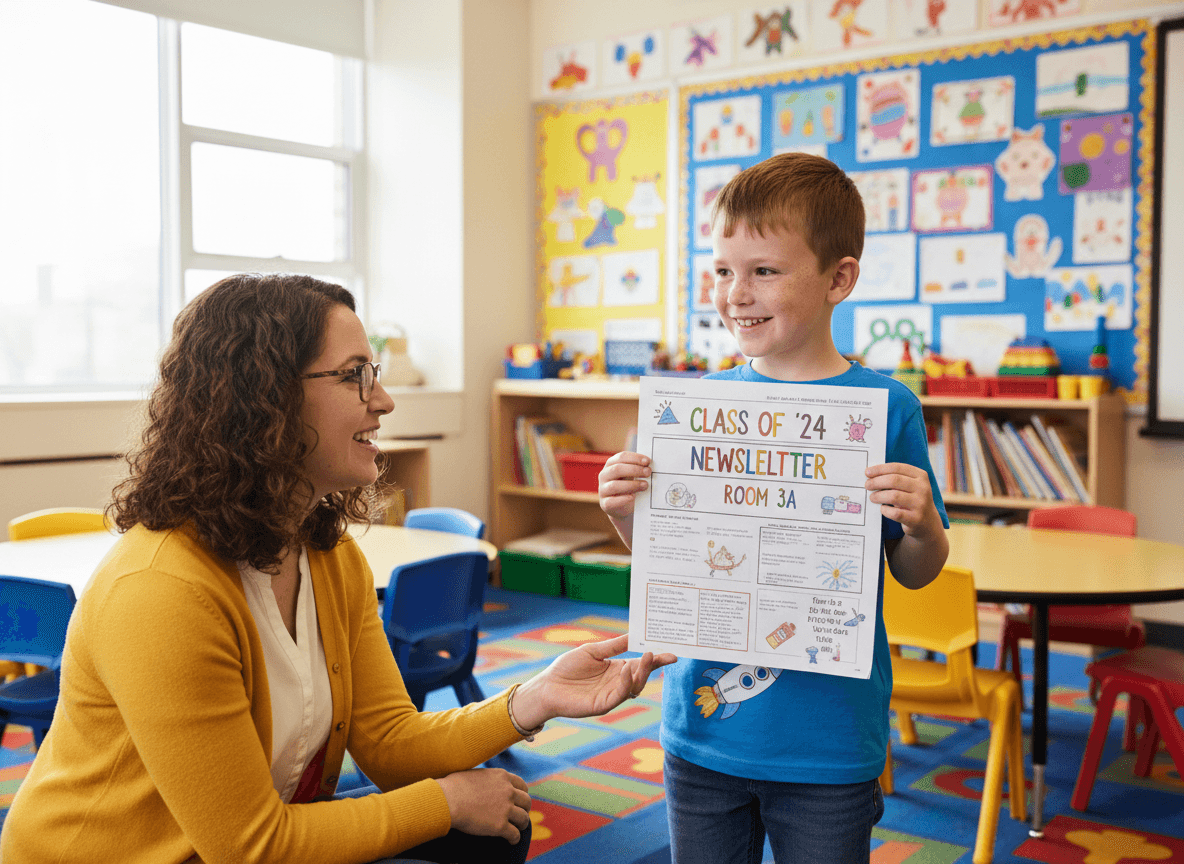
Families respond differently to student-produced newsletters than to teacher newsletters. They read more carefully. They look for their child's contribution. They save copies. They show grandparents.
This is worth explaining to students before the first issue goes out: "The people reading this newsletter are your families. They will know your name in the byline. They will read your words. Write it like it matters, because it does."
When the first issue ships and a parent emails to say their child talked about it at dinner, share that feedback with the class. That email is the most effective writing instruction you can give.
Connecting to ELA Standards
Student newsletter projects map directly to Common Core ELA standards at every elementary grade level. Informational writing, opinion writing, narrative techniques, revising and editing, producing and distributing writing for an audience, all of these standards are embedded in a functioning student newsletter.
The difference from a worksheet is the audience. A student who knows their writing will be read by real people revises differently than a student who knows only the teacher will see the work. That difference in investment shows up in the writing.
Get one newsletter idea every week.
Free. For teachers. No spam.
Frequently asked questions
When is the right time to start student journalism at the elementary level?
Students as young as second grade can participate in structured newsletter roles with teacher scaffolding. Third grade is where most programs start with more independence, using sentence starters, interview question prompts, and word count guidelines.
What should an elementary student journalism newsletter include?
Keep it to two or three sections: a classroom update written by a rotating student reporter, an interview with a classmate or staff member, and a student-selected photo with a caption. Complexity grows as students grow.
How should teachers manage their role in an elementary student newsletter?
The teacher scaffolds heavily in the first month, edits for factual accuracy and appropriate content, and fades involvement gradually. By the third or fourth issue, students should be driving the process with the teacher as a final reviewer.
What mistakes do elementary teachers make with student journalism programs?
Setting the bar for writing quality too high too early kills student confidence. The first few newsletters should be celebrated regardless of polish. Accuracy matters. Conventions can be taught over time.
How does Daystage work for elementary student journalism programs?
Teachers use Daystage to handle the layout and distribution while students focus on writing, so the newsletter looks professional even when the writers are in third grade, and parents receive it reliably each week.

Adi Ackerman
Author
Adi Ackerman is a former classroom teacher and curriculum writer with 8 years in K-8 schools. She writes about school communication, parent engagement, and what actually works in real classrooms.
More for Student-Led
Ready to send your first newsletter?
3 newsletters free. No credit card. First one ready in under 5 minutes.
Get started free