
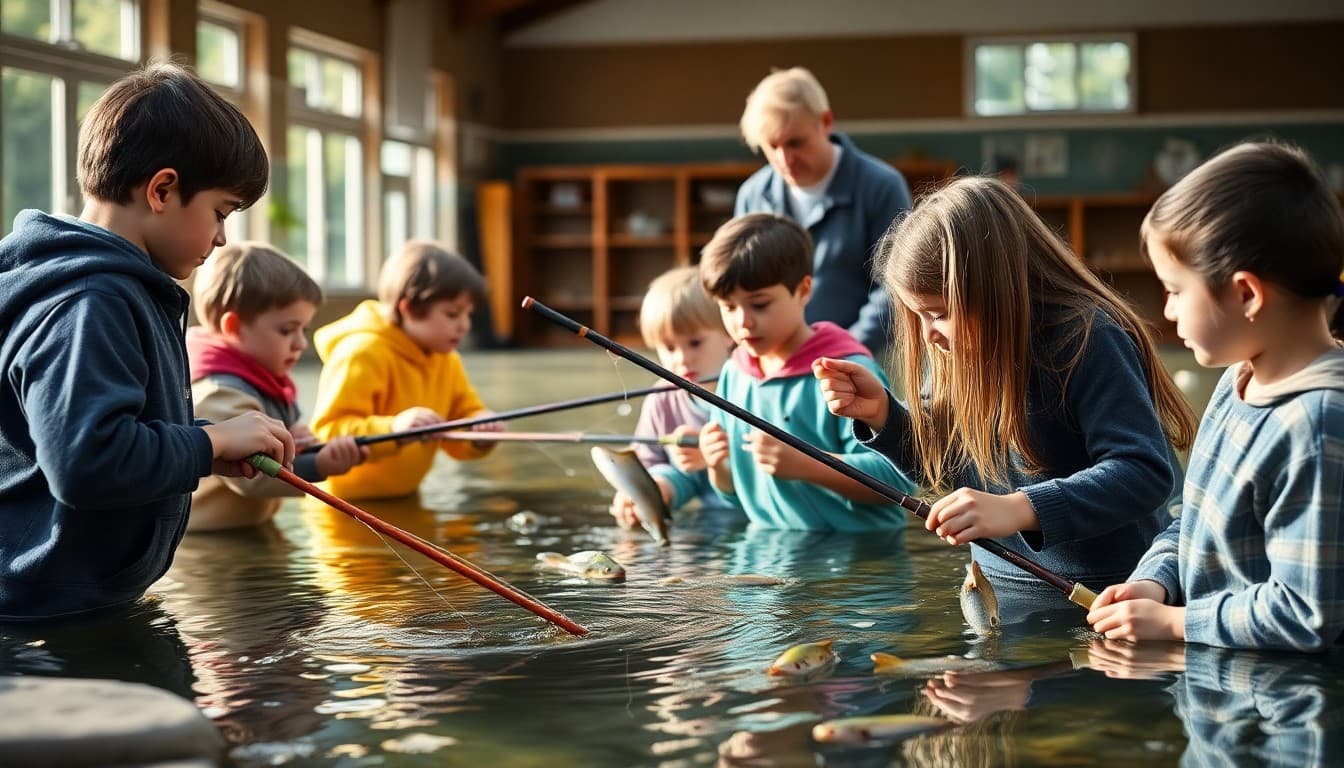
School Fishing Club Newsletter: Conservation and Angling
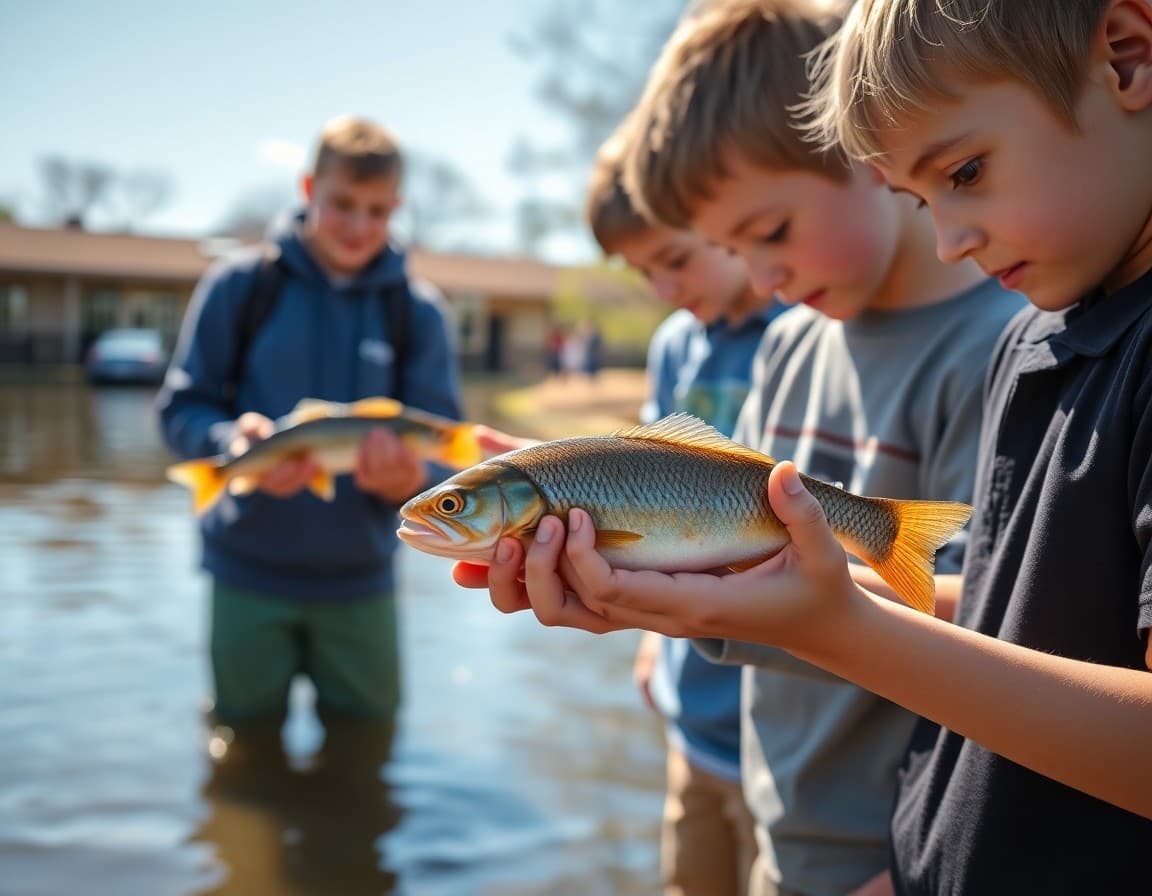
Fishing club newsletters serve families who want practical information about upcoming trips and parents who appreciate knowing their child is connected to an outdoor activity with real ecological depth. Write for both.
Upcoming Trip Details
The core logistics block should appear at the top of every newsletter during fishing season. Families need to prepare gear, arrange transportation, and know about any licensing requirements before each outing:
Next Trip: October 18 - Riverside Park Pond, 7:00 AM to 10:00 AM
Meet at the school east entrance at 6:45 AM. Transportation by school van. Return approximately 10:30 AM. Target species this session: largemouth bass and bluegill. Rod and tackle provided - bring your own if you prefer. Wear layers and boots or waterproof shoes. Youth fishing licenses required for anyone over 15 (link to state license portal below). Lunch not needed; back before noon.
Catch Log and Species Identification
A running catch log gives the newsletter an ongoing data narrative that families and students can follow across the year. Format it clearly:
Season Catch Log - Updated October 15
Largemouth bass: 12 caught, average length 9.4 inches, largest 14.2 inches (Marcus Chen, October 7).
Bluegill: 34 caught, average length 5.8 inches, largest 8.1 inches (Priya Patel, September 23).
Channel catfish: 3 caught, average length 11.2 inches.
Catch-and-release: 100% of catches this season. No fish harmed.
Conservation Topic of the Month
Connecting fishing to ecology makes the club academically credible and builds habits that serve students for life. Each newsletter should include one brief conservation topic: "This month: why water temperature matters. Largemouth bass are most active between 65 and 75 degrees Fahrenheit. When water temperature drops below 50 degrees in late October, fish become lethargic and move to deeper water. This is why our catch rates drop in November and why we shift to different tactics in cold water. We'll check water temperature at each trip from now through December and track the changes on our data chart."
Template Excerpt: Fall Fishing Newsletter
Jefferson Fishing Club - October Update
October is the best month of the freshwater season. Water temperatures drop to the optimal range for bass activity, and fish are actively feeding before winter. Our October 7 trip produced 19 fish in 2.5 hours, our best catch rate of the season so far.
Technique spotlight: This month students practiced jig fishing for the first time. A jig is a weighted hook with a rubber body fished along the bottom. It mimics a crawfish, which is a primary food source for bass in fall. Three of the 12 bass from October 7 came on jigs. Members who want to practice rigging jigs can come to the pre-trip session next Tuesday at 3:30 PM in room 108.
Conservation connection: We completed a macroinvertebrate sample at the pond on October 7. We found stonefly larvae, a sensitive species that only survives in healthy water. Their presence is a strong indicator that the pond's water quality is good. We'll repeat the sample in spring and compare.
Tournament Opportunities
Several organizations run youth fishing tournaments, including the Future Anglers Foundation and various state wildlife agency events. If the club participates in or is considering competition, the newsletter should explain the format, registration requirements, and what the participation would look like for students. School fishing tournaments are typically catch-and-release and scored on total length rather than weight, which requires a tape measure rather than a scale at the weigh-in.
Equipment Needs and Donations
Fishing clubs operate on modest budgets and can benefit significantly from donated equipment. A specific ask in the newsletter is more effective than a general request: "We are currently looking for: 6 to 8 medium-weight spinning rods in good condition, a tackle box to hold club-shared lures, any unused freshwater fishing tackle (hooks, jigs, plastic worms, spinners). If you have equipment sitting unused at home, we would put it to work." Community members often have unused fishing gear they are glad to donate to a school club.
Get one newsletter idea every week.
Free. For teachers. No spam.
Frequently asked questions
What should a school fishing club newsletter include?
Upcoming trip schedules with location, timing, and what to bring. Recent trip reports with catch logs by species. Conservation and ecological education content. Licensing requirements for students who fish in state waters. Tournament information if the club competes. Equipment donation needs. A student fishing tip or technique shared from a member's experience.
Do school fishing club members need fishing licenses?
This varies by state. Many states issue free youth fishing licenses for students under 16. Some states have exemptions for catch-and-release fishing. The newsletter should address licensing requirements clearly at the start of each season and provide a link to the state wildlife agency where families can verify requirements and apply for licenses.
How do you incorporate conservation education into a fishing club newsletter?
Include one conservation topic per issue connected to the waterways the club fishes. Invasive species in local lakes, catch-and-release best practices that maximize fish survival, water temperature and dissolved oxygen relationships to fish behavior, macroinvertebrate sampling as water quality indicators. These topics deepen the academic value of the club beyond catching fish.
Should a fishing club newsletter feature student catches?
Yes, with photos when families have given permission. A catch log section with species, size, and the student who caught it is a popular feature. It celebrates individual achievement and builds an ongoing record of the fish populations in local waterways. Over several years, this data can be used for a genuine environmental monitoring project.
Can Daystage support fishing club newsletters with photo galleries?
Yes. A fishing club newsletter with photo galleries of recent catches, waterway locations, and student technique demonstrations is easy to build in Daystage. The block editor lets you add captioned photos throughout the newsletter without any design expertise. Field trip photo galleries in school newsletters consistently increase open rates.

Adi Ackerman
Author
Adi Ackerman is a former classroom teacher and curriculum writer with 8 years in K-8 schools. She writes about school communication, parent engagement, and what actually works in real classrooms.
More for Student-Led
Ready to send your first newsletter?
3 newsletters free. No credit card. First one ready in under 5 minutes.
Get started free