
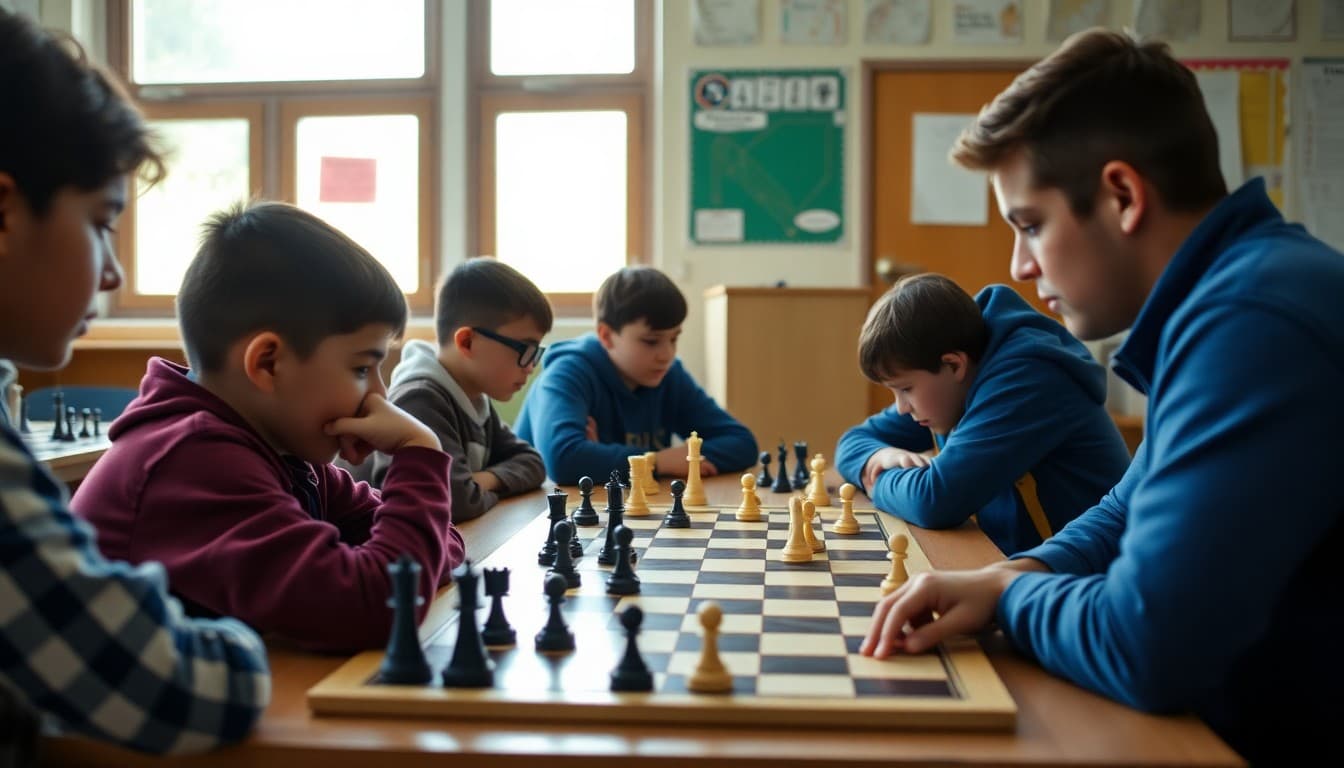
School Chess Club Newsletter: Tournament Season Communication
Chess club families are a specific audience. They understand competition, they care about individual player development, and they want to follow their child's progress through tournament season. A newsletter that speaks to that audience directly will be read carefully.
Tournament Season Calendar Block
The most-used section of a chess club newsletter during tournament season is the calendar. Format it clearly and keep it current:
Fall Tournament Schedule
October 12: Westfield Invitational - Jefferson High School, 8:00 AM start (arrive 7:45). All rated players eligible. Bring lunch, water, and a quiet activity. Expected end time: 4:00 PM. Entry fee included in club dues.
November 9: Regional Qualifier - Community Center, 9:00 AM. Top 3 finishers advance to State on December 7. Transportation provided from school, leaving at 8:15 AM.
December 7: State Championship (qualifiers only) - University Center, Springfield. Travel details to follow in the November newsletter.
Communicating Player Development
Chess families want to see their child's progress over time. A brief section covering club practice highlights and player development keeps the newsletter grounded in the actual work being done between tournaments. "This week we focused on the Ruy Lopez opening. Students practiced the main line and three common responses to it. Ask your player to show you the first five moves." This kind of prompt gives families a way to engage with their child's chess development even if they don't play themselves.
Tournament Results That Tell the Full Story
Tournament results should go beyond a bare score. Context makes results meaningful. "At Westfield, our team scored 18.5 out of 25 possible points. Three players achieved their personal best tournament score. Marcus scored a 4 out of 5, his highest result in two years of competitive play. Sophie defeated a player rated 200 points higher in round 3." This kind of reporting gives every player a moment in the newsletter rather than reducing the whole tournament to a team score.
Template Excerpt: Post-Tournament Newsletter
Westfield Invitational Results - October 12
The team competed against 22 other schools at Saturday's Westfield Invitational. Our overall team score of 18.5 placed us 4th out of 23 teams, our best placement at this tournament in four years.
Individual highlights: Marcus Chen (4.0/5), Priya Patel (3.5/5), Jamie Torres (3.5/5), Sam Williams (3.0/5), Alex Kim (2.5/5), Elena Novak (2.0/5). Several players faced opponents rated significantly above them and competed well in close games that went deep into the endgame.
Coach's note: I was particularly proud of how the team handled adversity in round 4 when three players lost within 20 minutes. They regrouped, watched each other's remaining games, and came back in round 5 with focus. That composure is harder to develop than any opening theory.
Chess Concept of the Month
Including a brief chess concept in each newsletter serves two purposes: it educates families who don't play chess so they can follow their child's progress more intelligently, and it gives players a concept to discuss at home. Keep it accessible: "This month we worked on the concept of piece activity. In chess, a piece that controls many squares and threatens opponent pieces is considered active. A piece trapped behind its own pawns is inactive. One of the key goals in the opening is to develop active pieces before your opponent." A paragraph like this is enough.
End-of-Season Recognition
The final newsletter of the tournament season should recognize every player. Not just the top scorers. The student who improved their rating the most. The student who achieved their first tournament win. The student who showed the most sportsmanship in difficult circumstances. The student who contributed most to team morale. Chess club families are invested in their child's development and a closing newsletter that sees each player as an individual rather than just a rating number builds loyalty to the program.
Get one newsletter idea every week.
Free. For teachers. No spam.
Frequently asked questions
What should a chess club newsletter include?
Cover tournament schedule and results, individual player rankings if you track them, recent club practice highlights, openings or strategies the group is working on, and upcoming travel or tournament logistics. Including one chess concept or opening name with a brief explanation each issue teaches families something about the game and increases their engagement with tournament results.
How often should a chess club send a newsletter?
Monthly is typically right for a chess club. During tournament season (usually fall and spring), biweekly newsletters around tournament weeks keep families informed about schedules and results. Off-season newsletters can be monthly and focus on club development, individual player achievements, and preparation for the next tournament season.
How do I communicate tournament logistics in a chess club newsletter?
Include the tournament name, location, date and start time, expected end time, transportation arrangement, any entry fees, what to bring (usually a lunch and a book or quiet activity for waiting rounds), and what level of play is expected. Chess tournaments can last 6 to 8 hours so families need clear information about the time commitment.
Should a chess club newsletter mention individual player rankings?
If you track USCF or school ratings, sharing individual ratings in the newsletter is generally appreciated by players and families. Be thoughtful about how you frame improvement versus decline in ratings. A player who lost rating points in a difficult tournament against higher-rated opponents is still developing. Context matters when sharing competitive data with families.
Can Daystage handle a chess club newsletter sent to a small membership list?
Yes. Daystage works equally well for clubs with 12 members and schools with 500 families. A chess club can create a simple branded newsletter with club colors and the school logo, manage their own list of member families, and send tournament updates whenever needed without paying for a large-scale communication tool.

Adi Ackerman
Author
Adi Ackerman is a former classroom teacher and curriculum writer with 8 years in K-8 schools. She writes about school communication, parent engagement, and what actually works in real classrooms.
More for Student-Led
Ready to send your first newsletter?
3 newsletters free. No credit card. First one ready in under 5 minutes.
Get started free