
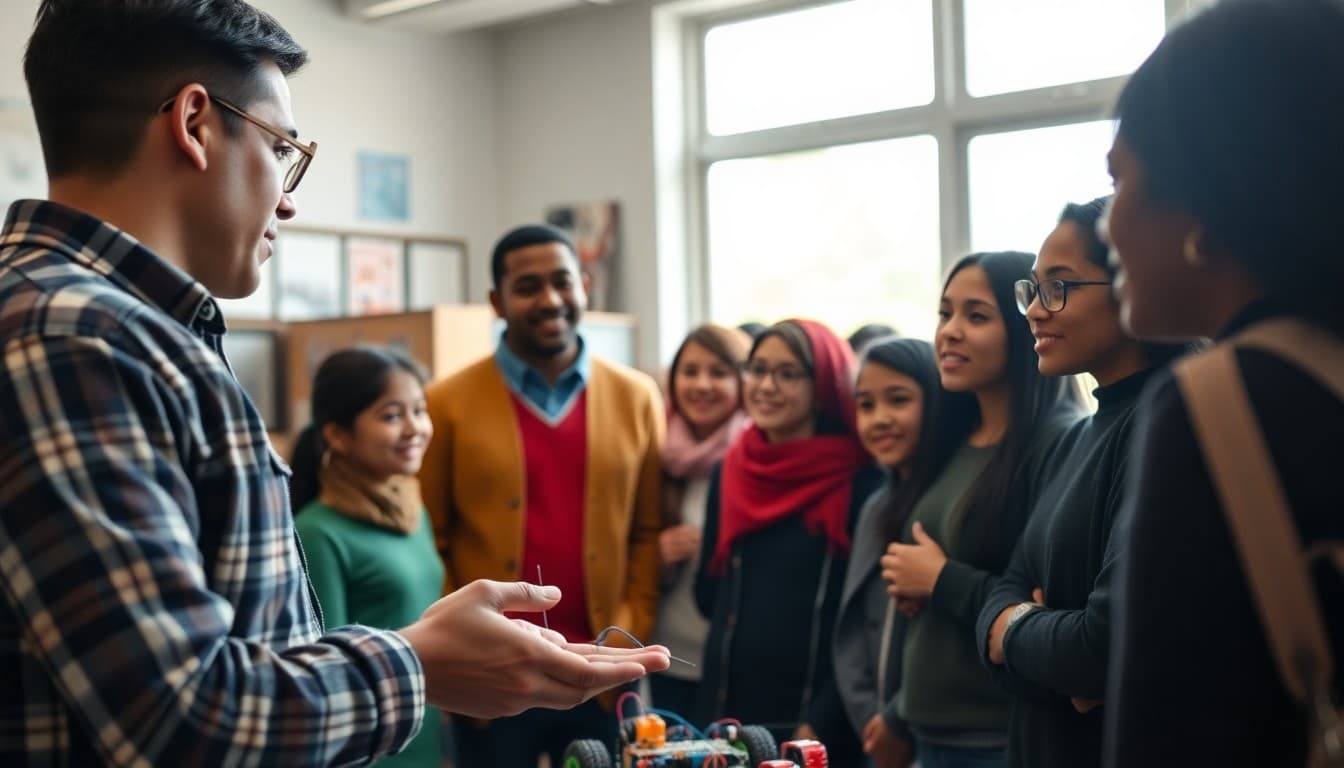
Parent Engagement Newsletter for Stem School Families

STEM school communities often contain remarkable concentrations of professional expertise. Engineers, data scientists, biomedical researchers, software architects, and technology executives are present in many STEM school parent communities in ways they simply are not at general enrollment schools. A parent engagement newsletter that fails to channel this expertise is leaving real value on the table.
The Untapped Professional Capital in Your Community
STEM school parents who work in technical fields are often interested in contributing to their child's school but do not receive specific enough invitations to act on that interest. A general "we welcome volunteers" call produces the same response at a STEM school that it does anywhere: a handful of parents who were already looking for an entry point, and many more who read the newsletter and move on.
A specific invitation changes this. "We are looking for three engineers or engineering managers who can serve on a one-time design review panel for our 10th grade capstone projects on March 14 from 3 to 5 PM" will produce a different response than "we welcome parent volunteers." Names, dates, time commitments, and specific roles turn willing professionals into actual participants.
Matching Expertise to Specific Opportunities
A STEM school parent engagement newsletter should catalog the school's specific needs and match them to professional expertise categories that families can self-identify with. This does not require a lengthy survey. A section of the newsletter with a short list works well: "We are looking for parents in these areas to contribute in specific ways this semester." Then list the roles, requirements, and contact information.
For example: software engineers for a code review session with the AP Computer Science class. Medical professionals for a career panel for health science students. Architects or structural engineers to review junior engineering designs. Each line names the profession, the activity, and the commitment level. Families scan for their professional category and respond to the ones that match.
A Template Excerpt for a STEM Parent Engagement Newsletter
Here is a section from a STEM high school in San Jose:
"We are building our Industry Partner Network for the 2026-27 school year. We are looking for professionals in engineering, computer science, biotech, environmental science, and data analytics who can contribute in one of three ways: a 45-minute guest lecture during the school day, a monthly mentorship session with one or two students by video or in person, or serving as a project reviewer for our junior capstone presentations in April. All three are high-impact, low-time-commitment ways to connect students to the professional world. If you or a colleague fits this description, complete the interest form at the link below and our career pathways coordinator will follow up within two weeks."
This section names the industries, offers three specific contribution types with time estimates, and provides a clear next step. It is doing actual recruitment, not just expressing appreciation for involvement.
Engaging Families Without Technical Backgrounds
Not every family at a STEM school is there because of technical expertise, and not every type of engagement requires it. A parent engagement newsletter that only promotes STEM-specific volunteer opportunities signals to non-technical families that their involvement is less valued. Balance technical opportunities with general ones: event planning, hospitality for competitions, communications support, fundraising coordination, and community outreach all need people who are organized, energetic, and connected, regardless of their professional background.
A section of the newsletter dedicated to "how families can help without a technical background" acknowledges the full range of the community and channels energy toward areas where the school genuinely needs help.
Supporting Competitions With Family Volunteers
STEM school competition seasons are intensive. Robotics teams may practice five days per week for six weeks. Science olympiad teams need equipment, transportation, and food. Model UN teams need coaching and logistics support. A newsletter that explains what competition season looks like and names specific ways families can help, from driving students to providing dinner during practice marathons, converts interested parents into active supporters.
Give families a schedule of competition commitments so they can plan in advance. A family who knows the robotics regional is November 14 and needs 12 parents for pit crew support can put that on their calendar in September and actually show up.
Highlighting What Parent Involvement Has Produced
STEM school newsletters that report on the outcomes of parent involvement build momentum for future participation. "Our industry mentor network connected 34 students to professionals in their field of interest last year. Three of those mentors wrote letters of recommendation for college applications. Two students completed summer internships arranged through the network." That is a paragraph that motivates the next wave of mentors and demonstrates to families that the investment produces real results for students.
Celebrating Families as Part of the STEM Community
STEM school newsletters can build community by acknowledging the families who contribute, not just in formal volunteer roles but in the day-to-day support that makes STEM participation possible. A parent who drives a student to late-night robotics practice, who learns alongside their child about 3D printing, or who attends every competition regardless of the early morning start time is part of the school's story. A newsletter that sees and names this support builds the kind of community that sustains a STEM school through difficult years.
Get one newsletter idea every week.
Free. For teachers. No spam.
Frequently asked questions
What types of parent engagement work best at STEM schools?
STEM school communities often include parents with relevant professional expertise who can contribute in ways that standard school volunteer roles do not capture. Engineers can review student designs. Software developers can mentor coding students. Medical professionals can speak to health science classes. A newsletter that explicitly invites industry professionals to participate in specific, low-time-commitment ways channels existing expertise into the school's programming rather than letting it sit unused.
How do I engage STEM school parents who do not have technical backgrounds?
STEM school communities are not uniformly technical. Many families enrolled because of the school's academic reputation or other non-technical programs. A newsletter that only promotes STEM-specific engagement excludes these families. Include engagement opportunities that do not require technical expertise: event coordination, fundraising, administrative support, and community outreach all matter and all welcome families regardless of their professional background.
How can STEM schools use parent expertise to strengthen programs?
Industry mentorship, guest speaking, project review panels, and mock interview coaching are all high-value contributions that professional parents can make to STEM school programs. A newsletter that names these specific opportunities with time requirements, for example a one-time guest lecture or a monthly mentorship session, converts professional parents from passive supporters to active contributors.
What should a STEM school parent engagement newsletter say about competitions and events?
Name specific competitions, explain briefly what they involve, and note what types of family support are most useful. For a robotics competition, families may be able to help with transportation, provide meals during practice marathons, or serve as pit crew supporters on competition day. For a science fair, families with relevant expertise can serve as judges. Specific asks get specific responses.
Can Daystage support parent engagement newsletters for STEM schools?
Yes. Daystage lets STEM school administrators and teachers build newsletters with photos of student work, event details, and volunteer sign-up links, then send them to the full family community in one step. Tracking open rates helps identify which families are engaged and which may need a more personal outreach.

Adi Ackerman
Author
Adi Ackerman is a former classroom teacher and curriculum writer with 8 years in K-8 schools. She writes about school communication, parent engagement, and what actually works in real classrooms.
More for STEM
Ready to send your first newsletter?
3 newsletters free. No credit card. First one ready in under 5 minutes.
Get started free