
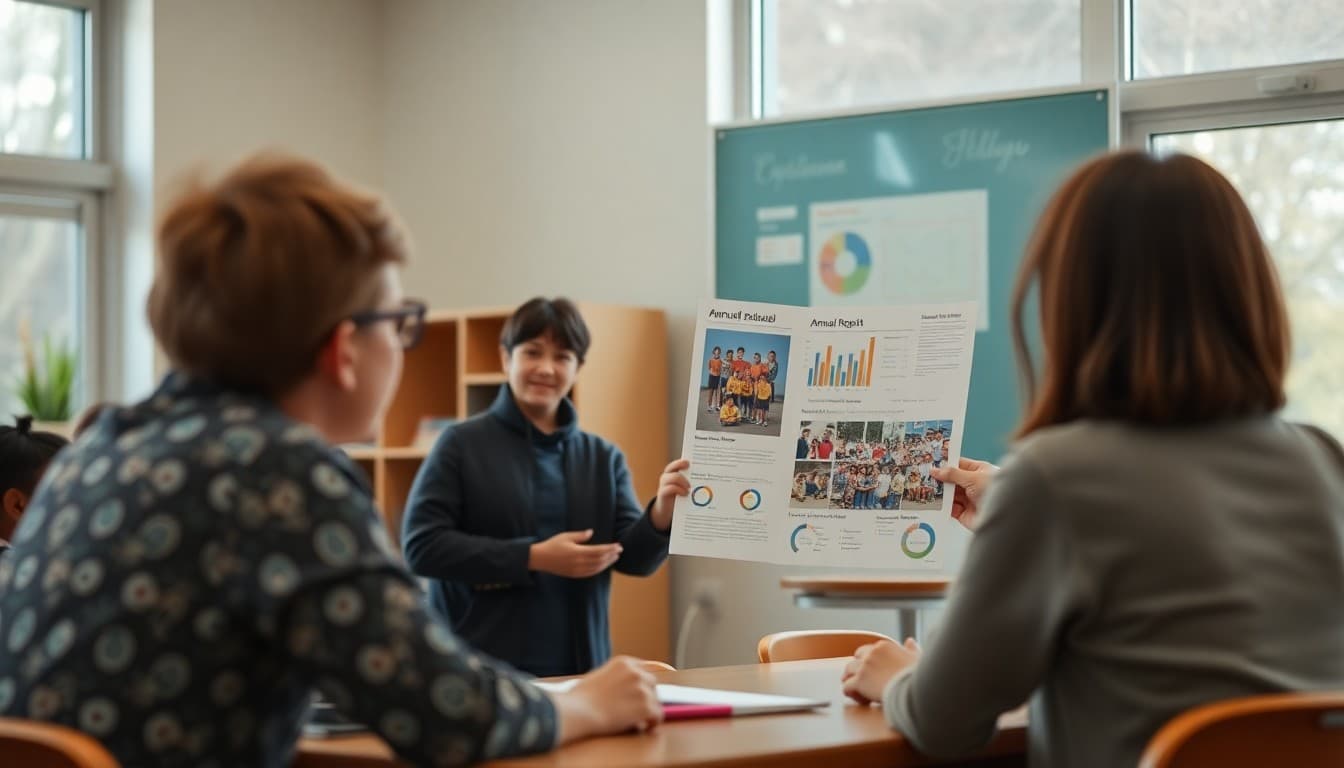
Annual Report Newsletter for Stem School Families
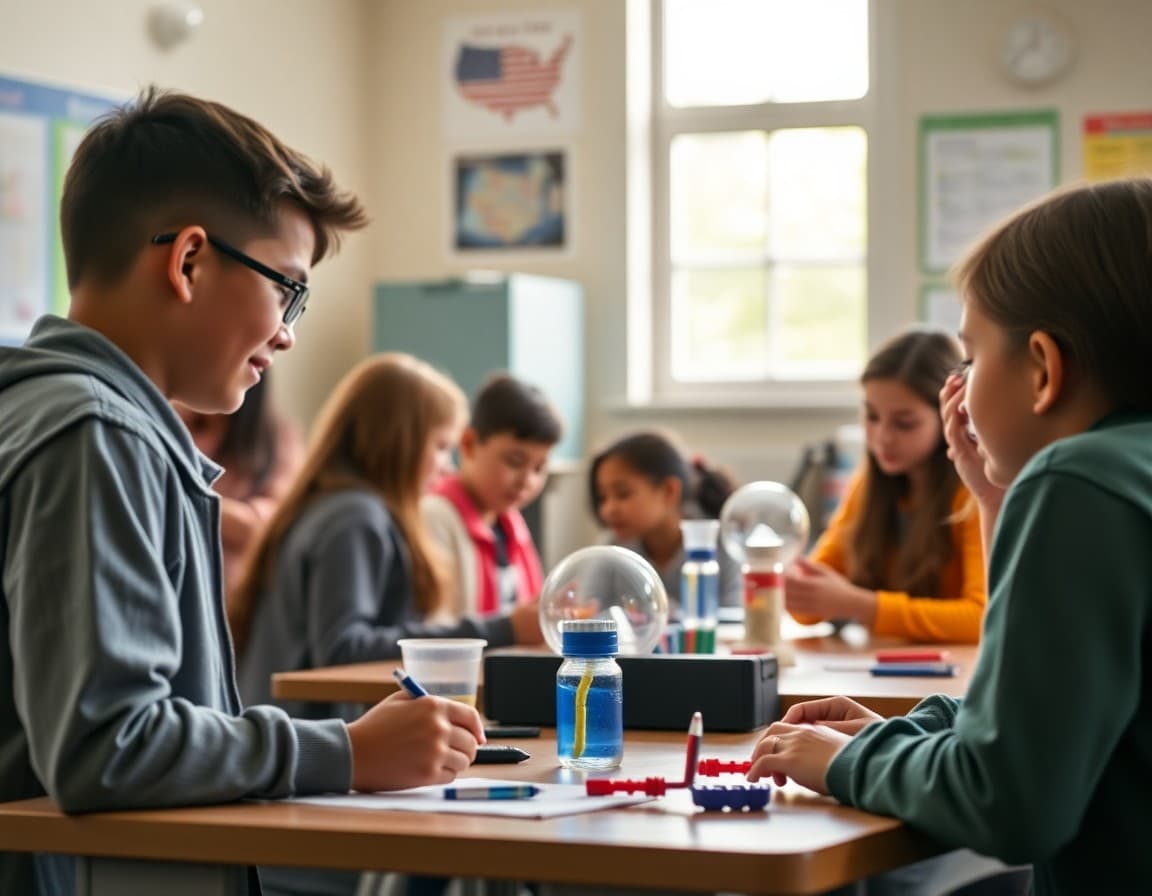
A STEM school annual report newsletter is doing more than presenting academic data. It is accounting for the specialized investment families made when they chose this school over the neighborhood alternative. That accountability requires program-specific outcomes, competition results, alumni tracking, and a clear-eyed assessment of what worked and what did not.
Going Beyond the Standard Academic Report
Every school sends proficiency rates and attendance numbers. A STEM school annual report that only includes these misses what makes the school worth the choice families made. The first section after the basic academic data should be program-specific outcomes: what the robotics team accomplished, how many students earned industry certifications, what the capstone projects produced, how many students completed dual enrollment courses, and where last year's graduates enrolled.
These are the metrics that answer the question STEM school families are asking every year: was this the right choice for my child?
Reporting Competition Results With Context
Competition results are a natural centerpiece of a STEM school annual report, but they require context to be useful. A raw placement number tells part of the story. The number of teams in the competition, the difficulty of the challenge, whether it was the team's first or fifth time competing, and what the team learned from the experience tell the rest.
"Our robotics team placed 11th out of 38 teams at the state qualifier, advancing to the state championship for the first time in school history. At the state championship, we placed 22nd out of 24 teams. The team identified three specific design decisions that contributed to the gap and has already begun redesigning for next season." That is an honest, complete account of a mixed result that shows the school's approach to improvement.
A Template Excerpt for a STEM Annual Report Newsletter
Here is a program results section from a STEM high school in Colorado:
"2025-26 Program Highlights: Robotics: State qualifier placement 6th of 47 teams. Regional champions, first time in school history. 34 students on two teams. Engineering Capstone: 24 junior and senior projects presented to industry panels. Three projects advanced to the state-level showcase. Two projects received letters of interest from industry partners. Certifications: 28 students earned CompTIA IT Fundamentals certification. 12 students completed Autodesk Fusion 360 certification. Dual Enrollment: 41 students completed college coursework through our university partnership, earning a combined 143 college credits. College outcomes for Class of 2026: 89 percent enrolled in four-year programs, 76 percent in STEM majors."
Every line is specific. Every number is real. The section is dense with information because that is what the audience expects.
Reporting on Industry Partnerships and Real-World Connections
STEM school annual reports should account for what industry partnerships produced, not just that they existed. How many students participated in mentorship programs? How many completed site visits or job shadows? Did any students receive internship offers? Did any industry partners contribute equipment, funding, or curriculum input? These outcomes demonstrate that the school's external relationships are functioning and producing value for students.
Acknowledging What Did Not Work
STEM school communities often include analytically inclined families who will respect honest reporting about shortfalls more than they trust a relentlessly positive narrative. If a program was launched but underperformed its goals, name it. If a competition result was disappointing, report it. If the school tried something that did not work, describe what was learned. "Our new environmental engineering program launched in September with 18 students enrolled. Our target was 40. We have identified three changes to the program structure and our outreach to incoming students for next year" is the kind of transparency that builds trust with families who are paying close attention.
Highlighting Faculty Expertise and Professional Development
STEM school teachers often maintain professional connections that directly benefit students. A teacher who attended an industry conference, completed a summer research fellowship, or earned a new certification is bringing fresh expertise back to the classroom. The annual report is a natural place to name these achievements and explain what they mean for students. "Ms. Park spent four weeks this summer at a National Science Foundation research site studying atmospheric modeling. She will integrate that work into the AP Environmental Science curriculum in January."
Setting Goals That Demonstrate Ambition and Accountability
Close the STEM school annual report with specific, measurable goals for the year ahead. Goals that are named publicly commit the school to accountability in the following year's report. "We aim to have 60 percent of graduating seniors enrolled in STEM majors, up from 54 percent this year. We will expand our dual enrollment partnerships to three additional universities. Our robotics team will compete at the national level for the first time." These goals tell families that the school is planning, not just operating, and that they can expect a reckoning in next year's annual report.
Get one newsletter idea every week.
Free. For teachers. No spam.
Frequently asked questions
What should a STEM school annual report newsletter include beyond standard academic data?
Competition results with context, program participation numbers, certification rates, industry partnership outcomes, alumni pathways, and capstone project summaries. These are the metrics that make a STEM school distinct from a general enrollment school. Families chose this school for reasons that standard report cards do not capture, and the annual report is the right place to demonstrate what the school's specialized programming actually produced.
How do I report on competition results in a way that is honest but still builds confidence?
Report actual placements and results, then contextualize them. Finishing 14th out of 42 teams at a regional competition is meaningful data. Being eliminated in the first round of a tournament is also meaningful. Describe what students learned from the experience and what the team is changing for next year. Results without context are data points. Results with context are part of a story of continuous improvement.
How should a STEM school report on college and career outcomes in the annual newsletter?
For high schools, include data on where graduating seniors enrolled, any STEM-specific scholarships earned, industry certifications achieved, and early employment or internship outcomes if you track them. For middle schools, include data on what percentage of students advanced into STEM high school programs or courses and any regional or state competition results that indicate how students are developing. These outcomes are the proof of the school's value.
Should the STEM school annual report address programs that did not achieve their goals?
Yes. A STEM school community that includes many analytically minded families will notice if the report only covers wins. Name programs that did not hit their targets, explain what the school learned from the shortfall, and describe what changes are planned. A robotics team that had its worst season in four years and learned three specific things from the failure is doing more valuable work than one that succeeds without reflection.
What tool makes it easiest to produce a STEM school annual report newsletter?
Daystage handles the formatting and sending in one place, which is useful when you have multiple programs contributing content. You can build sections for different programs, add competition photos, and include data highlights in a visually organized newsletter that goes to every family in one send.

Adi Ackerman
Author
Adi Ackerman is a former classroom teacher and curriculum writer with 8 years in K-8 schools. She writes about school communication, parent engagement, and what actually works in real classrooms.
More for STEM
Ready to send your first newsletter?
3 newsletters free. No credit card. First one ready in under 5 minutes.
Get started free