
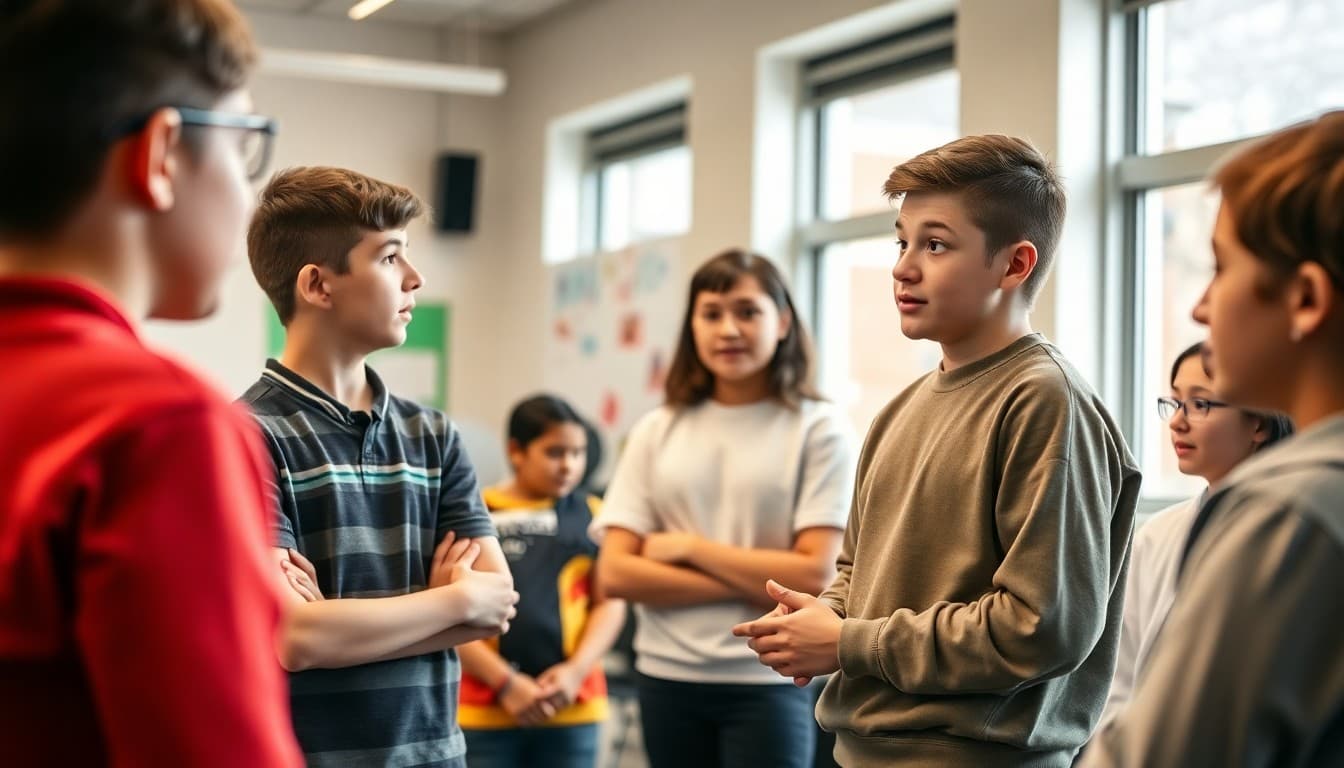
STEM Literacy Newsletter: Science Communication Skills
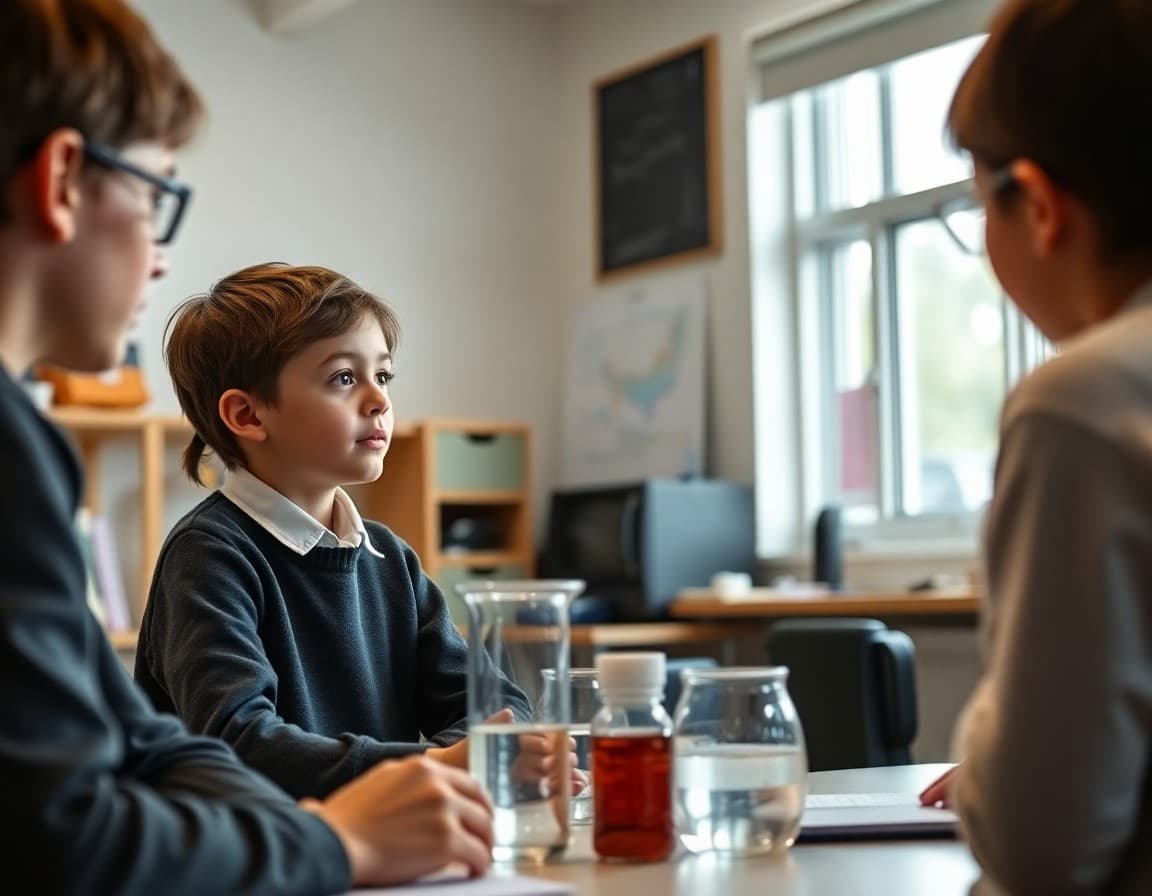
STEM literacy is one of the most undercommunicated parts of science education. Families understand that students do experiments and solve equations. Many do not realize that explaining, reading, and evaluating scientific information is being taught as a specific skill. Your newsletter can fix that.
Explain what you mean by STEM literacy at the start of the year
The term "STEM literacy" is not self-explanatory. Families need a working definition early in the year so they understand what they are seeing when their child brings home a science explainer essay or gives a presentation at the school fair.
"STEM literacy in this class means two things: the ability to read and evaluate scientific information (Is this study well-designed? Does this graph show what the headline claims?) and the ability to communicate science clearly to a non-expert audience (Can you explain how mRNA vaccines work to your grandmother?). We practice both skills every week alongside the hands-on science work."
Share examples of student science communication work
The most compelling way to demonstrate STEM literacy to families is to share the actual student work. An excerpt from a student's science explainer, the opening paragraph of a lab report, or a description of how a student explained a concept to a younger student all make the skill visible.
"Here is the opening paragraph from a student's explanation of how solar panels work, written for a fourth-grade reading level: 'When sunlight hits a solar panel, tiny particles of light called photons knock electrons loose inside the panel. Those loose electrons create an electric current, the same kind of current that flows through the wires in your house. The panel collects those electrons and sends them where you need electricity to go.' That paragraph took three revisions to get right."
Teach families how to evaluate scientific claims alongside students
STEM literacy assignments give families an opportunity to practice the same skills at home. A newsletter that explains the criteria for evaluating a scientific claim, sample size, control group, replication, peer review, gives families a framework to use when they see science news themselves.
"This month's unit is on evaluating scientific studies in news articles. Students are learning to ask: How many people were in the study? Was there a control group? Has this been replicated? Who funded the research? Try applying those four questions to the next health or science headline you see. If any of the four answers is unclear or concerning, the headline may be overstating the finding."
Describe the data visualization work students are doing
Reading and creating data visualizations is a core STEM literacy skill that often goes undescribed in newsletters. If students are learning to read graphs, identify misleading visualizations, or create their own charts and infographics, describe that work specifically.
"This week, students were shown six graphs about the same dataset, each designed differently. Two of the graphs were technically accurate but visually misleading because of truncated y-axes or unusual scaling. Students had to identify which graphs were potentially misleading and explain why. The ability to read a graph critically is a skill most adults were never explicitly taught."
Sample newsletter template excerpt
Science Communication Project update:
Students are completing their first public-facing science explainer this month. The assignment: explain one scientific concept from our current unit in a format that a sixth grader who has not taken this class could understand. Students chose their format: a two-page illustrated guide, a recorded two-minute video, a poster with annotated diagrams, or a structured Q and A document.
The most common challenge students faced was not understanding the science. It was figuring out which parts their audience already knows and which parts need to be explained from scratch. That challenge is the heart of what professional science communicators do.
Connect science communication to future skills
Employers across industries report that the ability to communicate technical concepts clearly is one of the most valuable and scarce skills they encounter in applicants. A newsletter that names this connection helps families understand why science writing and presentation work belong in a STEM class.
"Engineers who cannot explain their designs to non-engineers struggle to get projects approved. Scientists who cannot communicate their findings to policymakers see their research ignored. The communication skills students build in this unit are as career-relevant as the technical content."
Invite families to engage with the work at home
Families can practice STEM literacy alongside their child simply by reading a science news article together and applying the evaluation criteria students are learning in class. Framing this as something the student teaches the family, rather than something both struggle through, puts the student in the expert role and reinforces the learning.
Get one newsletter idea every week.
Free. For teachers. No spam.
Frequently asked questions
What is STEM literacy and why does it matter for K-12 students?
STEM literacy is the ability to read, interpret, evaluate, and communicate information about science, technology, engineering, and mathematics. It includes reading scientific articles, evaluating statistical claims, understanding data visualizations, identifying credible sources, and communicating technical concepts to non-specialist audiences. STEM literacy matters because the vast majority of students will not become professional scientists, but all of them will make decisions affected by science: medical choices, environmental policies, technology adoption, and financial planning. Students who can evaluate a scientific claim are better equipped for all of those decisions.
How do STEM teachers teach science communication as a specific skill?
Effective science communication instruction focuses on audience awareness, which means asking students to explain the same concept to a scientist, to a peer, and to a younger student, and recognizing that all three explanations need to be different. It also covers data visualization literacy, where students learn to read and create graphs, charts, and diagrams accurately. Scientific writing conventions, including the structure of a lab report and the difference between observation and inference, are also core components. Oral presentation skills for explaining technical work to a general audience round out the skill set.
What is the difference between STEM literacy and STEM competency?
STEM competency is the ability to do science: design experiments, write code, build structures, solve equations. STEM literacy is the ability to understand and evaluate scientific information without necessarily doing the science yourself. Both matter. A student who can design a brilliant experiment but cannot explain the results clearly, or who cannot evaluate whether a news headline about a study is accurate, has a significant gap. The most capable STEM students develop both: the ability to do rigorous work and the ability to communicate and evaluate it.
How does STEM literacy connect to media literacy and critical thinking?
STEM literacy and media literacy overlap in the skill of evaluating scientific claims in popular media. A student who understands how studies are designed can recognize when a news headline overstates the strength of a finding. A student who can read a data visualization can spot when a graph is designed to mislead. These skills belong to both STEM education and media literacy education, and programs that explicitly connect the two produce students who are more resistant to misinformation across both domains.
How does Daystage help STEM teachers communicate with families about science literacy work?
Daystage lets STEM teachers share student science communication work directly in the newsletter, including student-written science explainers, presentation slides, and video clips of student talks. When a family reads their child's two-paragraph explanation of why vaccines produce immunity, written for a general audience, alongside the teacher's description of what the assignment required, the value of science communication as a skill becomes concrete and worth discussing at home.

Adi Ackerman
Author
Adi Ackerman is a former classroom teacher and curriculum writer with 8 years in K-8 schools. She writes about school communication, parent engagement, and what actually works in real classrooms.
More for STEM
Ready to send your first newsletter?
3 newsletters free. No credit card. First one ready in under 5 minutes.
Get started free